
What Age Is a Dog Considered a Senior? (By Size & Breed)
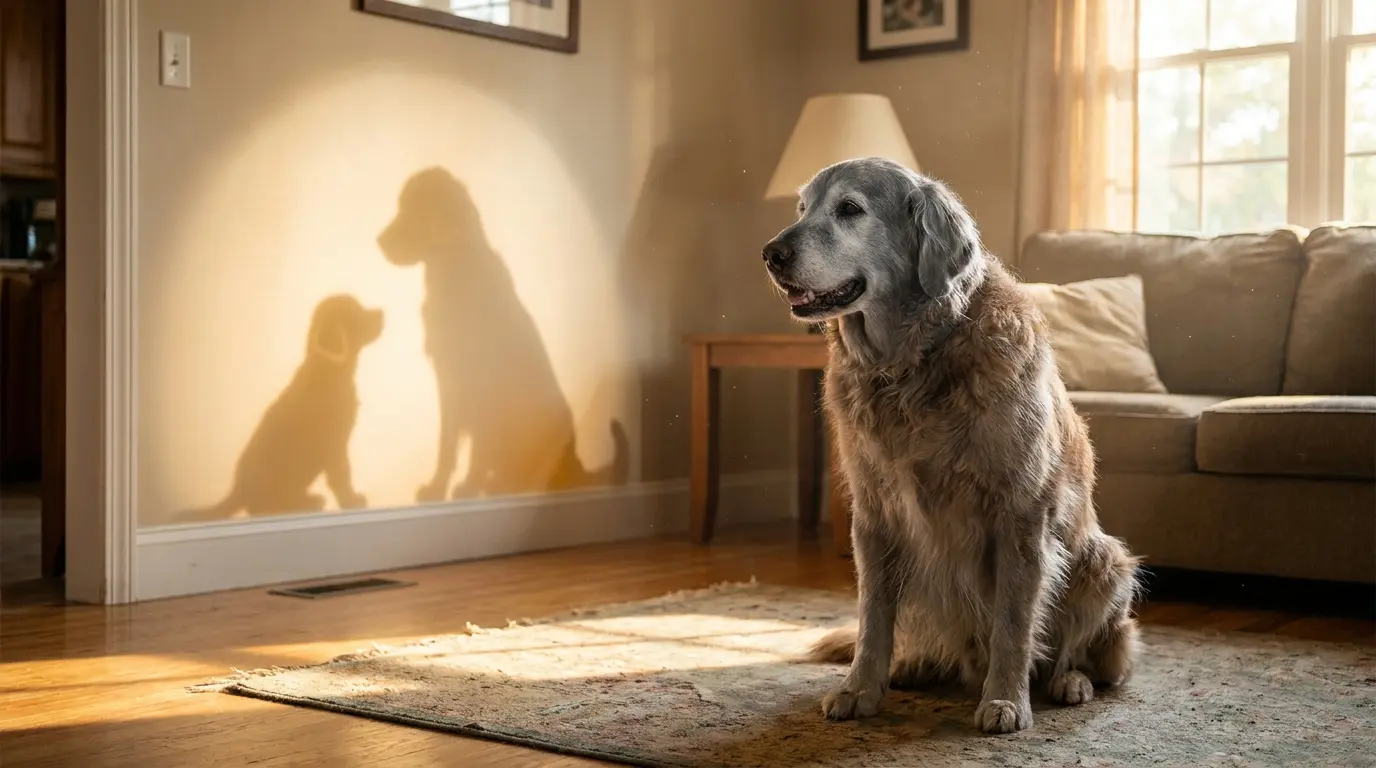
How old is a senior dog? Ask ten people and you’ll probably get ten different answers. Seven. Ten. “Whenever the muzzle goes gray.” None of them are wrong, exactly. They’re just incomplete, because “senior” depends heavily on the dog in front of you, not a single number that applies to every breed equally.
A Great Dane and a Chihuahua don’t age on the same clock. Not even close. This guide breaks down when dogs actually enter their senior years by size and breed, what changes once they get there, and how to spot the early signs before the vet even has to point them out to you. You will come up with an answer that’s truly useful, not a generic “rule of thumb” because you didn’t take into consideration all the things involved in what size and breed of dog your dog is. If you are not sure exactly how old your dog is in human years? Try our Dog Age Calculator
How Old Is a Senior Dog, Really? (It’s Not Just About Years)
Forget the “one dog year equals seven human years” thing. It’s catchy, and it’s also wrong, or at least wildly oversimplified. Real aging in dogs doesn’t move at a fixed rate — it moves fastest early on, then slows. That alone explains why there’s no clean, universal answer to how old is a senior dog.
A one-year-old dog is already roughly equivalent to a human teenager, biologically. By two, closer to a young adult. After that, the math shifts depending heavily on size, and this is where things get genuinely interesting.
Size drives aging speed more than almost anything else. Larger dogs age faster, not slower, despite starting out bigger and seemingly more robust. Their bodies simply wear down quicker — faster cell turnover, more strain on joints carrying that extra mass, a biological cost that comes with growing large fast as a puppy.
So there’s no single answer to what age is a dog considered a senior. There’s a range, and it depends almost entirely on the size category your dog falls into. That’s really the whole point of this guide.

What Age Is a Dog Considered a Senior? By Size and Breed
Here’s the breakdown that actually matters, size category by size category.
| Size Category | Typical Weight | Senior Age |
| Small breeds | Under 20 lbs | 10–12 years |
| Medium breeds | 21–50 lbs | 8–10 years |
| Large breeds | 51–90 lbs | 6–8 years |
| Giant breeds | Over 90 lbs | 5–7 years |
Breakdown of what each category :
Small breeds — think Chihuahuas, Yorkies, Dachshunds — tend to stay spry the longest. Ten or eleven often still means bright eyes and plenty of energy, even if the muzzle’s gone gray.
Medium breeds — Beagles, Cocker Spaniels, Bulldogs — sit right in the middle. Eight tends to be the point where owners start noticing the first real slowdown, though it varies a fair amount within this group.
Large breeds — Labradors, German Shepherds, Golden Retrievers — often surprise owners with how early “senior” arrives. Six can genuinely mean the start of real age-related changes, well before most owners expect it.
Giant breeds — Great Danes, Mastiffs, Irish Wolfhounds — age fastest of all, and unfortunately tend to have the shortest lifespans overall. Five is a real senior age here, not an exaggeration.
A Chihuahua at seven is still solidly middle-aged. A Great Dane at seven is already well into his senior years, sometimes further along than his energy level suggests. Same number of birthdays, completely different biological reality.
Why the gap? Bigger dogs grow faster as puppies, and that rapid growth seems to cost something later. Giant breeds reach their adult size within the first year or two, while a small dog might take most of a year just to hit half his final weight. That accelerated early growth appears to trade off against longevity down the line — researchers don’t fully agree on the exact mechanism, but the pattern itself is well established across breeds.
Mixed breeds land somewhere in between, generally following whichever size category they’re closest to. A 40-pound mixed breed ages more like a medium dog than anything else, regardless of what breeds went into the mix. If you’re ever unsure how old is a senior dog for a mixed-breed pet specifically, weight is a far more reliable guide than guessing at the breed mix.
Signs Your Dog Has Entered Their Senior Years
Age on paper is one thing. What you actually notice day to day is another, and sometimes the two don’t line up perfectly. A dog can technically qualify as senior by the table above while still acting like he’s got years of energy left, or show early signs before the “official” age arrives.
- Slower to rise after resting, or a bit stiffer first thing in the morning
- A grayer muzzle, which often shows up before anything else
- Less enthusiasm for long walks, though still happy for shorter ones
- More naps, deeper sleep, less interest in staying up late
- Occasional confusion in familiar spaces, worth watching if it becomes a pattern
None of these alone confirms your dog’s officially “senior.” But together, especially if a few show up around the same general age range from the table above, it’s a reasonable signal to start paying closer attention. For a much fuller breakdown, our guide on signs your senior dog is in pain covers exactly what to watch for and what actually warrants a vet visit.
It’s also worth noting that these signs don’t always arrive together, or in any particular order. One dog might show the gray muzzle years before slowing down physically. Another might stay sharp mentally well into a stiff, achy old age. There’s no fixed script every dog follows.
Average Life Expectancy by Breed
A quick reference, since “senior age” and “life expectancy” are related but not identical questions. Knowing roughly how long your dog’s breed tends to live puts the senior-age table in better context.
- Chihuahua — 14 to 16 years
- Yorkshire Terrier — 13 to 16 years
- Dachshund — 12 to 16 years
- Beagle — 12 to 15 years
- Cocker Spaniel — 12 to 15 years
- Labrador Retriever — 10 to 12 years
- Golden Retriever — 10 to 12 years
- German Shepherd — 9 to 13 years
- Boxer — 9 to 11 years
- Bulldog — 8 to 10 years
- Rottweiler — 8 to 10 years
- Great Dane — 7 to 10 years
- Mastiff — 6 to 10 years
- Irish Wolfhound — 6 to 8 years
These are ranges, not guarantees. Genetics, weight, diet, and general care all shift a dog toward the higher or lower end. For breed-specific data and more detail than a general list like this can cover, the American Kennel Club publishes reliable breed profiles worth checking against your own dog’s breed.
Notice the pattern here, too. It lines up closely with the size table above — smaller breeds cluster toward longer lifespans, giant breeds toward shorter ones, with plenty of individual variation inside each group depending on genetics and care.
What Changes Once Your Dog Is Considered a Senior
A few practical shifts, once your dog crosses into senior territory, whatever age that ends up being for his size.
Vet visits typically move to twice a year instead of once. Catching problems early matters more now, and a lot can change in six months that wouldn’t have mattered as much at three. Some vets recommend this shift even slightly before the official senior age hits, especially for large and giant breeds where changes tend to arrive fast.
Diet needs adjusting. Metabolism slows, joint support becomes more relevant, and senior dog nutrition needs shift in ways that a standard adult formula doesn’t fully address anymore. This is usually one of the easier, most impactful changes to make, and it doesn’t require waiting for a vet appointment to start.
Bloodwork becomes more routine, giving your vet a baseline to compare against as your dog continues aging, rather than only reacting once something’s visibly wrong. Catching a slow trend in bloodwork often beats waiting for symptoms to show up on their own.
Weight monitoring gets more important. Weight adds to the joint stresses already placed on the joints by ageing and can be more easily gained quietly when the level of activity naturally reduces. While this may seem like a small amount on a large dog, let’s face it, it’s a lot for a small dog.
Watching for joint pain and arthritis becomes a genuine priority, since it’s one of the most common issues senior dogs face regardless of breed.
None of these changes happen overnight, and none of them require overhauling everything about how you care for your dog. They’re gradual shifts, mostly, things your vet will likely bring up naturally at your next appointment once your dog crosses into the age range that fits his size.
Caring for Your Dog Through Each Life Stage
Every stage asks something a little different of you as an owner. Understanding where your dog sits right now, using everything covered above, makes it much easier to know what he actually needs next.
Puppyhood is about training and growth. Adulthood is mostly maintenance — routine, exercise, staying on top of preventive care. The senior years ask for more attentiveness. Watching more closely, adjusting more often, catching small changes before they become bigger problems.
That doesn’t mean it’s harder in some dramatic sense. It just means the questions shift. Instead of “how do I train this,” it becomes “how do I keep him comfortable,” and “what’s normal aging versus something worth a vet visit.” Cognitive changes, in particular, deserve their own attention — our guide on cognitive decline covers what to watch for as dogs move deeper into their senior years.
Most owners find the transition happens gradually enough that it doesn’t feel jarring, more like slowly recalibrating expectations than facing one big sudden change. A little more patience here, a little more observation there, and the adjustment tends to feel manageable rather than overwhelming.
Frequently Asked Questions
What age is considered senior for dogs of mixed breed? Go by size and weight rather than trying to guess breed percentages. A 60-pound mixed breed ages more like a large breed regardless of what’s in the genetic mix, and weight is a far more practical guide than trying to untangle ancestry.
Does a dog’s activity level affect when they become a senior? Not really, no. Aging is largely biological and size-driven rather than activity-driven. An active senior dog is still a senior dog, just one who’s staying engaged despite the changes happening underneath. Activity level says more about fitness than about biological age.
Can a dog “become senior” earlier due to health conditions? Sometimes, functionally. A dog with an early chronic condition might need senior-level care and monitoring sooner than his age or size alone would suggest, even if he’s not technically in the typical senior range yet. Your vet’s judgment matters more than the calendar in cases like this.
What age is a dog considered a senior for insurance or vet purposes? Most vets and insurers use roughly the same size-based ranges covered here, though some default to a flat seven-years mark for simplicity, especially with mixed breeds or unclear weight history. It’s worth asking directly if this affects a specific policy or wellness plan.
Is 10 old for a dog? Depends entirely on size. For a small breed, ten is solidly senior but often still has several good years ahead. For a giant breed, ten is genuinely elderly, well past the average life expectancy for many giant breeds listed above.
A Final Note
No one can give you one single age at which your dog becomes a “senior”. It’s more about paying attention to your particular dog, your particular size and making adjustments when the signs present themselves, not on his day of birth. Most dogs will alert you well in advance if you know what to look out for.
The size and breed tables are not final, but are a beginning point. There are dogs that have normal aging. Then there are others who surprise you, who are already very spry well beyond their years, or requiring additional care a bit younger than they are. In any case, the end goal is the same: focus, tweak as necessary, and allow your veterinarian to complete the outline the general guidelines can’t.


