
Grooming Tips for Senior Dogs: A Gentle Routine
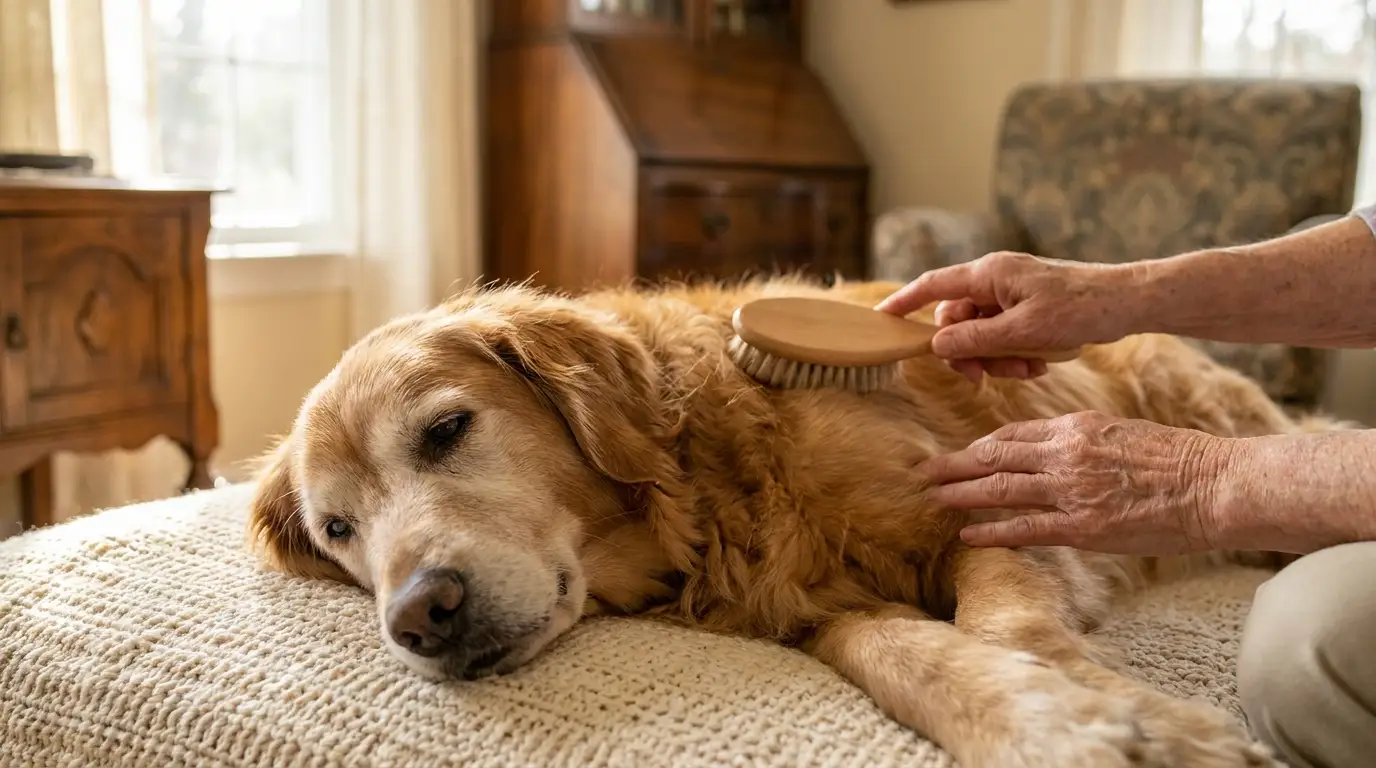
How often should you groom your dog once he’s a senior? More often for some things, less often for others, and the answer genuinely shifts as your dog ages. Grooming stops being purely cosmetic at this stage. It becomes real comfort, and honestly, a decent early-warning system for health issues you might otherwise miss.
A senior dog’s skin gets more sensitive. Joints get stiffer. Standing still for a bath isn’t as easy as it used to be. None of that means grooming becomes optional, it just means the routine needs to adjust. This guide covers exactly how often to groom, how to make bath time easier on aging joints, and how to keep going even if your dog has arthritis or mobility limits.
How Often Should You Groom a Senior Dog
There’s no single number to answer how often should you groom your dog once age enters the picture, since coat type changes the answer considerably.
Short-coated breeds generally do fine with a weekly brush and a bath every 4 to 6 weeks. Long or double-coated breeds need brushing 2 to 3 times a week, sometimes daily during seasonal shedding, with baths roughly every 4 weeks depending on how dirty or oily the coat gets.
Nails are the exception to the “less as they age” pattern most owners expect. Senior dog grooming tips almost always mention this specifically, because reduced activity means nails wear down naturally less than they used to, so trims often need to happen more frequently, not less.
The honest rule of thumb for grooming older dogs: keep the same basic schedule you always used, but expect each session to take longer and require more patience than it did five years ago.
Adjusting Bath Time for an Aging Dog
Bathing an older dog well comes down to a handful of small adjustments that add up to a much less stressful experience for both of you.
- Use a non-slip mat in the tub or shower, since wet, smooth surfaces are genuinely dangerous for a dog with weaker joints or poor balance
- Warm the water slightly more than you might for a younger dog, since older bodies lose heat faster and cold water is more uncomfortable now
- Keep sessions shorter than they used to be, splitting a full bath into two shorter sessions if your dog tires or gets anxious partway through
- Support your dog’s chest or hindquarters while he stands, rather than expecting him to hold a full standing position unassisted for the whole bath
- Dry thoroughly afterward, since a damp senior dog left to air-dry is at real risk of getting chilled, especially in cooler weather
Brushing Tips for Sensitive, Aging Skin
Brushing does double duty for a senior dog: coat maintenance and a genuine hands-on health check, all in one.
Switch to a softer-bristle brush if you haven’t already. Aging skin bruises and irritates more easily, and a brush that felt fine at five can feel genuinely uncomfortable at twelve.
Use shorter, gentler strokes rather than the vigorous brushing a younger dog’s coat might tolerate. This matters even more for a dog dealing with joint pain and arthritis, since firm pressure near sore joints can turn a routine brush into something he starts dreading.
Watch for dog scratching after grooming, which sometimes signals a brush that’s too rough, a product reaction, or skin that’s simply more reactive than it used to be. If it happens consistently, it’s worth mentioning to your vet rather than just switching brushes and hoping.
Every brushing session is also a chance to catch lumps, dry patches, or tender spots early. Run your hands over your dog’s whole body, not just where the brush goes, since this is exactly the kind of hands-on time that reveals signs your senior dog is in pain before they become obvious any other way. A lump that’s just a fatty deposit is worth knowing about too.
Nail Trims and Paw Care
This is the one area where senior dogs often need more attention, not less, which surprises a lot of owners.
Less activity means less natural wear on nails from walking on pavement or rough ground. Nails that used to stay reasonably short on their own now grow long enough to affect gait and comfort if left unchecked.
Overgrown nails change how a dog stands and walks, sometimes pushing toes into unnatural positions that add real strain to already-aging joints. Trim every 3 to 4 weeks for most senior dogs, more often if you notice clicking on hard floors between sessions, which is usually the first sign nails have grown past a comfortable length.
Check paw pads during nail trims too. Cracking, dryness, or unusual sensitivity are all worth noting, especially in a dog spending more time on hard flooring, where non-slip traction aids can help protect both paws and confidence.
Grooming a Dog with Arthritis or Mobility Issues
Grooming a dog with arthritis takes real patience, but it’s absolutely still manageable with the right adjustments, and there’s no reason to give up on it entirely.
Break sessions into shorter chunks rather than one long grooming marathon. Five minutes now, five minutes later, beats forcing a stiff, uncomfortable dog to hold still for twenty straight minutes.
Groom on a non-slip surface, whether that’s a rubber mat on a table or simply on the floor where he’s already comfortable, rather than requiring him to balance on a slick grooming table the whole time.
Let him lie down for brushing when possible, instead of insisting he stand throughout. Comfort matters more than technique here, and a relaxed dog lying down often tolerates far more than one straining to stay upright and steady.
Have a supportive orthopedic bed ready for right after grooming, since a bath or brushing session can leave a senior dog genuinely tired, and settling into real comfort afterward makes the whole experience feel less taxing overall for both of you.
When to Use a Professional Groomer vs. DIY at Home
Both have a place, and the right call often depends on your specific dog’s needs rather than one being universally better.
DIY at home works well for dogs who tolerate handling calmly and don’t need complex trims. It’s gentler on an anxious senior dog, and you control the pace entirely.
A professional groomer makes more sense for complicated coat types, dogs who need sedation grooming due to severe anxiety or mobility limitations, or simply when your own patience or physical ability to manage a squirming (or resistant) dog runs short. There’s no shame in outsourcing this once it’s become genuinely difficult at home.
For general grooming standards by breed, the American Kennel Club offers helpful guidance, and veterinary dermatology resources are worth checking if your senior dog’s skin issues seem to go beyond normal aging.
Frequently Asked Questions
How often should you groom your dog if he has a thick double coat? Brushing 2 to 3 times weekly, more during seasonal shedding, with baths roughly monthly. The answer to how often should you groom your dog shifts slightly for senior double-coated dogs, since their coat can mat more easily as they age.
Is bathing an older dog different from bathing a younger one? Yes, mainly in pacing and support. Warmer water, shorter sessions, non-slip footing, and thorough drying all matter more than they did when your dog was younger and steadier on his feet.
My senior dog hates being groomed now. What changed? Often pain, not personality. A dog who used to tolerate grooming easily may now be dealing with sore joints or sensitive skin, making the whole experience genuinely uncomfortable rather than just tedious.
How do I know if grooming is too much for my arthritic dog? Watch for trembling, trying to move away repeatedly, or vocalizing during handling. These are signs to shorten sessions immediately rather than push through to finish.
Should I switch to a professional groomer as my dog ages? Not necessarily, but it’s worth considering if home sessions have become a struggle for either of you. There’s no downside to trying a professional visit and seeing how your dog responds.
A Final Note
Grooming a senior dog well isn’t about doing more, it’s about doing it more gently and paying closer attention while you’re at it. Whatever the right answer to how often should you groom your dog turns out to be for your specific coat type and dog, a slower pace, softer tools, and a little extra patience turn what could feel like a chore into genuine bonding time, right up through the last of his golden years.


