What Is Sundowning in Dogs? Evening Confusion in Senior Dogs
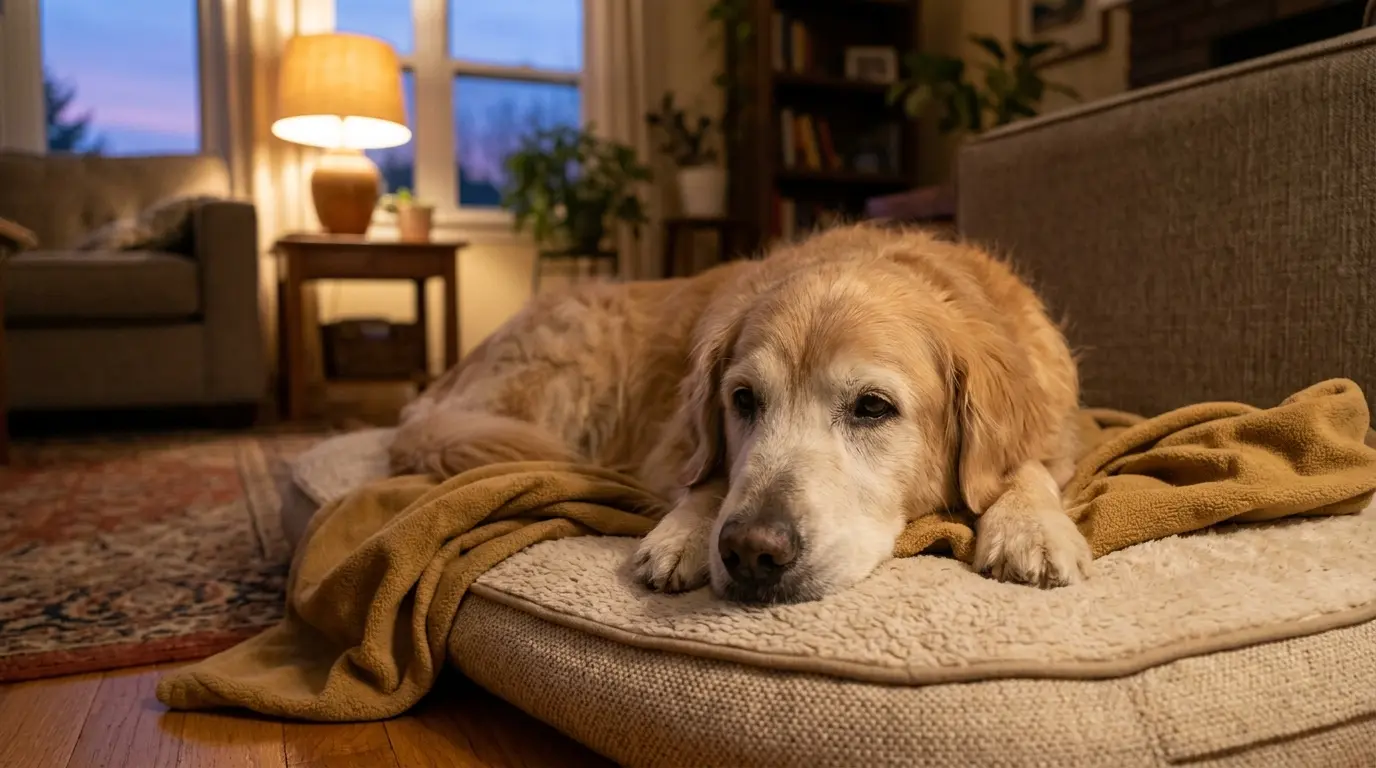
What is sundowning in dogs? It means a dog seems more lost, restless or anxious in the late afternoon or evening. Vets may see this with canine cognitive dysfunction, or dog dementia. But pacing at dusk alone does not prove a dog has it.
Perhaps your dog naps peacefully after lunch, then wanders the hallway as daylight fades. They stare at a wall, pause behind a chair or seem unsure where their bed is. Many owners notice this change and wonder what happened between breakfast and bedtime.
That uncertainty is hard. This guide explains what to observe, what else could cause it and how to make evenings easier while you seek advice from your vet.
What Is Sundowning in Dogs?
Sundowning describes a time-of-day pattern rather than a diagnosis on its own. You may also see it called sundowners syndrome in dogs. The key point is that the dog seems more lost or upset as night draws near.
Cornell’s veterinary behavior resource on senior dog dementia and nighttime changes notes that dogs with dementia may roam or seem worse at night. It does not mean every unsettled older dog has dementia.
Our broader dog dementia guide explains changes beyond bedtime. Here, the focus is the evening pattern: when it starts, what your dog does and whether anything helps them settle.
Signs of Sundowning
Watch for changes from your dog’s usual behavior, especially when several appear together:
- Repeated trips along the same hallway, without settling anywhere.
- Staring at walls or into space.
- Getting stuck in corners or behind furniture.
- Whining, barking or seeming restless during the night.
- Sleeping through much of the day, then staying awake overnight.
- Seeming not to recognize familiar rooms or people.
These signs can occur with dementia. But you cannot use this list to tell for sure what is wrong. A dog pacing at night may also need the toilet or struggle to lie down comfortably.
Note when each spell starts, how long it lasts and where your dog is. A brief video can show your vet what “seems lost” actually looks like, as long as you help your dog first.
For example, a useful note might read: “Tuesday, after dinner: walked between the sofa and door, went outside, then rested.” Log the calm nights too. Your vet needs to see the full picture, not just the hard parts.
Why Does It Happen?
Changes in an aging brain can affect what a dog knows and when they sleep. With canine cognitive dysfunction, evening confusion may come with changes to the circadian rhythm. This is the body’s daily sleep and wake pattern.
Poor sight can make a dim room hard to cross. A dog who cannot hear well may not know you are near. Pain can break up sleep or make it hard to rest. That does not mean pain must get worse when the sun sets.
Fear and worry can play a part, too. Note whether restlessness starts when the house gets busy or quiet, lights go off or a familiar person leaves. Our senior dog anxiety guide has more on this, but the timing alone cannot tell you the cause.
Sundowning vs. Other Causes
If your dog is restless at night, old age is context, not an explanation. Ask your vet about pain, poor sight or hearing, fear, bladder problems and kidney disease. Some drugs can change sleep or behavior, too.
Does your dog need more toilet trips or drink more water? Do they stand beside the bed but avoid lying down? Bring these details, plus all drug and supplement names, to the appointment.
Review the signs your senior dog is in pain if movement or touch seems uncomfortable. If appetite has changed too, our guide to why is my old dog not eating covers this; tell your vet rather than assuming it belongs to sundowning.
Sudden confusion needs a prompt call to your vet, even if it starts at dusk. Seek emergency care for collapse, difficulty breathing or an ongoing seizure. Even if you know your dog’s usual pattern, do not brush off a sudden, severe change.
How to Help Your Dog Through the Evening
Start small while your vet looks for the cause. Try changes you can undo. These comfort measures are not proven cures for sundowning in senior dogs.
A Predictable Evening Routine
Keep meals, toilet trips and bedtime in the same order. For example, offer dinner at the usual time, take a quiet toilet break, then settle in the same room together.
Write the routine on the fridge so each person knows what to do. Keep the steps short and clear.
Leave room for extra toilet breaks. If pacing starts, check basic needs before sending your dog back to bed. Avoid scolding accidents or confusion.
Lighting and Environment
Try switching on soft, steady lights before the room becomes dark. Place a night light along the route between the bed, water bowl and exit, with cables out of reach.
Look at the route from your dog’s height. A bright reflection, deep shadow or chair pushed into a familiar gap may deserve attention. Keep key furniture and bowls in their usual positions.
Watch how your dog reacts. More light is not always best. If a change seems to upset your dog, undo it and record what happened for your vet.
Calming Activities
Offer quiet company without forcing contact. Turn the TV down and let your dog choose whether to rest beside you or farther away.
If they enjoy gentle stroking, keep it light. Ask your vet before trying massage around sore joints or the spine; stop if your dog pulls away, stiffens or objects.
Save games and puzzles for earlier in the day. Try an easy food puzzle using their usual food allowance, or let them sniff at their own pace. Stop if the task seems too hard or your dog gets upset.
Daytime Exercise and Sleep Balance
Ask your vet how much your dog should do, more so if they struggle to walk or breathe. Try short, easy trips. One long, hard walk to wear them out may be too much.
Make time for daylight, sniffing and quiet play. Let your dog rest in between. Do not keep a tired dog awake all day in the hope of forcing sleep at night.
Note how your dog seems after each walk or game. “Rested after a short garden visit” tells your vet more than “walks work” or “walks don’t help”.
Safety Proofing Pacing Routes
Walk the route your dog actually uses. Remove loose objects, secure rugs and block access to stairs, pools and narrow gaps where they could become trapped.
Make sure your dog can reach water and a soft bed. Avoid moving every piece of furniture at once; fix the risks, but keep the things your dog knows in place where you can.
Do not force a distressed dog into a crate they dislike. Ask your vet how to set up a safe place to rest if they keep wandering or cannot settle. If your dog stays upset, ask for more help. Do not just shut them in a smaller space.
Vet Options and Treatment
Start with two questions: “What is sundowning in dogs, and how do vets assess it?” and “What else could explain my dog’s evenings?” Bring dates, videos and a list of what has changed.
Your vet may check your dog’s body, sight and hearing, and look for pain. They may test blood and urine, too. They may suggest more tests or a specialist if they find cause for concern.
VCA’s veterinary behavior guidance on cognitive dysfunction looks at both health and behavior when planning care. There is no single plan that fits every dog.
Ask about foods made to support brain health, and whether they suit your dog’s needs. Ask about supplements, too. Some have little research behind them, and a mix of products may not be safe. Our joint supplements guide concerns joint care, not treatment for sundowning.
If your vet diagnoses dementia, they may discuss a drug called selegiline, where it is available and suits your dog. They may also discuss treatment for pain or anxiety. Do not add human sleep aids, melatonin or leftover medication unless your vet tells you to.
It is worth asking about medicine when distress or lost sleep makes life hard. You do not need to wait until you are worn out. Ask what improvement to watch for, which side effects need a call and when to review the plan. There is no promise that it will work.
Caring for Yourself Too
Broken sleep can make ordinary decisions feel heavy. If possible, share evening duties with someone your dog knows, and agree who takes the dog out and who gets to sleep.
Keep your notes short so they do not feel like one more chore: settling time, nighttime waking and anything unusual. You do not need a neat chart to explain that nights are becoming difficult.
Tell your vet how the situation affects both of you. If comfort remains poor, use a quality of life discussion to talk about help and next steps. Asking for help is part of caring for your dog.
Frequently Asked Questions
What is sundowning in dogs: is it the same as dementia?
No: sundowning means signs get worse at a certain time. Dementia can affect more parts of a dog’s life. They can overlap, but a restless evening does not prove the cause. Your vet needs to check for other causes.
Does sundowning mean my dog is in pain?
Not always. Pain can cause some of the same signs, and dogs with dementia can have pain too. Tell your vet if your dog seems stiff, pants at rest, finds it hard to lie down or flinches at touch. Do not assume confusion rules pain out.
Can dogs have sundowners without showing signs all day?
Owners may notice changes mainly in the evening. Record daytime behavior too, such as sleep, time with you and toilet trips. This gives your vet more to work with than a note about bedtime alone.
What can I do for a senior dog pacing at night?
Check whether they need a toilet break, water or help reaching their bed. Keep the area calm and clear of hazards, and see your vet if it keeps happening. Sudden or severe changes need prompt advice.
Can sundowning in dogs be cured?
The outlook depends on the cause; there is no known cure for dog dementia. Your vet may still have ways to help with the signs. If the cause is something else, ask what to expect. Do not trust claims of a sure cure.
You do not have to solve every unsettled evening alone. Start with a safe space, a few clear observations and a conversation with your vet. Your dog still deserves familiar comforts, and you deserve practical support as you work out what comes next.
AI wrote this article using sources from vets. Senior Dogs Guide is not a vet practice. No vet has reviewed or endorsed this article. Ask your own vet for advice about your dog.