When Is It Time? Assessing Your Senior Dog’s Quality of Life
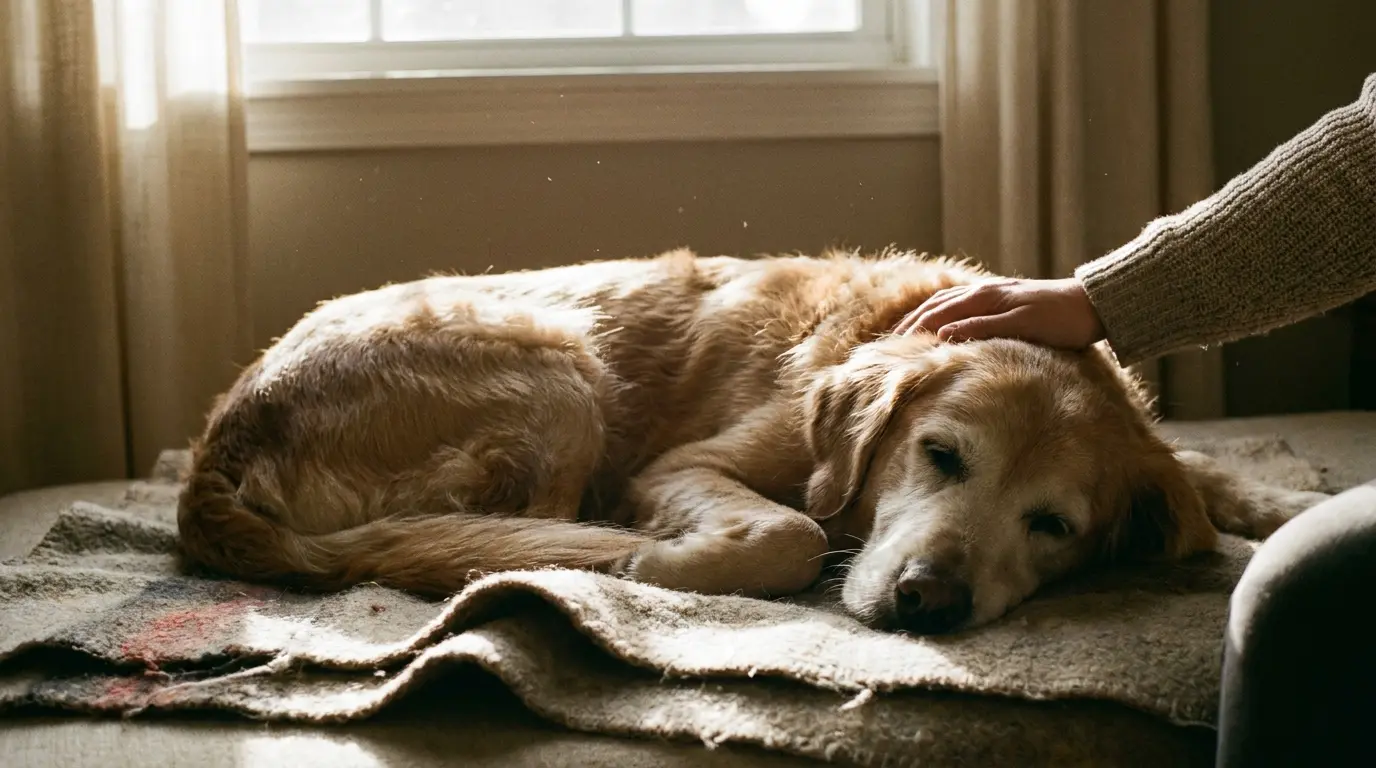
If you’re asking when should you euthanize an old dog, you’re already doing the hardest, most loving part of this. You’re paying attention. You’re not looking away from something difficult, and that matters more than you probably feel like it does right now. Just landing on this page, at this moment, says something about the kind of owner you’ve been all along.
There’s no perfect formula for this decision, and anyone who tells you there is one hasn’t actually lived through it. But there is a way to think about when to euthanize your dog that’s clearer than guesswork and gentler than panic. This guide walks through a simple quality-of-life framework, the signs worth watching for, how to talk to your vet, and how to make whatever time is left as comfortable as possible — for your dog, and for you.

Why This Decision Is So Hard
Nobody feels ready for this. Not owners who’ve had months of warning, and not owners caught off guard by something sudden. The uncertainty itself is part of what makes it so heavy, and no amount of preparation fully removes that.
Guilt shows up a lot here, in both directions. Guilt about deciding “too soon,” worried you’re taking away time your dog still wanted. Regret about waiting “too long,” worried your dog suffered while you hoped for one more good week. Both fears are normal. Neither means you’re doing this wrong, and most owners who’ve been through it will tell you the guilt fades faster than you expect once the decision is actually behind you.
You know your dog better than any checklist ever could. That’s not a contradiction of the framework below — it’s the reason the framework exists. It gives shape to what you’re already sensing, so you can trust it a little more. If you’ve been watching closely for signs your senior dog is in pain already, you’re further along in this process than you might realize.
If there’s a family involved, this decision doesn’t have to rest on one person’s shoulders alone. Different family members sometimes see different things, or reach readiness at different times, and that’s okay too. Gently sharing what you’re each noticing, rather than deciding in isolation, tends to make the whole process feel less lonely.

A Simple Quality of Life Framework
Vets and hospice professionals often use a version of this, sometimes called the HHHHHMM scale. It sounds clinical written out like that, so here’s the warm, plain-language version instead, meant to be read slowly rather than scored like a test.
Comfort & Pain Level
Is your dog’s pain being managed well, most of the time? A few uncomfortable moments in an otherwise okay week is different from pain that seems constant despite medication. This is worth revisiting with your vet regularly, not deciding alone from home, since medication that worked well a month ago sometimes needs adjusting as things progress.
Appetite & Hydration
Is your dog still eating and drinking, even if less than before, or with some coaxing? A dog who’s genuinely lost interest in food and water, day after day rather than just an off afternoon, is telling you something important about how he’s feeling overall.
Mobility
Can your dog still get up, move around, and reach the places that matter to him — his bed, the yard, you — with some help if needed? Struggling occasionally is different from being unable to do this at all, even with assistance.
Happiness & Engagement
Does your dog still show interest in the things he used to enjoy? A wag at your voice, attention toward a favorite toy, pleasure in a gentle pet. Even small signs of engagement count for something here, and they’re often the clearest window into how he’s actually experiencing his days.
More Good Days Than Bad
This is the one many vets weigh most heavily, and it’s the simplest to actually track. Look honestly at the last week or two. If good days still outnumber the hard ones, there’s often still time. Once bad days start outnumbering good ones consistently, that’s usually the clearest signal of all, clearer even than any single symptom on its own.
None of these need to be perfect to answer yes. The point isn’t a passing grade. It’s an honest, ongoing conversation with yourself about your specific dog, revisited every few days rather than decided once and forgotten.
Signs Your Dog May Be Nearing the End
If you’re wondering what are signs my dog is dying, here’s what tends to show up, gently and factually, without the goal of frightening you.
- Significant, ongoing loss of appetite, beyond a picky day or two
- Extreme lethargy, sleeping most of the day with little interest in waking for things he used to enjoy
- Difficulty breathing, or breathing that seems labored even at rest
- Loss of bladder or bowel control that wasn’t there before
- Withdrawal from family, seeking isolation rather than closeness
- Confusion or disorientation that’s new or worsening, sometimes tied to cognitive decline
None of these alone means it’s time immediately. Together, and especially if they’re consistent rather than occasional, they’re worth a direct conversation with your vet soon rather than later. This is often exactly the point where owners start seriously asking when should you euthanize an old dog, rather than just wondering quietly to themselves. Trust that instinct to ask, even if part of you is hoping the answer is “not yet.”
Talking to Your Vet About This Decision
Your vet has seen this many times, and most are genuinely glad to help carry some of this weight with you. Many owners find that simply asking their vet directly when should you euthanize an old dog, in plain words like that, opens up a far more useful conversation than tiptoeing around the topic.
Ask directly: is my dog’s pain well-managed right now, and realistically, for how much longer can that likely continue? Ask what decline typically looks like for your dog’s specific condition, so you have a sense of what’s coming rather than guessing.
Question about palliative or hospice care too. Many vets, and dedicated in-home hospice services, can help maximize comfort for however much time remains, without rushing a decision before you’re ready.
This conversation isn’t just about deciding a date. It’s genuinely one of the most useful things you can do, since your vet can see things clinically that are hard to judge from inside the situation you’re in every day. Bring a short list of what you’ve noticed, even a rough one, so nothing important gets lost in the moment.
How to Comfort Your Dog Through Their Final Days
Whatever time is left, there’s a lot you can do to make it good, and none of it requires anything elaborate.
Keep his favorite things close. A well-worn blanket, a beloved toy, whatever’s always meant comfort to him specifically, even if it’s a little ragged by now.
Offer his favorite foods, even if they’re not part of his usual diet. This isn’t the time to worry about a perfectly balanced meal. If he wants scrambled eggs or a piece of chicken, let him have it.
Keep the environment calm. Familiar sounds, familiar people, less noise and chaos than usual. Predictability is soothing, even now, maybe especially now.
Stay close, physically, as much as feels right for both of you. Your presence is one of the most comforting things you can offer, and it costs nothing but time.
Don’t feel obligated to make it dramatic or perfect. A quiet, ordinary day with the people and things he loves is genuinely enough, and most dogs would choose exactly that over anything grander.
If you have other pets in the home, know that they may also sense the change happening. A companion animal sometimes stays closer than usual, or seems subdued in a way that mirrors the household’s mood. There’s no need to manage this actively, just an awareness that you may not be the only one grieving quietly in the background.
It’s Okay to Grieve Before, During, and After
Anticipatory grief is real. You might find yourself mourning before anything’s actually happened yet, and that’s not dramatic or premature. It’s just love, arriving early because it has to, showing up ahead of schedule the way it sometimes does.
There’s no correct way to feel during this, either. Some owners feel mostly sad. Some feel a strange, guilty relief once the decision is finally made. . All of it is normal, and none of it says anything bad about how much you loved him.
Afterward, give yourself the same patience you’d give a friend going through this. There’s no timeline you’re supposed to be following, and grief for a dog is every bit as real as grief for any other loved one, even if the world around you doesn’t always treat it that way. Some people find comfort in a small ritual, a walk somewhere meaningful, a photo left out, a favorite toy kept close for a while longer. There’s no wrong way to remember him.
Frequently Asked Questions
When should you euthanize an old dog — is there a clear right moment? Not a single perfect moment, no, but the quality-of-life framework above genuinely helps clarify it. Most owners describe eventually reaching a quiet certainty, even if the days leading up to it felt uncertain, and that certainty is usually more reliable than trying to pin down an exact “right” day in advance.
How to comfort a dying dog if I don’t know how much time is left? Focus on today rather than the unknown timeline. Comfort, familiar routine, and closeness matter regardless of whether it’s days or weeks, and none of that effort is wasted either way, even if it turns out to be more time than you expected.
Is it normal to feel relief alongside grief? Yes, very much so. Relief that suffering has ended doesn’t mean you loved your dog any less. The two feelings coexist for a lot of owners, and neither cancels out the other, even though it can feel confusing to hold both at once.
Should I be present during euthanasia? This is a deeply personal choice, and there’s no right answer. Many owners find comfort in being there. Others find it too difficult, and that’s okay too — your dog won’t feel loved any less either way, and either choice comes from the same place of care.
What about the cost of end-of-life care? It’s a fair thing to think about alongside everything else, and worth planning for ahead of time where you can, even though it can feel like an uncomfortable thing to consider during an already hard time. Our guide on the cost of end-of-life care covers what to realistically expect.
A Final Note
There’s no version of this that doesn’t hurt. But making this decision from a place of love and honest attention, rather than panic or guesswork, is one of the last, quiet gifts you can give your dog. If you’ve been carrying the question of when should you euthanize an old dog for a while now, know that the care behind that question is itself a form of love. You’re doing this because you love him. That’s really the whole story, and it’s enough.
Whatever you decide, and whenever you decide it, you’re not doing this alone. Vets, hospice professionals, and other owners who’ve walked this exact road are there if you need them, and there’s no shame in leaning on any of them.
For further support, both the American Veterinary Medical Association and Lap of Love, an in-home hospice and euthanasia service, offer compassionate resources if you’d like more guidance through this.