
Best Non-Slip Socks & Traction Aids for Senior Dogs
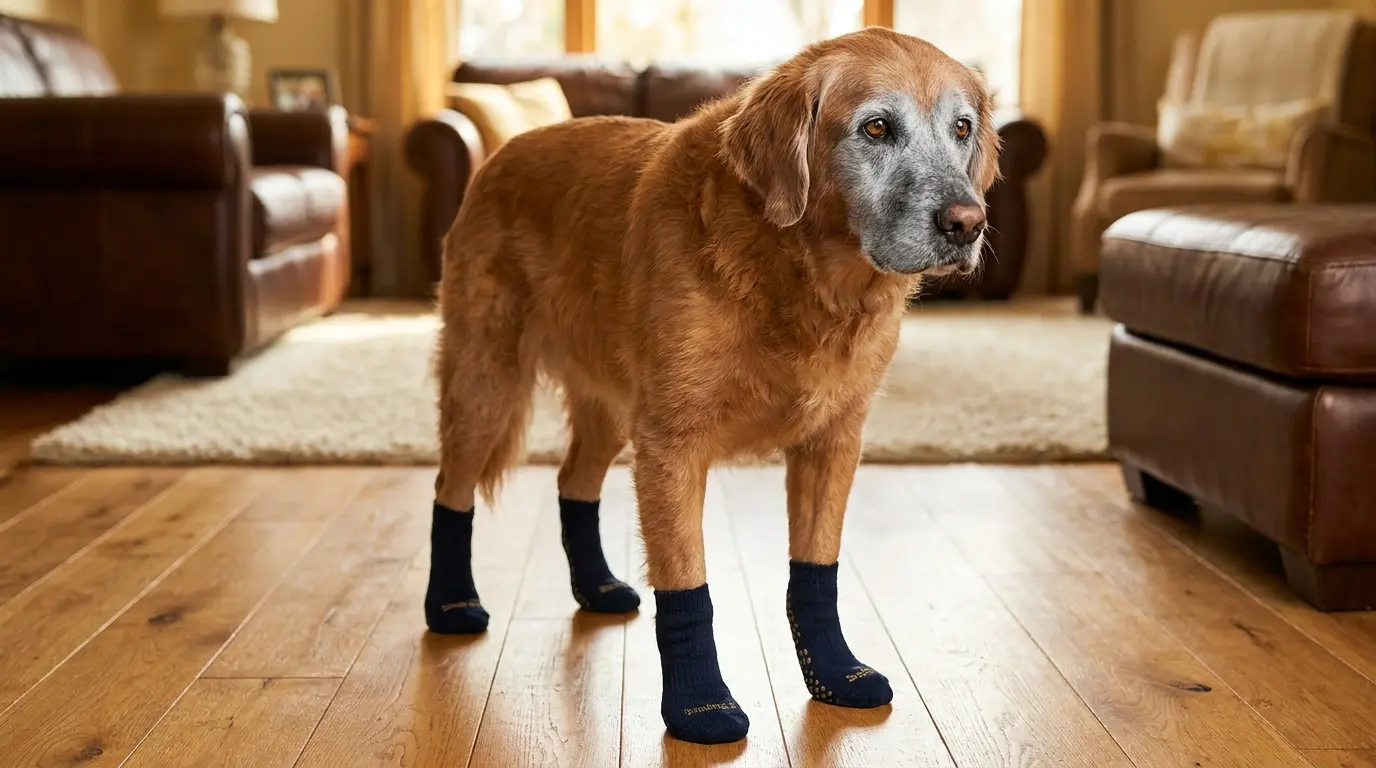
Dog grip socks solve a problem most owners don’t notice until it’s already happening: a senior dog sliding, hesitating, or flat-out refusing to cross a hardwood floor he used to walk across without a second thought. Hardwood and tile offer almost nothing for aging paws to grip onto, and that lack of traction shows up fast once a dog’s muscles and joints aren’t what they used to be.
This guide covers why traction becomes such a big deal for older dogs, the different types of aids worth knowing about, what actually makes a good pair of dog grip socks, some well-reviewed options, and how to get a stubborn dog to actually wear them.
Why Senior Dogs Need Extra Traction
Weaker muscles change everything about how a dog moves across a slick floor. A younger dog compensates for a slip almost instantly. A senior dog, especially one dealing with joint pain and arthritis, often can’t recover that quickly, and one bad slip can genuinely spook a dog for weeks afterward. Confidence, once lost this way, takes real time to rebuild.
Hardwood and tile are the worst offenders. Carpet and grass give paws something to grab. Smooth flooring gives them nothing, and dogs know it — you’ll often see a senior dog pause at the edge of a hardwood room, clearly deciding whether to commit. Some will detour around an entire room rather than cross it directly.
Here’s the part that compounds the problem. Once a dog associates a floor with slipping, he starts avoiding it. Less movement, less confidence, sometimes a real drop in overall activity level. What started as a traction issue turns into something closer to reduced mobility overall, purely from avoidance rather than any actual physical decline.
Types of Traction Aids
Not every solution works for every dog or every house. Here’s the rundown.
Grip Socks
Fabric or rubberized socks that slip over a dog’s paws, providing a textured sole for grip on hard flooring. Easy to put on, reusable, and genuinely effective on smooth surfaces. The catch: some dogs hate wearing anything on their feet at first, and getting past that initial resistance takes a bit of patience.
Paw Wax or Balm
A wax-based product applied directly to paw pads, adding grip without covering the paw entirely. No adjustment period needed since there’s nothing to get used to wearing, which makes it a good first thing to try. Downside — it wears off within hours and needs reapplying regularly, sometimes multiple times a day for an active dog.
Non-Slip Rugs and Runners
Runners placed along frequently walked paths turn a slippery hallway into a safe one, no paw product required. Doesn’t help everywhere, though — kitchens, bathrooms, and open living rooms are harder to fully cover with rugs alone, and gaps between runners can still catch a dog off guard.
Toe Grips
Small rubber rings that fit around individual nails, adding grip at the point of contact. Precise and long-lasting once fitted correctly, but sizing each nail takes more effort upfront than slipping on a sock, and nails that are recently trimmed can affect the fit.
Signs Your Dog Might Need Traction Help
A few tells are worth watching for before assuming your dog is fine on hard flooring.
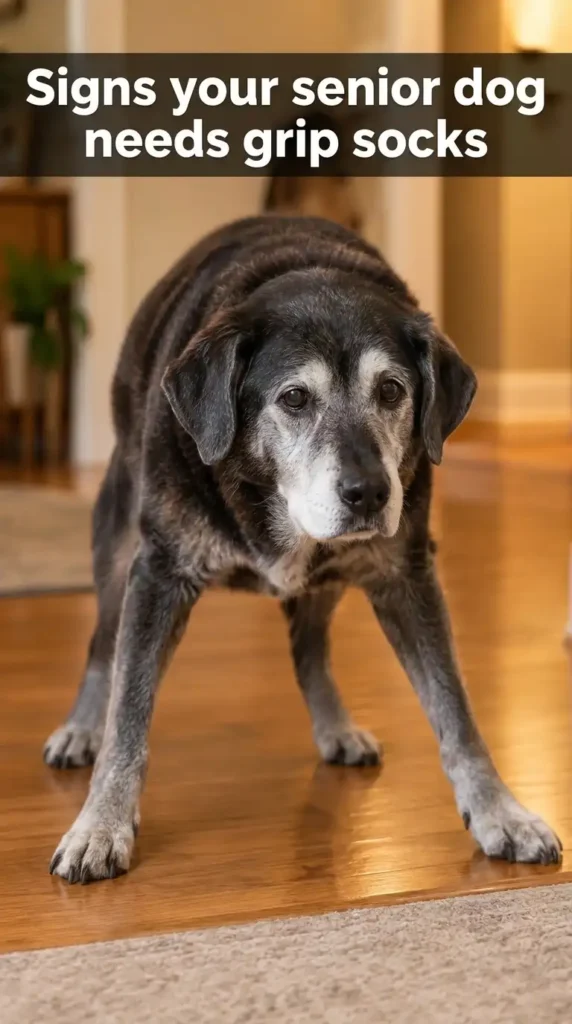
- Splayed legs or a wide stance when standing on hardwood or tile
- Hesitating or refusing to cross certain rooms
- A visible slip, even a small one, followed by reluctance to try again
- Nails clicking loudly and rapidly as he scrambles for grip
- Choosing longer routes around a room rather than crossing directly
Catching this early, before avoidance fully sets in, makes the whole traction-fixing process considerably easier.
What to Look for in Dog Grip Socks
Not all socks perform the same on an actual hardwood floor, whatever the packaging claims. A few specific details separate a genuinely useful pair from something that just looks the part in photos.
- Rubberized sole with a real grip pattern — smooth rubber alone isn’t enough; look for raised texture or dots specifically designed for traction on smooth surfaces
- Breathable material — paws overheat fast in poor-quality fabric, especially during longer wear or warmer months
- A secure but non-restrictive fit — too loose and they slide off within minutes; too tight and circulation becomes a real concern worth checking for
- Washability — senior dogs wear these daily in a lot of cases, so machine-washable fabric matters more than it sounds once you’re doing laundry weekly
- Accurate sizing — measure paw width, not just overall dog weight, since paw shape varies a lot even within similar-sized breeds
Skip anything without a genuine grip pattern on the sole. A “non-slip sock” that’s just soft fabric with no texture underneath barely outperforms bare paws on hardwood, whatever the product photos suggest.
Best Dog Grip Socks by Category
A quick note before this list: these are popular, well-reviewed options based on general reputation, not personal testing claims. Check sizing carefully before buying, since sock fit varies more between brands than most owners expect.
Best Overall Grip Socks
Pawz makes some of the most consistently recommended traction socks on the market, known for a genuinely textured rubber sole and a snug, stay-put fit that holds up through daily wear. Reviews consistently mention how well they stay on compared to cheaper alternatives that slide off within an hour.
Best Budget Option
Generic non slip dog socks sold in multi-packs on Amazon offer decent traction at a fraction of premium pricing, a reasonable starting point before committing to a pricier brand. Buying a multi-pack also means backups on hand once the first pair inevitably shows wear.
Best for Large Breeds
Dog Gone Smart’s traction socks come in sizing that actually accommodates bigger paws properly, rather than stretching a standard size and hoping it fits. Larger dogs put more weight through each paw, so sole durability matters more here than it does for a smaller breed.
Best Reusable/Washable Option
Ruffwear’s grip products are built for repeated daily wear and hold up well through the wash, which matters a lot if your dog needs these socks every single day rather than occasionally. The fabric holds its shape better than cheaper options after multiple wash cycles too.
Best Non-Slip Rug Alternative
For homes where socks just aren’t working, a runner rug with rubber backing along main walking paths solves a good chunk of the same problem without any paw product involved at all. It’s also the lowest-effort option for owners who’d rather not deal with putting anything on their dog daily.
How to Get Your Dog Used to Wearing Socks
Most dogs act like the world is ending the first time socks go on. That’s completely normal, and it passes faster than most owners expect.
Start indoors, for short stretches. Five minutes with a treat and some praise, then take them off. Don’t force a full day of wear on attempt one.
Distract during the awkward adjustment period. A short play session or a favorite toy right after putting socks on shifts focus away from the weird new sensation on his feet.
Increase wear time gradually over several days. Most dogs stop noticing them entirely within a week of consistent, positive introduction, and some genuinely stop reacting after just two or three sessions.
Watch for genuine distress versus normal fussiness. A little high-stepping and shaking is typical at first. Actual panic or repeated attempts to bite them off might mean the fit’s wrong, not that socks are a bad idea altogether.
Combining Traction Aids with Home Modifications
Socks alone rarely solve the whole problem. Pairing them with ramps and stairs for elevated access, plus rugs along the paths your dog walks most, creates a genuinely safer home overall rather than addressing traction in isolation.
Think of it as layers, not a single fix. Socks handle the open floor. Rugs handle high-traffic paths. Ramps handle the up-and-down. Together, they cover far more ground than any one solution could alone, and most senior dogs benefit from at least two of these working together rather than relying on just one.
For general guidance on home safety adjustments for aging dogs, the American Kennel Club has useful background worth checking.
Frequently Asked Questions
Do dog grip socks actually work, or is it mostly marketing? Genuinely effective ones do, provided they have a real textured sole rather than just soft fabric. Quality varies a lot between brands, which is exactly why the sole pattern matters more than the price tag alone when you’re comparing options.
How do I know if my senior dog needs traction help? Watch for hesitation on hardwood or tile, slipping, or a dog who’s started avoiding certain rooms altogether. These often show up alongside other signs your senior dog is in pain, so it’s worth watching for both together rather than treating them as unrelated.
Are dog traction socks safe for daily, all-day wear? Generally yes, for breathable, well-fitted socks, though it’s worth removing them periodically to check paw temperature and circulation, especially during the first few weeks of regular use while you’re still confirming the fit.
What if my dog absolutely refuses to wear socks no matter what? Some dogs never fully adjust, and that’s fine. Paw wax, non-slip rugs, or toe grips are all reasonable alternatives that skip the sock issue entirely while still solving the underlying traction problem.
Do grip socks help with arthritis specifically, or just general slipping? Both, indirectly. Better traction reduces the strain of catching a slip, which matters a lot for a dog with sore or weakened joints, even though the socks themselves don’t treat arthritis directly or replace actual medical management.
A Final Note
Traction is one of those small, unglamorous fixes that makes a genuinely outsized difference in a senior dog’s daily confidence. A dog who’s not afraid of the kitchen floor moves more, engages more, and generally seems happier day to day. Worth the short adjustment period it usually takes to get there.
Don’t expect perfection from any single solution. A combination of grip socks, rugs, and a little patience during the training phase tends to work better than searching for one perfect product that fixes everything at once.
