
Cost of Caring for a Senior Dog: Complete Budget Guide

Most senior dog costs run somewhere between $1,500 and $4,000 a year, depending on your dog’s size and health. That’s the short answer. The longer answer — and the one that actually matters when you’re trying to plan ahead — depends on things like senior pet insurance dogs decisions, how often your vet wants bloodwork, and whether a dental cleaning turns into extractions.
Costs go up as dogs age. Not dramatically, usually, but steadily, and in ways that catch a lot of owners off guard mid-year. Watching for signs your senior dog is in pain early on often keeps costs lower too, since catching issues before they become emergencies genuinely saves money down the line.
This guide breaks down real dollar ranges for routine care, common medical issues, insurance, and ongoing expenses, plus a few practical ways to keep the total manageable. Numbers throughout are general US ranges — your actual costs will vary by region, clinic, and your dog’s specific situation.
Routine Care Costs
Twice-yearly vet visits become the norm once a dog crosses into senior territory. Vets watch for changes more closely at this stage, and catching something during a routine check is almost always cheaper than catching it during an emergency. Here’s roughly what that looks like, cost-wise.
| Service | Typical Cost |
| Senior dog wellness exam cost | $50–$100 per visit |
| Routine bloodwork/panel | $100–$250 |
| Dental cleaning (no extractions) | $300–$700 |
| Fecal & urinalysis | $30–$75 |
| Heartworm & tick-borne disease test | $45–$85 |
Two exams a year instead of one adds up. Figure $200–$400 annually just on wellness visits alone, before anything else gets added to the bill. A single senior dog wellness exam cost usually sits at the lower end of that range, but most vets want to run bloodwork alongside it once a dog’s crossed into senior territory, which is what pushes the per-visit total higher.
Bloodwork especially becomes routine, not optional. Vets use it to catch kidney or liver changes early, long before symptoms show up on their own. Think of it less as an extra expense and more as the thing that keeps a small problem from becoming an expensive one.

Cost of Adopting a Senior Dog
Wondering how much does it cost to adopt a senior dog? Less than you’d think, usually. Shelters often discount senior adoption fees specifically to encourage it — sometimes down to $50, occasionally waived entirely during senior-pet promotions. Shelters genuinely want senior dogs adopted, and the fee reflects that.
Adoption fee: $50–$300, depending on the shelter and any current promotions running. Some shelters even bundle in a free initial vet visit or starter supplies, worth asking about directly since it’s not always advertised upfront.
The bigger number comes right after adoption. Initial vet setup — a full exam, baseline bloodwork, dental assessment, updated vaccines — typically runs $200–$500 in that first month. Budget for it going in, rather than being surprised by it once the adoption paperwork is already signed.
Common Senior Dog Medical Costs
Bloodwork & Diagnostics
A senior dog blood panel cost usually falls between $100 and $250, and most vets recommend one annually at minimum, sometimes twice yearly for dogs with an existing condition. X-rays run $150–$400. An ultrasound, if something on bloodwork or an exam warrants a closer look, adds another $300–$600. These numbers stack quickly if more than one diagnostic tool gets used in the same visit, which happens more often than owners expect once something looks slightly off. A single concerning finding on bloodwork, for example, can lead straight into imaging the same day, turning a routine visit into a considerably larger bill.
Dental Care & Extractions
Cleanings alone sit at $300–$700. Add extractions, and a senior dog tooth extraction cost can range anywhere from $150 for a single simple tooth to $800 or more for multiple complicated extractions under the same anesthesia. Dental disease is genuinely common in older dogs, so this line item deserves real budget space rather than getting treated as a rare surprise. Anesthesia itself factors into the cost too, and vets typically run extra monitoring for senior dogs under anesthesia, which adds a bit more to the total compared to a younger dog’s procedure.
Arthritis & Joint Treatment
Monthly costs here run $20–$60 for prescription NSAIDs, plus $20–$50 for joint supplements if your vet recommends them alongside medication. Physical therapy sessions, where available, typically cost $50–$100 each. Over a year, ongoing arthritis management can easily reach several hundred dollars, which is worth factoring into any longer-term budget for an aging dog already showing joint issues. Some dogs also benefit from occasional laser therapy or acupuncture, running $40–$80 per session where offered, though these are optional additions rather than standard treatment.
Emergency Care
This is the number nobody wants to think about, but should. Base ER visits start around $150–$250. Actual treatment — surgery, hospitalization, overnight monitoring — can push total costs to $500–$3,000 or more, fast. This single category is exactly why an emergency fund matters so much for senior dogs specifically, since the risk climbs meaningfully with age. A torn ligament repair, for instance, can run $1,500–$4,000 on its own, and that’s without any complications along the way.

Senior Pet Insurance Dogs: Is It Worth the Cost?
Premiums for senior dogs run higher than for puppies. Expect $50–$150 a month, depending on breed, size, and coverage level, sometimes more for giant breeds or dogs with a known risk profile. Shopping around for senior pet insurance dogs coverage matters here, since premiums can vary substantially between providers for otherwise similar plans.
Here’s the catch that surprises a lot of owners. Pre-existing conditions typically aren’t covered. If your dog already has diagnosed arthritis, for instance, don’t expect insurance to help with that specific cost going forward. New, unrelated issues that come up after your policy starts usually are covered.
So is it worth it? Depends on your dog and your risk tolerance. A dog with no major existing conditions, from a breed prone to expensive issues later, can genuinely benefit from senior pet insurance. A dog with several pre-existing conditions already, less so — you might do better self-funding an emergency account instead, covered in the budgeting section below.
Read the exclusions list closely before signing anything. Some policies cap payouts per condition, per year, or over the dog’s lifetime, and that fine print matters more than the monthly premium number alone. A cheap plan with tight caps can end up costing more in the long run than a slightly pricier one with fewer restrictions.
Ongoing Costs
Beyond medical care, a few recurring expenses shift once your dog’s a senior.
Senior dog food typically runs $30–$80 a month depending on size and quality, sometimes more for prescription formulas your vet recommends for a specific condition.
Joint supplements, if you’re not already covering them under medical costs above, add roughly $20–$50 monthly. Worth budgeting for even before arthritis is officially diagnosed, since many vets recommend starting them preventively in larger breeds.
An orthopedic bed is a one-time cost, usually $80–$250, though it’s genuinely one of the better dollar-for-dollar comfort investments on this whole list, given how much time a senior dog spends resting.
How Size Affects the Total
Larger dogs are more expensive to treat, of course, as dosage of medication, anesthesia and sometimes even bloodwork increases with size. The costs of the same procedure for a 15 lb dog and a 90 lb dog could be significantly different.
Furthermore, larger breeds are prone to joint problems much earlier and can become more affected, and arthritis-related expenses are likely to begin earlier and are more likely to escalate over time than a small breed of the same age. When considering costs over a period of years, your dog size is as important as his health condition.
Smaller dogs aren’t automatically cheaper across the board, though. Some small-breed-prone conditions, like certain dental and luxating patella issues, carry their own specific costs that partially offset the lower medication and anesthesia amounts.
A Sample Annual Budget
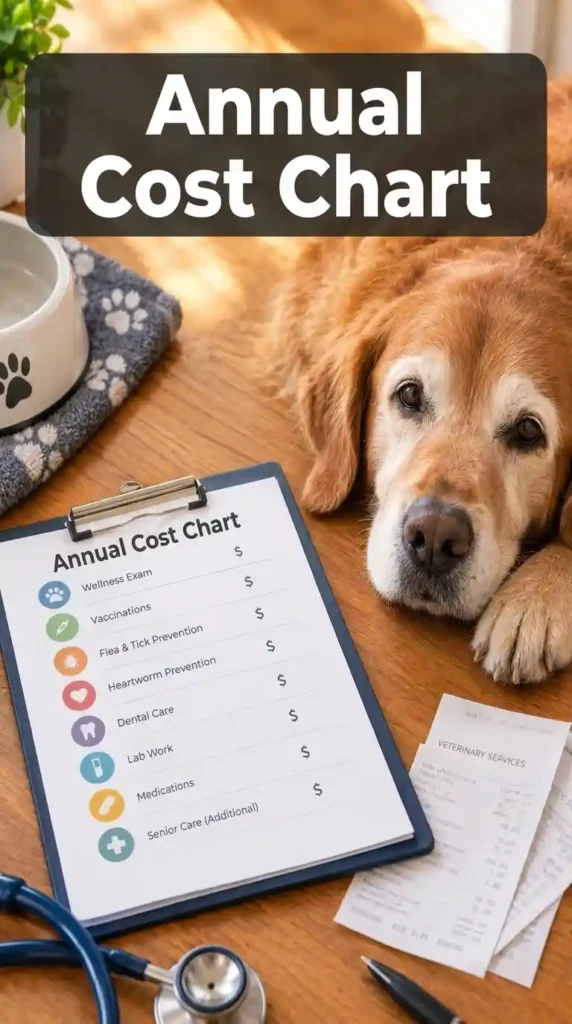
Putting it all together helps more than any single number on its own. Here’s what a rough annual total might look like for two common scenarios.
| Expense Category | Healthy Senior Dog | Senior Dog with Arthritis |
| Wellness exams (2x/year) | $150–$200 | $150–$200 |
| Bloodwork/diagnostics | $150–$300 | $200–$400 |
| Dental cleaning | $300–$700 | $300–$700 |
| Food | $400–$800 | $400–$800 |
| Joint supplements | — | $250–$600 |
| Arthritis medication | — | $250–$700 |
| Estimated annual total | $1,000–$2,000 | $1,550–$3,400 |
This doesn’t include emergency care, which sits separately since it’s unpredictable by nature. Think of these totals as the baseline, with an emergency fund layered on top rather than folded into the regular budget.
How to Budget and Save
A few practical moves that actually help, none requiring a big lifestyle change.
- Start a monthly pet emergency fund. Even $30–$50 a month adds up to real protection within a year or two, insurance or not, and it’s money you control directly rather than routed through a claims process.
- Get quotes from more than one vet for anything major, especially dental work or surgery. Prices vary more than people expect between clinics in the same area, sometimes by hundreds of dollars for the same procedure.
- Ask about generic medication options. They’re often available and meaningfully cheaper than brand-name prescriptions, with the same active ingredient and effectiveness.
- Look into low-cost or nonprofit vet clinics for routine care. Many areas have them, and they can cut wellness-visit costs significantly without sacrificing quality of care.
Small, consistent habits do most of the work here. None of these require a big lifestyle change, just a bit of planning ahead of time rather than reacting once a bill’s already in front of you.
For broader context on typical pet ownership costs, the ASPCA publishes general cost breakdowns worth comparing against your own budget.
Frequently Asked Questions
How much does it cost to adopt a senior dog, all in, for the first year? Factor in the adoption fee ($50–$300), initial vet setup ($200–$500), plus routine costs for the rest of the year. Most owners land somewhere around $1,500–$2,500 for that first full year, including the adoption itself and any early diagnostics your vet recommends.
Is senior pet insurance worth it if my dog already has health issues? Usually not for those specific existing conditions, since pre-existing issues aren’t covered under senior pet insurance dogs policies. It can still make sense for future, unrelated problems, but weigh that against just self-funding an emergency account instead.
What’s the single biggest unexpected cost for senior dogs? Dental extractions and emergency care both tend to catch owners off guard the most, since neither is fully predictable in timing or final cost until you’re already sitting in the vet’s office.
Can I lower my senior dog’s vet costs without sacrificing care? Yes, generally. Comparing quotes, asking about generics, and using low-cost clinics for routine visits can meaningfully reduce costs without cutting corners on actual care quality or outcomes.
How much should I budget monthly for a senior dog overall? A reasonable range is $150–$350 a month once you average food, supplements, routine vet care, and a small emergency fund contribution together, though it varies a fair amount by size and existing health conditions.
Does a dog’s size really change the cost that much? Yes, often more than owners expect. Larger dogs generally need higher medication doses, more anesthesia for procedures, and tend to develop joint problems earlier, all of which push their lifetime costs above what a similarly healthy small breed would run.
A Final Note
None of these numbers need to feel overwhelming laid out all at once. Most senior dog costs arrive gradually, not all at once, and a little planning — an emergency fund, routine bloodwork instead of surprises, senior pet insurance dogs coverage if it fits your situation — goes a long way toward keeping things manageable. Your dog’s golden years shouldn’t come with constant financial stress layered on top of everything else.
Revisit your budget once a year, roughly around your dog’s birthday or wellness exam. Costs shift as health needs change, and a plan that made sense last year might need a small update this year, especially if a new condition has entered the picture.
Most importantly, don’t let the total dollar figure discourage you from getting a senior dog the care he needs. Spreading costs across the year, using the strategies above, and staying ahead of problems rather than reacting to them tends to keep even a full year of senior care well within reach for most household budgets.