
Senior Dog Anxiety: Causes and How to Help
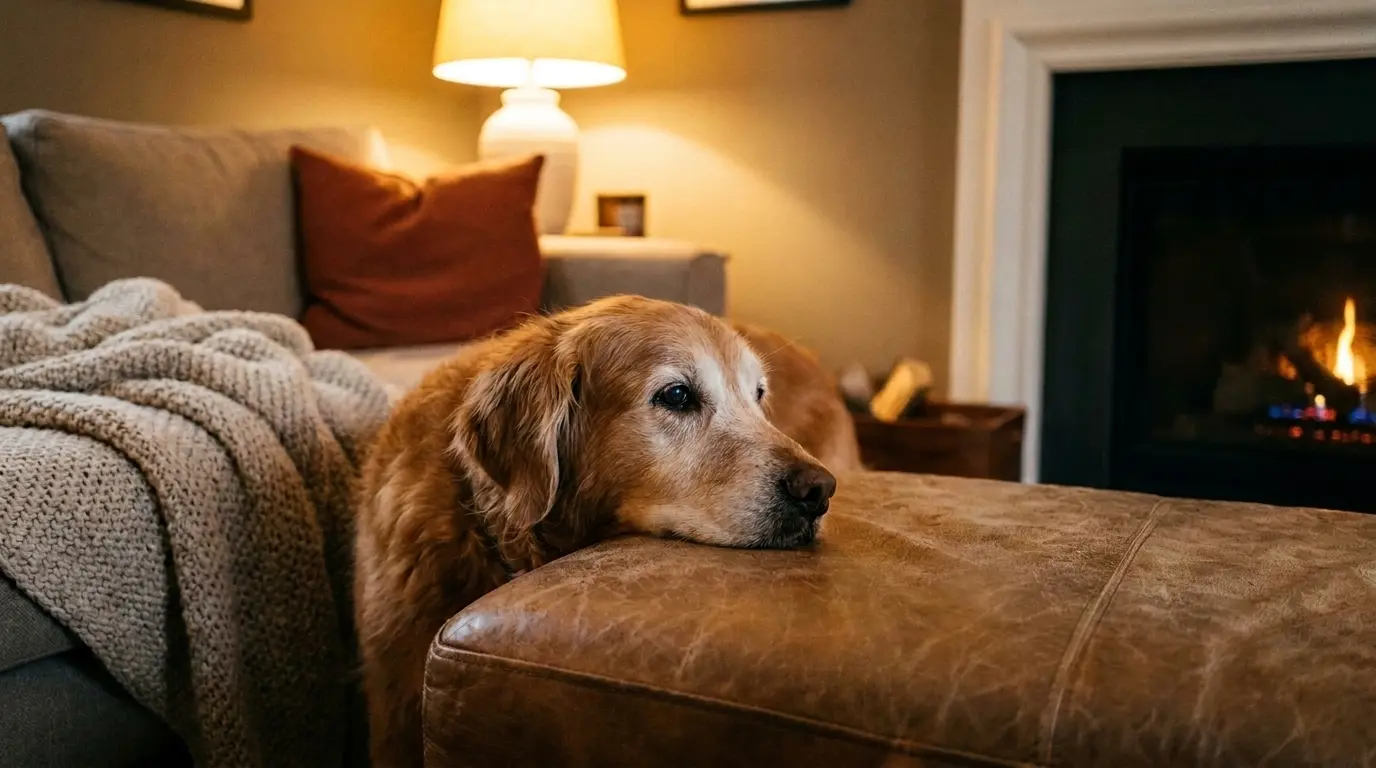
A dog who’s been fine alone for years suddenly can’t handle you leaving the room. That’s senior dog separation anxiety, and it catches a lot of owners off guard. Not because it’s rare. Because it feels backwards — shouldn’t an older dog be calmer, not more anxious? Usually the answer has less to do with temperament and more to do with everything else changing underneath him.
Senior dog anxiety is very real and frequently overlooked or dismissed as “old age clinginess. Whether it’s separation anxiety in seniors, restlessness at night or general discomfort that has sneaked up on him, this guide discusses why it happens, how to tell, as well as what can actually help.
Why Senior Dogs Develop Anxiety
Anxiety doesn’t usually appear out of nowhere. There’s almost always something underneath it, even when it’s not obvious at first glance.
Vision and hearing loss play a bigger role than most owners realize. A dog who can’t see or hear as well relies more heavily on you for a sense of safety. Losing you from sight, even briefly, feels riskier than it used to, in a way that’s easy for an owner to underestimate from the outside.
Cognitive decline is closely tied to anxiety too. A dog experiencing early cognitive decline often feels confused or disoriented in ways that translate directly into anxious behavior — pacing, clinginess, general unease that wasn’t there before. The anxiety is often the first visible sign, arriving before the more obvious cognitive symptoms do.
Pain is an underrated cause. A dog in discomfort, even mild discomfort he’s hiding well, often becomes more anxious generally. Unease about movement, about being touched, about what might hurt next. This connection gets missed constantly, since the anxiety itself is what owners notice first, not the pain underneath it.
Routine disruption hits harder now. Older dogs, especially ones with any cognitive changes, lean on predictability more than they used to. A schedule change that wouldn’t have registered at five can genuinely rattle a senior dog.
It’s rarely just one of these. Usually it’s two or three stacking together, and the anxiety that shows up is the combined result rather than one clean, single cause you can point to.
Signs of Anxiety in Senior Dogs
Some of these look almost identical to normal aging on the surface. Worth knowing the difference before assuming it’s nothing.
- Pacing, especially back and forth in the same limited area
- Panting when it’s not hot and he hasn’t been active
- Sudden clinginess — following you room to room, unable to settle without you nearby
- Vocalizing more than usual, whining or barking without an obvious trigger
- Trembling or shaking, sometimes with no clear cause
- Destructive behavior that’s new, particularly around doors or windows
A dog showing several of these, especially in a new pattern that wasn’t there a year ago, is very likely dealing with some form of anxiety rather than just “getting older.” Worth writing down which ones you’re seeing and when, the same way you’d track any other new behavior worth mentioning to a vet.
Senior Dog Separation Anxiety Specifically
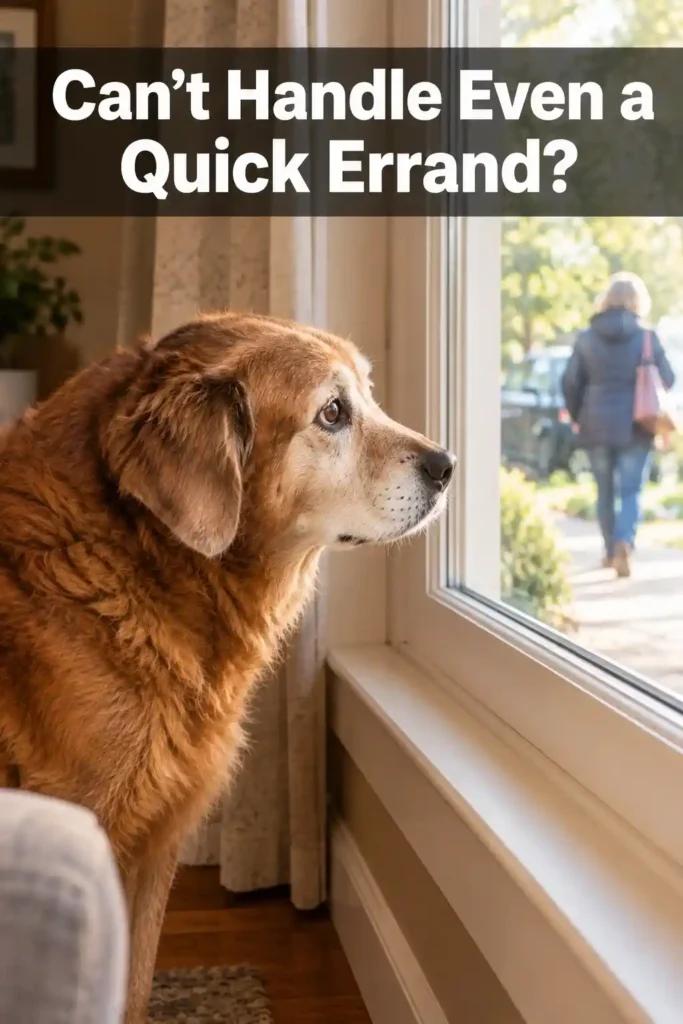
This one throws owners the most, honestly. A dog who spent a decade perfectly content home alone suddenly can’t handle you grabbing the mail. Senior dog separation anxiety isn’t a character flaw showing up late — it’s usually a direct response to everything else that’s shifted underneath him.
It happens for a real reason, though. As the causes above pile up — vision loss, cognitive changes, physical discomfort — a dog becomes more dependent on you as his anchor. You’re the constant in a world that’s started feeling less predictable to him. Losing sight of that constant, even for ten minutes, can genuinely spike his stress.
A few things help:
- Practice short absences first. Step outside for thirty seconds, come back. Build up gradually rather than jumping straight to a full day at work.
- Leave something with your scent on it, a worn shirt or blanket, somewhere he settles.
- Avoid a big emotional goodbye or hello. Keep departures and arrivals low-key, since a dramatic reunion actually reinforces the idea that your absence was a big deal.
- Consider a pet camera if you’re able to. Sometimes just knowing what’s actually happening while you’re gone, rather than guessing, changes how you approach it.
Severe cases of senior dog separation anxiety sometimes need more than home strategies alone. That’s genuinely okay, and worth bringing to your vet rather than pushing through it solo.
Senior Dog Anxiety at Night
Nighttime restlessness is its own specific animal, and it deserves separate attention from daytime anxiety.
Vision changes make darkness genuinely more disorienting for an aging dog. What used to be a familiar hallway becomes something to navigate more carefully, or avoid altogether. Add any degree of cognitive decline, and nighttime confusion often compounds fast — this is part of why sleep-wake cycle changes show up so consistently in dogs dealing with cognitive issues. A dog who once slept soundly through the night can start waking, pacing, or vocalizing at odd hours as these factors stack together.
A few things that genuinely help with senior dog nighttime anxiety:
- A nightlight in hallways or near his bed, reducing the disorientation that comes with total darkness
- A consistent bedtime routine, same time, same steps each night, since predictability itself is calming
- Keeping his sleeping area close to yours, at least during a rough patch, rather than isolated in another room
- Avoiding furniture rearrangement or major household changes right before bed, when disorientation is already more likely
Most nighttime anxiety responds well to consistency alone, given a few weeks. If it doesn’t, that’s worth flagging to your vet rather than assuming it’ll resolve on its own. Nighttime issues in particular are worth mentioning even if daytime behavior seems completely normal, since the two don’t always show up together.
How to Help — Practical Strategies
Routine & Consistency
This is genuinely the single most effective tool available, and it costs nothing. Same feeding times, same walk times, same general daily shape. Predictability does more for an anxious senior dog than almost anything else on this list, and it’s the one strategy every owner can start today regardless of budget.
Comfort Items
A specific blanket, a particular toy, a piece of clothing that smells like you. These matter more to an anxious dog than they might seem to, and there’s real value in not washing away that familiar scent too often during a rough stretch. It’s a small thing, but small things add up when a dog’s world feels a little less certain lately.
Calming Aids & Supplements
Certain owners find calm dog supplements with key calming ingredients such as L-theanine or chamomile to be the relief they are looking for. They are not a cure all on their own, but they can certainly help to moderate symptoms, especially in mild cases, when used in conjunction with other routine and environmental changes.
Environmental Adjustments
A quieter space away from loud household activity, blackout curtains if light triggers restlessness, white noise if outside sounds are part of the trigger. Small adjustments, but they add up more than people expect once a few are stacked together.
When to Involve Your Vet
If anxiety is severe, sudden, or not improving after a few weeks of consistent effort, it’s time for a vet conversation. Prescription options exist for genuinely difficult cases, and there’s no reason to struggle through something manageable with the right support available.
When Anxiety Signals Something Else
Sometimes anxiety isn’t really about anxiety. It’s the visible symptom of something else entirely.
Pain is a common hidden cause, and it’s worth ruling out directly rather than assuming behavioral anxiety is the whole story. Our guide on signs your senior dog is in pain covers what else to watch for alongside the anxious behavior itself, since the overlap between the two is bigger than most owners expect.
Cognitive decline is the other major overlap. If anxiety is showing up alongside disorientation, house-training lapses, or a change in how your dog interacts with the family, it’s worth reading through our full guide on canine cognitive dysfunction rather than treating the anxiety as an isolated issue.
Treating the anxiety alone, without addressing what’s actually causing it, tends to only go so far. Getting the root cause right first makes everything downstream — routine changes, calming aids, whatever your vet recommends — work considerably better.
For general background on senior pet behavioral changes, the American Veterinary Medical Association has reliable resources worth checking.
Frequently Asked Questions
How to treat dog anxiety in older dogs? It is very dependent on the cause and degree of the situation. For mild cases, the usual routine, comfort items and soothing supplements can be very effective. In more serious cases, prescription medication may be required, which should only be administered with your vet’s advice, not at home.
Can senior dog separation anxiety develop even if my dog never had it before? Yes, genuinely common. Vision loss, cognitive changes, and physical discomfort can all push a previously independent dog toward new separation anxiety later in life, even with no prior history of it whatsoever.
Is anxiety in senior dogs always tied to cognitive decline? No, though the two overlap often. Pain, sensory loss, and routine disruption can all cause anxiety independently of any cognitive changes, so it’s worth considering each possibility rather than assuming one explains everything on its own.
How long does it take for anxiety strategies to work? Any regular program will yield results in 2-3 weeks if followed diligently. Failing to get the desired results or in serious cases, where there is an underlying medical problem, it may require more time or extra care from your veterinarian before you notice a difference.
Should I be worried if my senior dog suddenly seems anxious? It is a sign worth keeping an eye on, but not necessarily alarming. It is better to bring up a veterinary consultation to rule out medical or pain-related causes of this sudden change, than to presume it is just behavioural from the outset.
A Final Note
Dog anxiety is a very normal occurrence in older dogs and it’s not something you have done wrong. Most of the time, it is your dog’s way of dealing with a world that is a little less predictable than it was before, and that it’s seeking your help in stabilizing. A bit of patience, consistency and the proper support goes a long way.
It is not something I am going to have to get rid of suddenly and that’s okay. The subtle changes are most likely to be beneficial rather than the drastic ones, and most dogs adapt fairly well when they get a more regular pace around them.


