Senior Dog Dental Care: Preventing and Managing Dental Disease
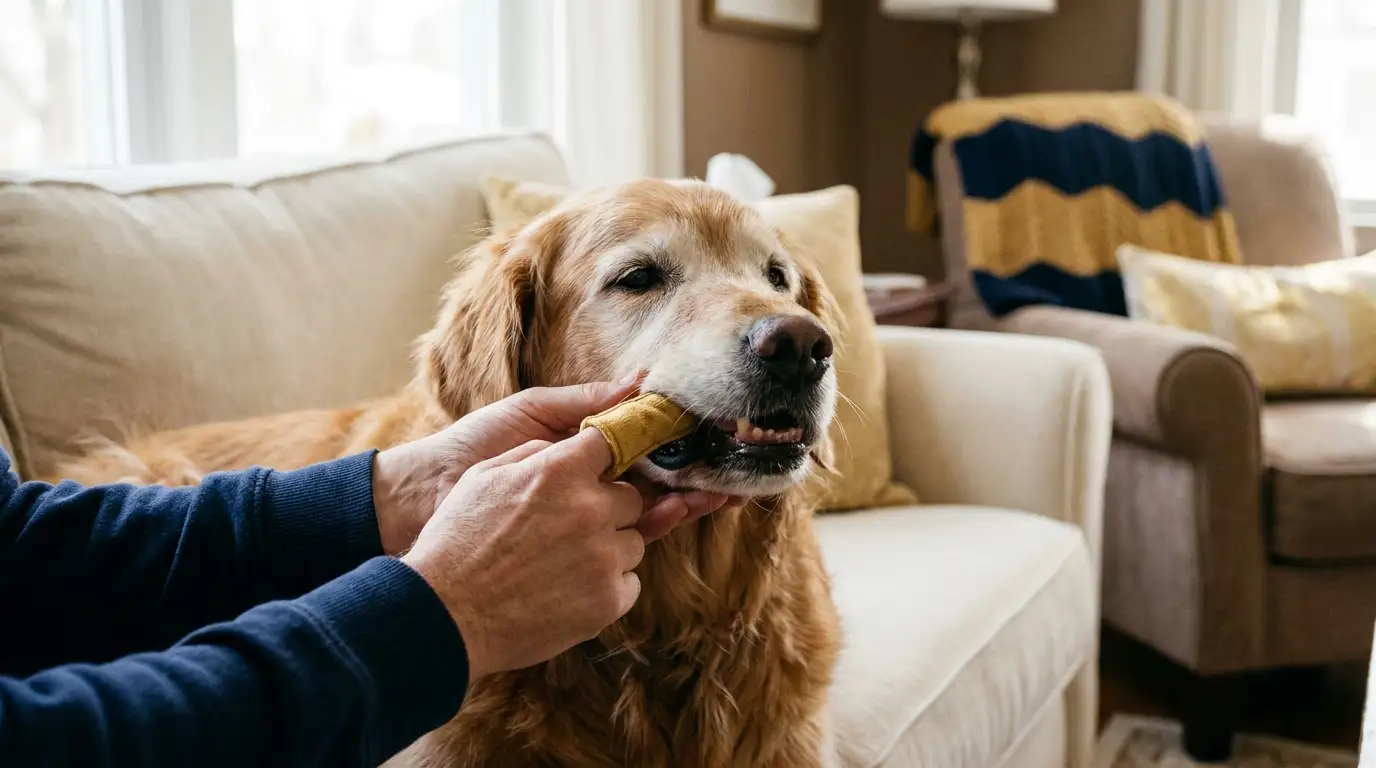
Dental disease is genuinely one of the most common health issues in senior dogs, and one of the most overlooked. Owners watch closely for limping or lumps, but bad breath gets written off as just “old dog smell” far too often. Dog teeth cleaning cost questions usually only come up once a vet has already found a problem, which is exactly backwards from how this should go.
By some estimates, a majority of dogs over three already show some sign of dental disease, and it only compounds with age. This guide covers why it’s so common, what to watch for, how vets actually treat it, what cleaning and extractions realistically cost, and how to build a home routine that actually helps rather than just sounding good on a product label.
Why Dental Disease Is So Common in Senior Dogs
Plaque doesn’t take a day off, and neither does time. That’s really the core of why this problem builds so quietly over a dog’s life.
Years of accumulated plaque hardens into tartar, and tartar left unaddressed leads to gum inflammation, then infection, then bone loss around the teeth. None of this happens overnight.It happens gradually over the years, which is exactly why people can easily miss it until the condition advances and starts causing real discomfort.
Aging immune systems make it worse. A senior dog’s body simply fights off the bacterial load in his mouth less effectively than it did at three or four, letting inflammation take hold faster and heal more slowly once it starts, sometimes creating a cycle that’s hard to break without professional intervention.
Breed and jaw structure play a role too, but honestly, most dogs are vulnerable here regardless of size or breed. Time in the mouth is the real common denominator, more than any single risk factor an owner can control.
Signs of Dental Problems
Signs of dental problems in dogs are often subtle at first, easy to explain away individually.
- Bad breath that’s noticeably worse than normal, not just mild “dog breath”
- Dropping food while eating, or chewing visibly more carefully than usual
- Pawing at the mouth or face repeatedly
- Chewing only on one side, avoiding the other entirely
- Bleeding gums, especially visible on chew toys or during brushing
- Visible tartar, that yellow-brown buildup along the gumline, sometimes with rotten dog teeth showing dark discoloration or visible decay
Any one of these alone might mean nothing serious. Several together, especially if they’re new, warrant a dental exam rather than a wait-and-see approach.
How Vets Treat Dental Disease
Professional cleaning under anesthesia remains the standard, and for good reason, even though the word “anesthesia” understandably worries a lot of senior dog owners thinking about their own dog’s risk.
A proper cleaning requires scaling below the gumline, which a dog simply won’t tolerate awake. Vets do take real precautions for senior patients specifically, including pre-anesthetic bloodwork, careful monitoring throughout, and anesthesia protocols adjusted for age and any existing conditions. Modern veterinary anesthesia for a healthy-enough senior dog carries real but genuinely manageable risk, lower than most owners assume going in.
You may have come across non anesthetic dog teeth cleaning, sometimes marketed as a gentler alternative. Most veterinary dental specialists don’t recommend it, since it only cleans visible tooth surfaces and misses everything happening below the gumline, where the actual disease progresses. It can look clean on the surface while doing very little for the problem that matters, which is exactly what makes it a risky shortcut.
Teeth extraction for dogs becomes necessary once a tooth is too damaged or infected to save. This isn’t a failure of care, it’s often the kindest option once a tooth is causing chronic pain, and most dogs eat comfortably afterward, sometimes more comfortably than before, once the source of pain is finally gone.
What Dental Cleaning Costs
Here’s the real answer to dog teeth cleaning cost, since vague ranges online rarely help anyone budget properly.
A standard professional cleaning typically runs $300 to $700, depending on your location, your dog’s size, and whether bloodwork and X-rays are included, which they usually should be for a senior dog.
Dog tooth extraction cost adds to that baseline. A simple single-tooth extraction might run $150 to $300. Multiple extractions, or a complicated tooth requiring surgical removal, can push total costs to $500 to $1,500 or more in a single visit.
Affordable dog teeth cleaning options do exist. Ask about veterinary schools in your area, which sometimes offer discounted care performed by supervised students, or nonprofit and low-cost clinics that periodically run dental specials. It’s worth calling around, since prices genuinely vary more than owners expect between clinics in the same city.
Factor this into your overall cost of vet care planning for a senior dog, since dental work is one of the more predictable big-ticket items worth budgeting.
At-Home Dental Care Routine
Daily brushing genuinely is the gold standard, more effective than any product on a shelf.
How often should I brush my dog’s teeth? Daily is ideal. Even three to four times a week meaningfully slows plaque buildup compared to not brushing at all. Use a dog-specific enzymatic toothpaste, never human toothpaste, which contains ingredients that are genuinely harmful to dogs.
If your dog absolutely won’t tolerate a brush, how to clean dog teeth without brushing does have some real options, just weaker ones. Dog teeth wipes offer a middle ground, gentler and easier for a resistant senior dog to accept, though they don’t reach below the gumline the way brushing can.
Dental chews and treats vary enormously in actual effectiveness. Look specifically for the VOHC (Veterinary Oral Health Council) seal, which indicates real, tested plaque and tartar reduction rather than just marketing claims printed on the bag.
Water additives offer modest, genuine benefit as a low-effort addition, though they work best alongside brushing, not as a replacement for it entirely.
For a senior dog dealing with dental pain or missing teeth, texture matters at feeding time too. Softer senior dog food, or kibble soaked briefly, helps considerably, and dog food for dogs with no teeth exists specifically for advanced cases where extractions have removed most or all of the teeth.
Preventing Dental Disease Before It Starts
If your dog is still middle-aged and reading this ahead of any real problem, you’re in the best possible position.
Start brushing now, before dental disease has a chance to establish itself. A dog trained early to accept brushing as normal tends to tolerate it far better as a senior than one introduced to it for the first time at ten.
Schedule dental exams as part of every regular vet visit, not as a separate, easy-to-skip appointment. Catching tartar buildup early, before it becomes gum disease, is dramatically cheaper and easier than treating advanced disease later.
Keep your grooming routine consistent, since regular hands-on time with your dog’s mouth during brushing or grooming sessions makes it much easier to notice small changes before they become big problems.
For evidence-based dental care standards, both the American Veterinary Medical Association and the American Animal Hospital Association publish reliable dental care guidelines worth reading.
Frequently Asked Questions
What’s the average dog teeth cleaning cost for a senior dog specifically? Often slightly higher than for a younger dog, since senior patients typically need more thorough pre-anesthetic bloodwork and monitoring, pushing the total dog teeth cleaning cost toward $400 to $700 rather than the lower end of the general range.
Is anesthesia really safe for an older dog’s dental cleaning? Generally yes, with proper precautions. Pre-anesthetic screening identifies most risk factors ahead of time, and vets adjust protocols specifically for senior patients rather than using a one-size-fits-all approach.
How can I tell if my dog is in pain from a dental problem? Watch for the signs covered above, plus general behavior changes. Our guide on signs your senior dog is in pain covers dental pain specifically as one of the categories worth knowing.
Are dental chews actually worth buying? Some genuinely are, particularly VOHC-approved options. Many others offer minimal real benefit despite dental-sounding marketing, so check for that seal specifically rather than trusting packaging claims alone.
Can a senior dog live comfortably with several teeth missing? Yes, very much so. Dogs adapt remarkably well to fewer teeth, and most eat just as enthusiastically afterward, sometimes more so once chronic dental pain is finally resolved.
A Final Note
Dental disease is common, treatable, and genuinely worth taking seriously rather than dismissing as a cosmetic issue. Whatever the exact dog teeth cleaning cost turns out to be for your specific situation, a little daily brushing, regular checkups, and paying attention to the signs above can spare your senior dog real pain and spare you a much bigger bill down the road.