
Adopting a Senior Dog: What to Know Before You Do
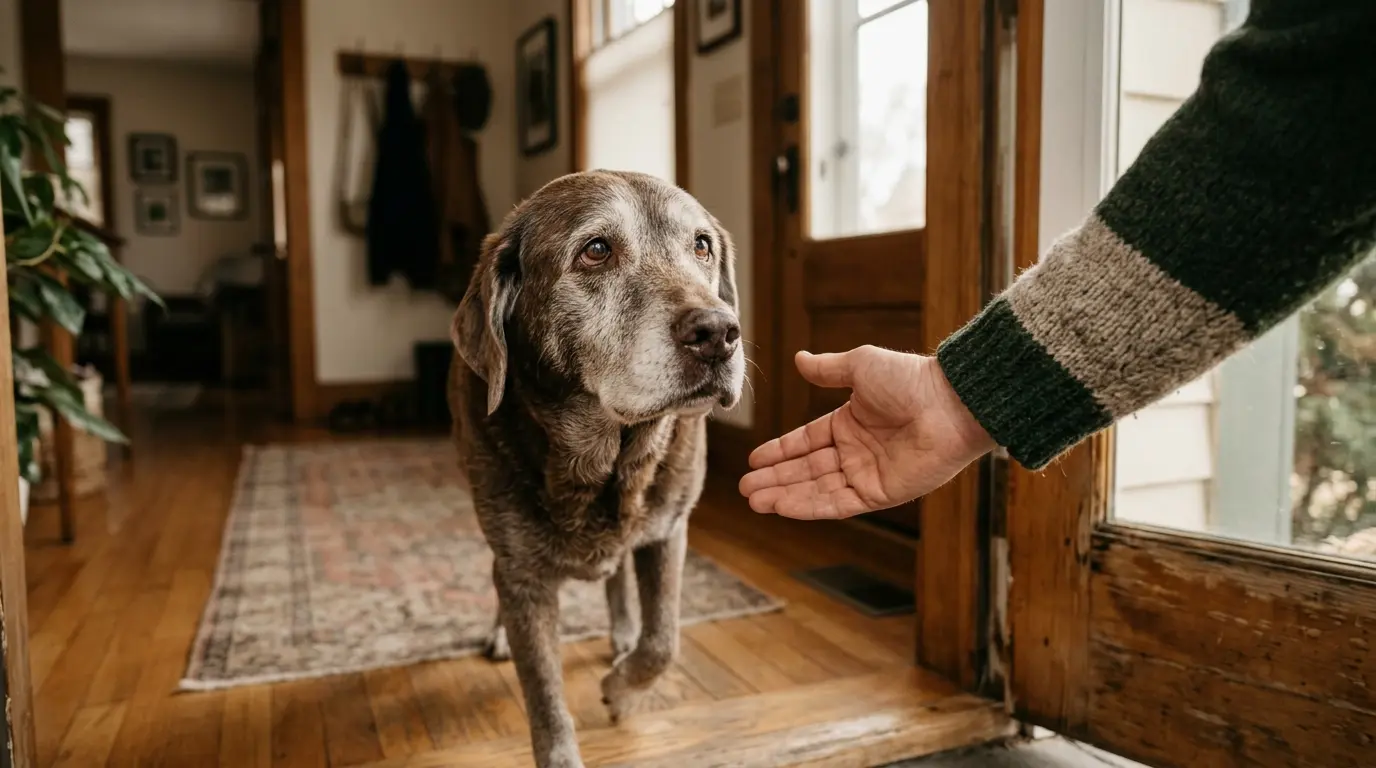
Before adopting a senior dog, find out what care that particular dog needs and whether you can provide it over time. Ask for health records, discuss behaviour and daily routines, and plan for ongoing costs before committing.
A photograph can make the decision feel immediate. Give yourself room for a conversation, too. You are choosing a companion and taking responsibility for a life with needs that may change.
Why consider adopting a senior dog?
The ASPCA’s overview of adopting senior pets highlights potential advantages, including an already-grown body size and previous housetraining. Those possibilities are useful starting points for questions, not promises about every older dog.
Ask what the rescue has actually observed. Has the dog lived in a home recently? What routine worked there? Which skills or habits need support?
Avoid choosing on the assumption that an older dog must be quiet, easy or happy alone. Instead, describe the life you can offer and ask whether it matches the dog in front of you.
For background on the age label, see our guide to when a dog is considered senior. For the adoption decision itself, put the dog’s current needs ahead of a birthday or breed label.
Start with your household, not just the dog’s profile
Write down a normal weekday. Include the time you leave home, the longest period without someone present and how you would manage appointments.
Then consider the physical setting. Does reaching the garden involve stairs? Is there somewhere the dog can rest away from children and other animals? Who could provide care if you were unwell?
The AVMA’s guidance on selecting a dog asks prospective owners to consider their lifestyle, future circumstances and financial responsibilities. It also emphasises adult responsibility for daily care when children are involved.
Try answering these practical questions before meeting a dog:
- Which tasks can I manage myself, including transport?
- Who has actually agreed to help, rather than simply being nearby?
- What care tasks would require training or extra support?
- Are household members comfortable with the commitment?
- If my schedule changes, what is the backup plan?
Be candid with the adoption team. A limit you explain early is something you can discuss together.
Questions to ask before adopting a senior dog
Take a written list to the shelter or rescue. You do not need every answer immediately, but you should know what is confirmed and what remains uncertain.
| Topic | Questions to ask |
|---|---|
| Background | Why is the dog available, and how much history is known? |
| Health records | When was the last examination? Can I receive the records and test results? |
| Current treatment | What medicines or prescription food does the dog receive? What follow-up is planned? |
| Movement and handling | What has been observed on stairs, walks, car journeys and during grooming? |
| Daily routine | What are the feeding, toileting, sleep and time-alone routines? |
| Behaviour | Is there any known bite, guarding or escape history? What situations cause difficulty? |
| Household match | What is known about living with children, dogs or cats, and in what setting? |
| Support | Who can I contact after adoption, and what help is available? |
If you are adopting a dog from foster care, ask whether the carer can share a typical day’s routine. Request concrete examples rather than broad descriptions such as “good with everyone.”
An unknown answer is still useful information. Write it down and ask what further assessment or planning would be appropriate before deciding.
Review health information with a vet
Ask for permission to share available records with your chosen veterinary practice before the adoption. Discuss whether a consultation is possible and what it would cost.
The AAHA senior-care guidelines describe the need for an individual healthcare plan. That supports a dog-specific conversation rather than a standard shopping list of tests, supplements or treatments.
Useful questions for the vet include:
- What do the existing records tell us, and what remains unclear?
- Are any appointments or investigations time-sensitive?
- What practical care would I need to provide at home?
- What should I monitor, and when should I contact the practice?
- Can you estimate the cost of the currently known care plan?
Ask for written instructions if medication is involved. Do not change a prescription, add supplements or substitute your own treatment based on this article.
Keep the discussion realistic. A review can help you understand available information; it cannot provide certainty about every future health problem or expense.
Budget beyond the adoption fee
When adopting a dog from a shelter, ask for the current fee and a written list of what it includes. The ASPCA’s adoption tips recommend checking adoption requirements and preparing for the responsibilities of bringing a pet home.
Build your budget from actual quotes and the dog’s known care needs. A general online average cannot tell you what this adoption will cost.
| Budget area | What to find out |
|---|---|
| Adoption and paperwork | Fee, included services and identification arrangements |
| Everyday care | Current food, routine supplies and grooming needs |
| Veterinary care | Initial appointment, known follow-up and existing prescriptions |
| Home preparation | Any changes discussed with the rescue or vet |
| Help and travel | Transport, suitable care during absences and backup support |
| Unexpected expenses | What funds or other arrangements you could realistically access |
For broader planning, our senior dog cost guide offers related reading. Use local quotes and written terms for your own decisions.
If considering insurance, request policy documents and ask the provider about this dog’s age, known conditions, exclusions and your share of costs. Do not put an assumed reimbursement into your budget before checking those terms.
Prepare the home for this dog’s needs
Before adopting a senior dog, walk through the route between the sleeping area, water and outside access. Make a note of steps, slippery sections and narrow spaces.
AAHA’s guidance on pain management and home adaptations discusses suitable bedding, improved footing, appropriate ramps and hazards such as stairs. Ask the rescue and vet which changes fit this dog.
You can take photographs of the layout to that conversation. A clear picture of the stairs or car entrance is more useful than saying the house is “easy to get around.”
Confirm any equipment needs before buying. This guide does not test beds, ramps or lifting aids, and no product can be assumed suitable from the dog’s age alone.
For additional background, read our guide to exercise for senior dogs. Ask the veterinary team for activity advice that reflects the dog’s examination and current care plan.
Make a plan for the first days
Ask the adoption team for handover instructions before collection. Record the current food, medication schedule, next appointment and the contact to use if you need help.
Old Dog Haven’s guidance on welcoming an older dog encourages patience and realistic expectations. It also notes that behaviour in a new home may differ from what was seen in another setting.
Keep your initial plans modest. Agree introductions and the household setup with the rescue, especially if children or other animals live with you. Avoid treating a friendly first meeting as a guarantee of compatibility.
Use observations rather than guesses
Keep a short notebook for anything you need to discuss. Note what happened, when it happened and what instructions you received.
For example, “Left most of breakfast at 8 a.m.; called the clinic at 9 a.m.” records an observation. “Just missing the shelter” assumes a cause you have not established.
Ask the vet which changes need a call and how quickly. Do not let an expected adjustment period become a reason to ignore a concerning change.
Know where to get urgent help
Save the regular practice and emergency clinic details before collection. Check how you would reach the clinic outside ordinary hours.
VCA’s guide to dog emergencies identifies serious signs including breathing difficulty and collapse. Seek urgent veterinary help for severe breathing trouble, collapse, uncontrolled bleeding, or a prolonged or repeated seizure. These examples are not a complete emergency checklist.
If you are unsure how serious a change is, contact a veterinary professional for guidance. This article cannot assess symptoms or decide whether an individual dog can safely wait.
Be clear about the commitment and support
Read the adoption agreement before signing. Ask when responsibility transfers to you and what happens if the arrangement becomes unsafe or you can no longer provide care.
Discuss any trial period rather than assuming one exists. Ask who handles medical expenses during it and what the return process involves. Keep written copies of the answers.
Think about your emotional readiness, too. You can ask the veterinary team how they would support decisions if the dog’s needs change. There is no need to predict every difficult moment before adopting, but it helps to know whom you could turn to.
If you are not ready for this particular dog, say so. Taking time to understand the commitment is part of making the decision carefully.
Frequently asked questions
Is adopting a senior dog a good choice for a first-time owner?
It can be worth considering, but assess the individual match. Tell the rescue that you are a first-time owner and ask what skills, time and support the dog needs. Arrange training or practical demonstrations for unfamiliar tasks before taking responsibility.
Are senior rescue dogs already house-trained?
The ASPCA notes that many senior pets have previous housetraining. That does not confirm any particular dog’s history or adjustment in your home. Ask about recent observations and the routine to follow; discuss new or persistent toileting changes with a vet.
How much does adopting an older dog cost?
Ask for the adoption fee, included services and estimates for known care needs. Add ongoing food, veterinary care, transport and backup support. There is no verified universal figure for the dog you are considering, so this guide does not invent one.
Is adopting a foster dog different from adopting from a shelter?
Ask the organisation to explain its process and agreement. A foster carer may be able to describe life in a household, while shelter staff can share observations from their setting. In either case, request records and clarify what support continues after adoption.
How long will an older dog take to settle in?
Do not plan around a guaranteed deadline. Old Dog Haven advises allowing time and avoiding expectations of instant comfort. Ask the adoption team how to respond to difficulties, and contact a vet about health concerns rather than assuming they are part of settling in.
Before you say yes
Adopting a senior dog begins with a hopeful possibility and some practical questions. Take the records home, talk through the daily routine and check the support available. You do not need a perfect plan, but you deserve enough information to make a thoughtful commitment to the dog in front of you.
About this guide: This article is AI-generated educational content based on the linked sources. Senior Dogs Guide is not run by a veterinarian, and this article has not been reviewed or endorsed by a vet. It does not describe firsthand adoption experience or product testing. Consult a veterinarian about an individual dog’s health and care.
