
Senior Bulldog: Health, Aging & Care Guide
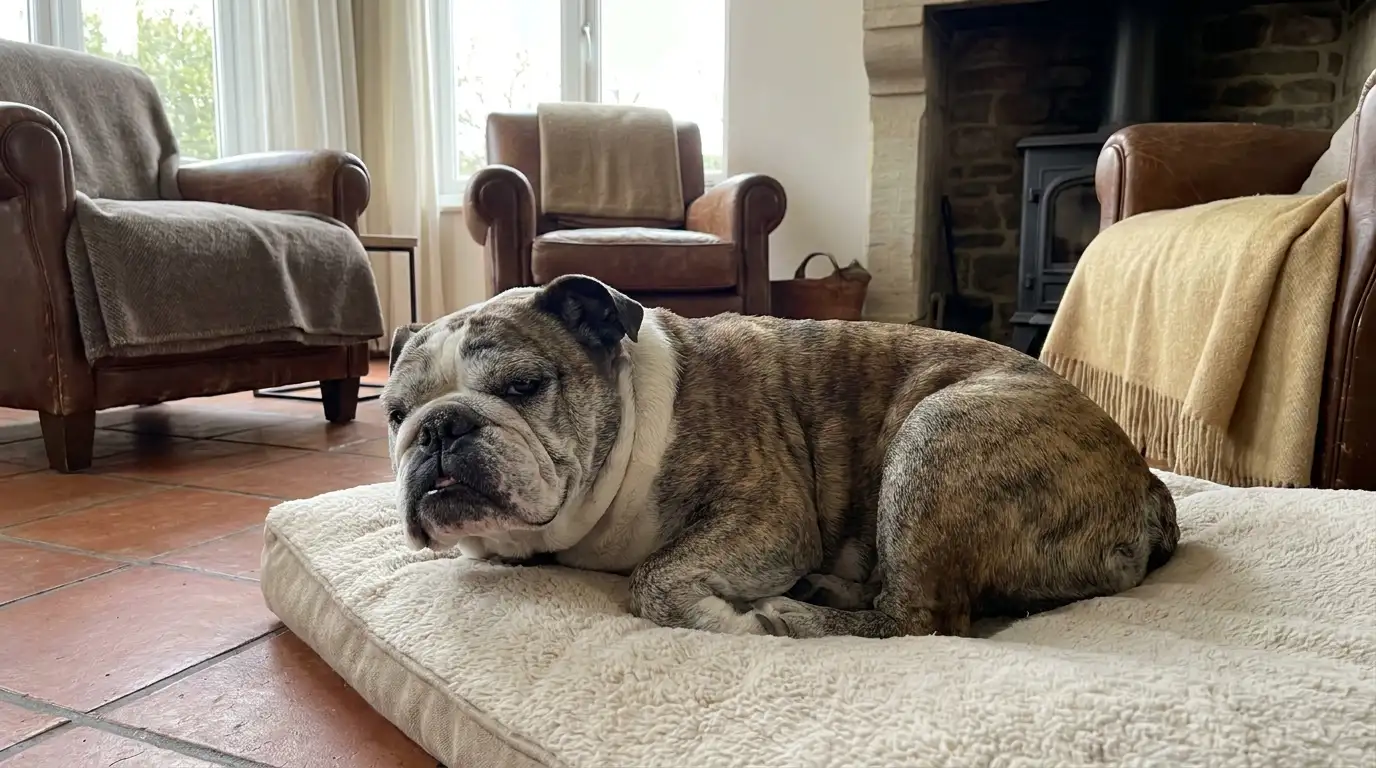
How long do bulldogs live? Typically 8 to 10 years, shorter than most breeds their size. That number tends to surprise new owners, since Bulldogs pack so much personality into a compact, muscular frame that they somehow feel like they should last longer than they do.
The flat face and stocky build that make Bulldogs so recognizable also drive most of their health challenges, and those challenges intensify as the years go on. This guide covers real lifespan numbers, when a Bulldog actually enters senior years, the breathing issues this breed is famous for, and how to keep him comfortable, cool, and healthy.
How Long Do Bulldogs Live? Life Expectancy Explained
The honest answer to how long do bulldogs live: 8 to 10 years on average, on the shorter end compared to similarly sized breeds. Some Bulldogs reach 11 or 12 with excellent care and a bit of genetic luck. Others, particularly those with more pronounced breathing or joint issues, fall shorter.
This isn’t really the breed’s fault. Decades of selective breeding for that signature flat face and heavy build came with real trade-offs in respiratory and joint health, baked into the breed standard itself rather than something any individual dog did wrong.
Genetics and breeder quality matter enormously here. A Bulldog from a breeder who prioritizes airway function and joint health over an extremely exaggerated look tends to fare noticeably better over a full lifetime than one bred purely for show-ring extremes.
At What Age Is a Bulldog Considered a Senior
Bulldogs hit senior status earlier than almost any other medium-sized breed, often as early as 5 to 6 years old.
That’s genuinely young by most standards, and it catches a lot of owners off guard. A five-year-old Labrador is barely middle-aged. A five-year-old Bulldog is already entering the stretch where breathing, joints, and skin all need closer attention than they did just a couple years earlier.
This early timeline ties directly to the breed’s compressed structure. Bodies built this way simply wear differently, and vets have learned to start watching more closely well before the traditional “senior dog” age most people expect from a dog this size.
English Bulldog Breathing Problems in Senior Years
This deserves its own section, because breathing issues are genuinely central to what makes Bulldog care distinct from almost every other breed, and they only become more relevant with age.
Brachycephalic airway syndrome, the collection of airway restrictions common in flat-faced breeds, tends to worsen with age. Cartilage weakens, tissue relaxes further, and a young Bulldog’s manageable snoring can become a senior Bulldog’s genuine breathing struggle over the course of just a few years.
Watch for louder or more frequent snorting, increased effort breathing even at rest, or a bluish tinge to the gums or tongue during exertion, which signals a real emergency requiring immediate vet attention. Heat and excitement both worsen symptoms considerably, which is exactly why the exercise section below matters so much for this breed specifically.
Some senior Bulldogs benefit from surgical airway correction, even later in life, if breathing has become significantly limiting. This is a direct conversation to have with your vet rather than something to manage purely through home adjustments once symptoms are severe, since surgery can genuinely improve quality of life even in an older dog.
Senior Bulldog Health Issues to Watch For
Beyond breathing, a handful of other issues show up consistently in aging Bulldogs. Knowing this list ahead of time means fewer surprises during a routine vet visit.
- Hip dysplasia — common given the breed’s heavy, low-slung build, often contributing to bulldog joint problems that worsen with age and limited mobility
- Skin fold infections — those iconic wrinkles trap moisture and bacteria, leading to recurring infections that need regular attention, more so as skin becomes less resilient with age
- Joint problems generally — beyond hip dysplasia specifically, the sheer weight this breed’s frame carries puts real strain on joints throughout the body, often leading to joint pain and arthritis
- Heat sensitivity — already elevated in this breed due to their airway structure, and genuinely more dangerous in senior dogs whose bodies regulate temperature less efficiently than they used to
- Heart issues — some Bulldogs develop cardiac conditions as they age, sometimes connected to the chronic strain of compromised breathing over years of reduced oxygen efficiency
These are not universal, but this concentration of predictable, breed-specific risks is exactly why regular vet visits matter more here than in a breed with a broader, less concentrated health profile.
Choosing a Health-Focused Bulldog From the Start
If you’re considering a Bulldog puppy, or just curious about your current dog’s background, breeding quality genuinely shapes how the senior years go.
Look for breeders who screen specifically for airway function, not just conformation to the breed standard’s look. Some breed lines are moving toward slightly less extreme facial structure specifically to reduce breathing complications, and asking directly about this shows a breeder who’s thinking about long-term health.
Hip scoring and cardiac screening in parent dogs also predict a lot about what’s ahead. A well-bred Bulldog from health-tested parents has real odds of a smoother senior chapter than one from breeding focused purely on appearance.
Managing Heat and Exercise Safely
Bulldogs overheat easily even as young dogs, and senior years make this considerably more dangerous rather than just uncomfortable.
Keep exercise short and cool. Early morning or evening walks, never during peak afternoon heat, and always with frequent breaks rather than one long continuous walk that pushes a compromised airway too hard.
Watch for early overheating signs closely — excessive panting, drooling, or seeking shade unprompted. In a senior Bulldog, these signs can escalate to real danger faster than in a healthier-breathing dog, so don’t wait to see if it passes on its own before acting.
Indoor climate control matters more than people expect too. Air conditioning during hot months isn’t a luxury for this breed, it’s genuinely closer to a health necessity, particularly once a dog’s breathing has already started showing age-related strain and can’t compensate the way it once could.
Nutrition and Weight Management
Extra weight can harm any dog, but it is especially risky for this breed because its joints and airways already face significant strain.
Best dog food for english bulldogs typically means controlled calories alongside real joint support, since this breed benefits enormously from glucosamine and chondroitin given how common joint problems already are. A quality senior dog food built around these priorities addresses two major risk factors in one bowl, without needing separate supplements for basic support.
A weight chart english bulldog resource from your vet is worth asking for directly, since ideal weight varies more by individual build than a generic breed-average number can capture. Healthy Bulldogs typically range from 40 to 55 pounds, but frame and muscle mass shift that range meaningfully from one dog to the next.
Best dog food for bulldogs more broadly should also account for this breed’s tendency toward food allergies and sensitive digestion, which sometimes worsens with age.
Skin Fold and Grooming Care
Those wrinkles are part of the breed’s charm, and part of its genuine upkeep responsibility, especially once skin becomes less resilient with age.
Clean skin folds regularly, at least a few times weekly, with a vet-approved wipe or gentle cleanser, then dry thoroughly. Trapped moisture is exactly what invites the bacterial and yeast infections this breed is prone to, and thorough drying matters just as much as the cleaning itself.
Yeast infection in english bulldogs specifically shows up as redness, odor, or dark discoloration within the folds, and it tends to recur if the underlying moisture problem isn’t addressed consistently rather than treated once and forgotten about until it flares up again.
Tail fold and facial wrinkles deserve particular attention, since they’re easy to overlook during a quick once-over but are exactly where problems concentrate. For more on this breed’s care needs generally, the American Kennel Club maintains a detailed Bulldog profile, and veterinary resources on brachycephalic airway syndrome are worth reading if breathing concerns are already present in your dog.
Frequently Asked Questions
How long do bulldogs live compared to other medium breeds? Noticeably shorter than average for a dog this size, mostly due to the concentrated breathing and joint issues tied to this breed’s build rather than any single isolated cause.
Why is my Bulldog considered senior so early? The compressed body structure that defines the breed also ages faster than a more typically proportioned dog, which is why vets start senior-level monitoring around 5 to 6 rather than waiting longer as they might with other medium-sized breeds.
Can breathing problems actually be treated, or just managed? Both, depending on severity. Mild cases are managed through weight control and heat avoidance. More severe airway restriction sometimes benefits from surgical correction, even in senior dogs, with real improvement in comfort and quality of life afterward.
Is it normal for my senior Bulldog to snore more than he used to? Somewhat, yes, but a significant increase is worth a vet visit rather than assuming it’s just aging. It often signals worsening airway restriction that’s worth addressing directly rather than waiting to see if it stabilizes.
What’s the single most important thing I can do for my aging Bulldog? Weight management, without much competition. It touches joints, breathing, and heart health all at once, making it the highest-leverage thing an owner can control day to day.
A Final Note
Whatever the exact answer to how long do bulldogs live turns out to be for your specific dog, watching for signs your senior dog is in pain and understanding what age is a dog considered senior for a breed that ages this early helps you stay a step ahead rather than catching up after something’s already gone wrong.


