Senior Poodle: Health, Aging & Care Guide
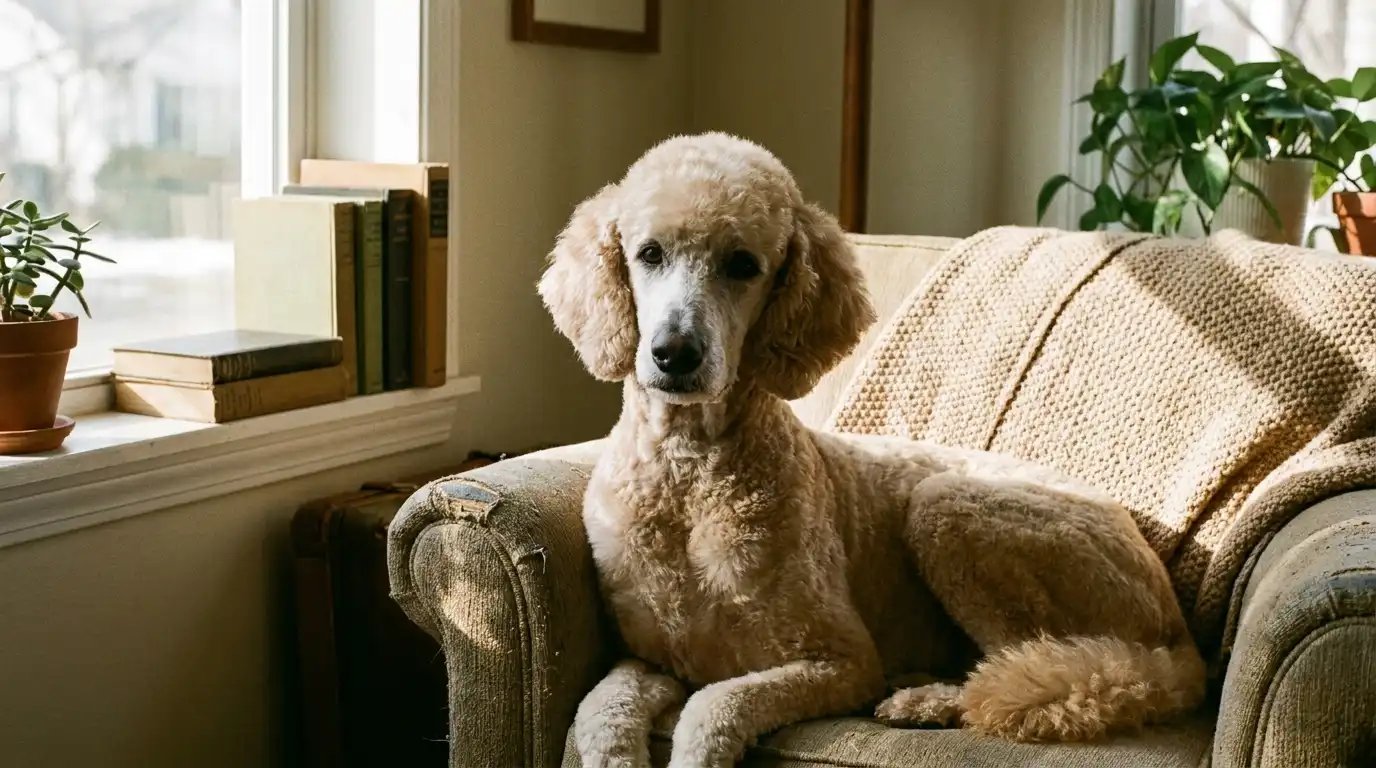
Poodles get famous for two things: that distinctive curly coat and a sharpness that makes them one of the smartest breeds around. Knowing how to groom a poodle matters at every age, but the senior years genuinely change the rules — thinning fur, more sensitive skin, and a coat that needs a gentler touch than it did at three. Learning how to groom an older poodle properly is really the heart of this guide, alongside the broader health picture.
Age also brings size-specific quirks worth knowing, since Toy, Miniature, and Standard Poodles don’t age at quite the same pace or in quite the same ways. This guide covers real lifespan numbers by size, when a Poodle actually becomes senior, the health issues to watch for, and exactly how grooming needs to shift as the years add up.
Poodle Life Expectancy
Poodle life expectancy varies more by size than almost any other breed trait. Toy Poodles often live 14 to 16 years. Miniatures land close behind at 12 to 15. Standards, the largest of the three, typically reach 10 to 13.
That inverse relationship — smaller Poodle, longer life — holds true across most breeds generally, but it’s especially pronounced here given how much size varies within a single breed standard. A Toy and a Standard Poodle share a coat type and a personality, but they’re genuinely different animals when it comes to aging timelines, almost like comparing two entirely separate breeds in terms of lifespan planning.
Genetics and breeding quality matter too, same as anywhere. A well-bred Poodle from health-tested parents tends to outlast one from a less careful breeding program, particularly when it comes to the joint and eye conditions covered below. Ask breeders directly about hip and eye testing if you’re getting a puppy, since it genuinely predicts a lot about the years ahead.
At What Age Is a Poodle Considered a Senior
This one splits clearly by size, more than in most breeds.
- Toy Poodles — senior status typically starts around 10 to 12 years
- Miniature Poodles — usually somewhere around 9 to 11 years
- Standard Poodles — senior territory begins earlier, around 8 to 10 years, consistent with the general pattern of larger dogs aging faster
This size-based split matters practically too, not just as trivia. It affects when you should start scheduling more frequent vet visits, when to consider a senior food switch, and when to start watching more closely for the breed-specific issues covered next.
Don’t treat these numbers as strict cutoffs. They’re useful markers for when to start paying closer attention, not birthdays that flip a switch overnight.
Common Health Issues in Senior Poodles
Senior poodle health issues cluster around a few areas, some size-specific and some shared across all three varieties. Knowing which applies most to your specific Poodle’s size helps you watch for the right things.
- Hip dysplasia — more common in Standard Poodles specifically, given their larger frame, often leading to later joint pain and arthritis
- Patellar luxation — a kneecap that slips out of place, seen more frequently in Toy and Miniature Poodles due to their smaller joint structure and lighter build
- Progressive retinal atrophy — a gradual, genetic vision-loss condition this breed carries at higher rates than many others, worth screening for even before symptoms appear, since early detection helps with adjustment
- Addison’s disease — an adrenal gland condition Poodles are somewhat predisposed to, causing vague symptoms like lethargy and appetite changes that are easy to miss early on
- Dental crowding — Poodles often have more teeth than their jaw comfortably fits, leading to crowding-related dental disease that worsens with age if not managed through regular cleanings
None of these are universal. But knowing what’s common in this breed means catching things early rather than chalking symptoms up to simple aging, which is easy to do with a breed this generally sturdy and long-lived.
How to Groom a Poodle in Senior Years
This is genuinely where senior Poodle care looks different from a younger dog’s routine, and understanding how to groom a poodle properly at this stage is worth doing right.
Brush more gently, more often. Senior coats thin somewhat and skin gets more sensitive, so a soft-bristle brush used more frequently beats an aggressive weekly session with a stiff one. Short, gentle strokes prevent pulling on skin that bruises more easily than it used to.
Consider a shorter, lower-maintenance trim. The elaborate show clips look wonderful, but they demand real upkeep that’s harder on an aging dog who tires more easily during long grooming sessions. A simple, shorter all-over clip reduces both the time on the table and the matting risk between visits, which matters more once a dog can’t hold a standing position as comfortably.
Watch for skin issues during every session. Bumps, dry patches, or unusual sensitivity to touch are all worth noting, since a senior Poodle’s skin genuinely changes with age and grooming time doubles as a health check most owners don’t think to use it for.
Space professional visits appropriately. Every 4 to 6 weeks remains typical, though some senior dogs do better with slightly more frequent, shorter sessions rather than one long marathon appointment that’s harder on aging joints and patience alike.
Learning how to groom an older poodle really comes down to patience and paying attention, more than any specific technique.
Handling Matting and Coat Changes
Matting becomes more of an issue in senior years, partly because thinner, more sensitive skin makes a Poodle less tolerant of the vigorous brushing that used to keep mats away easily.
Check problem areas — behind the ears, under the arms, around the collar — more often than you used to, even if the overall coat looks fine. These spots mat first and are easiest to miss during a quick glance.
If a mat does form, resist the urge to yank it out. Work it apart gently with your fingers first, or use a detangling spray, and don’t hesitate to just trim a stubborn mat out entirely rather than pulling on skin that bruises more easily now.
A shorter overall coat length, as mentioned above, genuinely reduces how often this becomes a problem in the first place. Less coat means fewer places for mats to form and less discomfort.
Nutrition for Senior Poodles
Weight management matters differently depending on size here, which is worth understanding rather than applying one blanket rule across all three varieties.
Toy and Miniature Poodles need portion control more than joint-focused formulas, generally, since their smaller frames make weight gain proportionally more impactful. A few extra ounces on a 10-pound Toy Poodle is a much bigger deal than the same weight gain on a 70-pound Standard, even though it sounds trivial on paper.
Standard Poodles, given their higher hip dysplasia risk, benefit more directly from joint-support ingredients — glucosamine and chondroitin specifically. A quality senior dog food matched to your Poodle’s actual size category, not a generic one-size-fits-all senior formula, makes a real difference here.
Dental health also factors into feeding choices, given this breed’s crowding tendency. Softer kibble or wet food sometimes becomes necessary if dental disease has progressed, which is worth discussing directly with your vet rather than guessing based on how your dog seems to be eating.
Exercise and Mental Stimulation as They Age
Poodles are famously sharp, and that intelligence doesn’t dim much with age even as the body slows down considerably.
Physical exercise should scale back gently — shorter walks, less jumping, especially for Standards managing joint concerns. But mental stimulation matters just as much as it always did, maybe more, since an under-stimulated senior Poodle can genuinely seem more restless or anxious than one whose mind stays engaged and busy.
Puzzle toys, gentle new training exercises, and simple scent games all keep a senior Poodle’s mind active without demanding much physically. This kind of engagement also plays a real role in managing cognitive decline, which intelligent, previously very engaged breeds sometimes notice more sharply once it starts, almost as if the contrast makes it more obvious.
For deeper breed-specific background, the American Kennel Club maintains a detailed Poodle profile, and veterinary ophthalmology resources on progressive retinal atrophy are worth reading if vision loss runs in your dog’s line or has already been diagnosed.
Frequently Asked Questions
How to groom a poodle with very thin senior fur? Switch to a soft-bristle brush, shorten grooming sessions, and consider a lower-maintenance trim overall. Learning how to groom a poodle at this life stage really comes down to gentle, frequent care beating infrequent, aggressive sessions.
What is poodle life expectancy on average across all sizes? Roughly 10 to 16 years depending heavily on size — Toy Poodles at the higher end, Standards at the lower end, Miniatures in between, with individual health and genetics shifting things further either way.
Do Standard Poodles have more health issues than Toy Poodles? Somewhat different issues rather than simply more. Standards lean toward hip dysplasia, while Toys and Minis lean toward patellar luxation, so it’s more about which specific risks apply to your dog’s particular size.
Is my senior Poodle’s coat change normal, or a health concern? Some thinning and texture change is normal with age. Sudden bald patches, however, or skin that looks inflamed, are worth a vet visit rather than assuming it’s just aging catching up.
How does knowing what age is a dog considered senior apply to Poodles specifically? Poodles follow the general size-based pattern fairly closely — smaller dogs reaching senior status later than larger ones, consistent with most breeds overall once you account for their unique size range.
A Final Note
Poodles carry their intelligence and elegance well into old age, and a little extra gentleness during grooming, paired with size-appropriate health monitoring, keeps that dignity intact through the senior years. Whatever size Poodle shares your home, paying attention to his specific needs, not a generic one-size-fits-all approach, is what actually serves him best.
Most owners find that once they adjust their grooming rhythm to match their dog’s changing needs, the whole process feels less like a chore and more like the same bonding time it always was, just done a little more carefully than before.