Signs Your Senior Dog Is in Pain: Complete Guide

Your dog used to be at the door before you could even open it. He’s been taking a second lately. Maybe two. Of course, you have already convinced yourself that it’s nothing, he’s just getting old. Sometimes that’s true. However, it is important to know the signs your senior dog is in pain as dogs hide what it is that you are trying to see.
This guide details how to spot pain in an older dog physically, behaviourally, by body area and gives a clear plan of what to do if you see signs of pain and when a veterinary visit is really necessary. For none of this is a vet degree necessary to see. It simply takes focus on the proper things.
Why Senior Dogs Hide Pain
Here is the thing about dogs: they don’t complain like we do. A wolf that limps too obviously becomes the easy target in the pack, and even generations removed from that life, your dog’s brain hasn’t quite gotten the memo that the den is now a couch by the fireplace. The instinct is old. Older than the couch, older than the breed, older than domestication itself.
So instead of dramatic signals, you tend to get quiet ones. A half-second hesitation before jumping onto the couch. Slightly less eagerness at dinnertime. A little extra distance kept between him and the kids during rowdy play. On their own, any one of these could just be a Tuesday.
The real skill in catching pain early isn’t watching for something dramatic , it’s noticing the pattern in the small stuff, and trusting your gut when something feels off, even if you can’t quite explain why. If you’ve caught yourself double-checking your dog lately, that instinct is worth listening to.
Physical Signs Your Senior Dog Is in Pain
More often than not, owners notice the physical signs, although they may not immediately realize it’s painful, it may read as “he seems a bit slower” or “he’s not quite himself. Watch for:
- Limping or favoring a leg — even if it only shows up after a long walk, or first thing in the morning before he’s loosened up
- Stiffness getting up or lying down — that slow, careful unfolding instead of the old flop-and-go
- Skipping the couch jump, or hesitating at the bottom of the stairs, sometimes pacing back and forth before committing
- Licking or chewing one spot repeatedly, often over a joint or a specific patch of skin
- A hunched back or lowered head, or a tail that stays tucked more than it used to
- Visible muscle loss, especially around the hind legs — run a hand along the thigh if you’re not sure, and compare it to how it felt a few months back
- Panting when it’s not hot outside and he hasn’t been running
- Shaking in the legs, particularly after standing for a while
- Shorter walks that end sooner than he used to want, or a dog who suddenly wants to turn back halfway through the usual route
One or two of these on their own can mean nothing ,a stiff morning after sleeping in an odd position happens to every dog. A cluster of them showing up together, especially if they’re new or getting more frequent, is worth paying real attention to.
Behavioral Signs of Pain
Pain does not always show up in the body first. Sometimes it shows up as a personality shift that’s easy to blame on “just getting older” or “having an off day,” especially in a dog who’s always had a fairly steady temperament.
- Avoiding physical contact with others — choosing a quiet corner over the usual spot by your feet, or leaving the room during activity he’d normally join
- Snapping or growling when touched somewhere specific, even from a dog who’s never done that before in his life
- Restlessness at night — pacing, repositioning, unable to settle into a comfortable spot
- Eating less, or eating slower and more carefully than before, sometimes approaching the bowl and then walking away
- Whining, groaning, or yelping when moving, being lifted, or during normal handling like brushing
- Sleeping more overall, but in shorter stretches rather than the long, deep naps he used to take
- Losing interest in play he used to genuinely love, or giving up on a game after a minute instead of ten
If your easy dog suddenly seems irritable, or your social dog starts avoiding the family, don’t chalk it up to a mood. Dogs don’t suddenly get “grumpy” for no reason like humans do. Most of the time that change is painful speaking, and it’s asking to hear.
Signs by Body Area
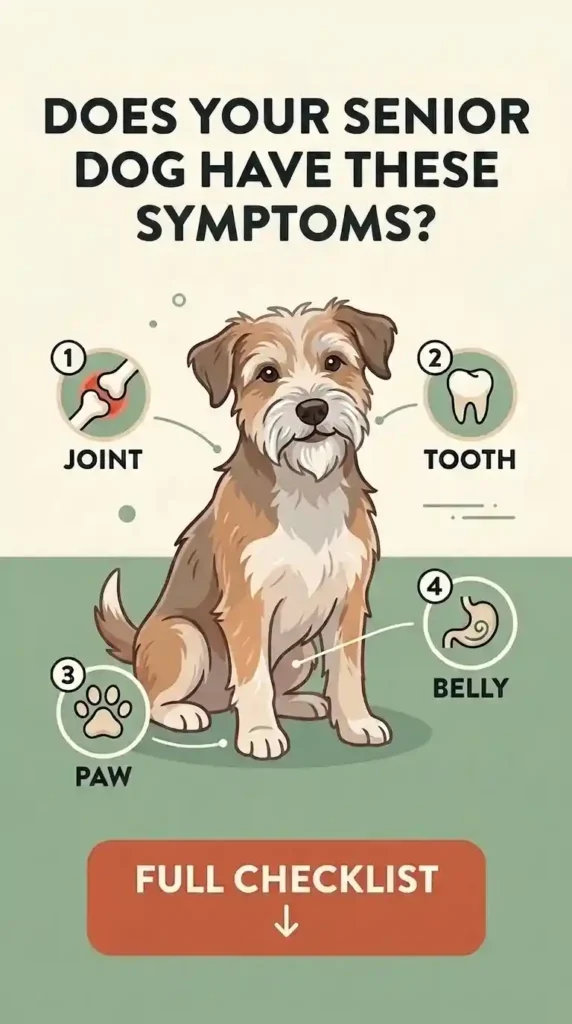
Pain tends to cluster around a handful of common problem areas in older dogs. Knowing what each one looks like helps you describe things clearly once you are at the vet, instead of just saying “he seems off.”
Joint & Mobility Pain
This is by far the most common source of pain in senior dogs, and most of it comes down to arthritis. Look for stiffness that’s worse after naps, resistance to climb stairs, or a stiff, slightly bunny-hopping gait in the back legs when he runs.
Dogs dealing with joint pain and arthritis often get noticeably better as they warm up mid-walk, then stiffen right back up once they have been resting a while. That pattern , worse at rest, better once moving, worse again later is one of the clearest signs there is, and it’s different from an injury, which usually doesn’t ease up with movement at all.
Dental Pain
Dental pain hides well, because it’s hidden — inside the mouth, where you’re not looking most days unless you go searching for it. Watch for dropped food while eating, chewing exclusively on one side, breath that’s suddenly worse than usual, pawing at the mouth or face, and a sudden switch to only wanting soft food.
A lot of owners assume a senior dog eating more slowly is just age catching up. Sometimes it’s a sore tooth or inflamed gum line he’s been quietly dealing with for weeks, working around it without ever letting on.
Abdominal Pain
This one is a lot trickier to catch, and it is the one owners most often miss entirely. Signs include a hunched, almost “praying” posture with the front legs down and the rear end up, restlessness that will not settle no matter what position he tries, a belly that feels tense or sensitive to a gentle touch, vomiting, or a stomach that looks visibly swollen or bloated.
If you notice any of this alongside a loss of appetite, don’t wait it out to see if it passes. This is one area where a same-day call to the vet is genuinely the safer move, not an overreaction.
What to Do If You Notice These Signs
Seeing a few of these signs doesn’t mean something’s disastrously wrong. It does mean it’s time to act, not wait and see what happens over the next few weeks.
Book a vet visit. Pain in older dogs is common, but it’s not something to just accept as “part of getting old” without a professional taking a look. A lot of causes turn out to be very manageable once identified, and plenty of dogs bounce back with the right treatment plan.
Keep a simple note before you go. Nothing fancy , a note on your phone each time you notice something, with the date attached. “Stiff getting up, Tuesday morning.” “Wouldn’t jump in the car, Thursday.” “Growled when I touched his back leg, Sunday.” Two weeks of this gives your vet a real pattern to work with instead of a unclear “he’s been off lately,” and it often speeds up getting to the right diagnosis.
Make life a little easier at home while you sort things out. A rug over slippery flooring, a ramp for the car or the bed, and a supportive orthopedic bed can genuinely take pressure off sore joints day to day, even before any diagnosis comes back.
Tracking and Preparing for Your Vet Visit
Watch how he moves on different surfaces. Hardwood versus carpet versus grass can reveal a lot .A dog who moves fine on grass but slips and struggles on tile is often dealing with a mix of joint pain and reduced traction, which is a very useful detail to bring to your vet appointment.
Skip the human medicine cabinet. It’s tempting to reach for something you would take yourself, but a lot of common over-the-counter pain relievers are dangerous for dogs, even in small doses. Pain management needs to come from your vet, not your bathroom shelf, however well-intentioned that instinct is.
Budget for it honestly. Ongoing pain management can come with real, recurring costs, and it’s worth thinking about the cost of vet ahead of time rather than being caught off guard later, especially if bloodwork or imaging ends up being part of the diagnosis.
For general background on pain recognition in aging pets, the American Veterinary Medical Association has solid, vet-reviewed information worth a look.
When It’s an Emergency
Most of what we have covered above calls for a normal vet visit, not a mad rush to the emergency clinic. A few things, though, mean you should not wait for the next available appointment, even if it’s late at night or a weekend:
- Sudden inability to stand or walk at all
- A belly that’s visibly swollen or bloated
- Crying out when touched almost anywhere on the body
- Collapse, or lethargy so severe he won’t lift his head to greet you
- Vomiting combined with refusing food or water for more than a day
Any one of these on its own is worth an urgent call. Together, they’re a clear sign this can’t wait until Monday, and an emergency vet visit is the right thing, not an overreaction.
Frequently Asked Questions
How can I tell if my old dog is in pain if he’s not limping? Look past the legs. Withdrawal, appetite changes, restlessness at night, and irritability when touched often show up well before any visible limp does — pain doesn’t always announce itself through the legs first.
Is slowing down just normal aging, or is it pain? Some slowdown is genuinely normal, and not every gray muzzle or shorter walk means something’s wrong. A sudden change, or several signs appearing together within a short window, is different — that combination is worth a vet visit rather than an assumption either way.
What dog pain behavior changes do owners miss most often? Appetite and sleep changes, by far. They’re easy to explain away as “just getting older” when they’re often the earliest real signs something’s wrong, well before any physical symptom becomes obvious.
When should I take my senior dog to the vet for pain? As a rough guide, two or more signs lasting several days is worth a booked visit, and any of the emergency signs above is worth an urgent one — when in doubt, a phone call to your vet’s office costs nothing and can settle it either way.
A Final Note
Watching your dog age is not easy, and worrying about missing something is part of loving him. The fact that you’re paying this much attention already puts you way ahead of where most owners start. Trust what you’re noticing, write it down when you can, and let your vet help you fill in the rest ,you don’t have to figure this out alone.