Senior Chihuahua: Health, Aging & Care Guide
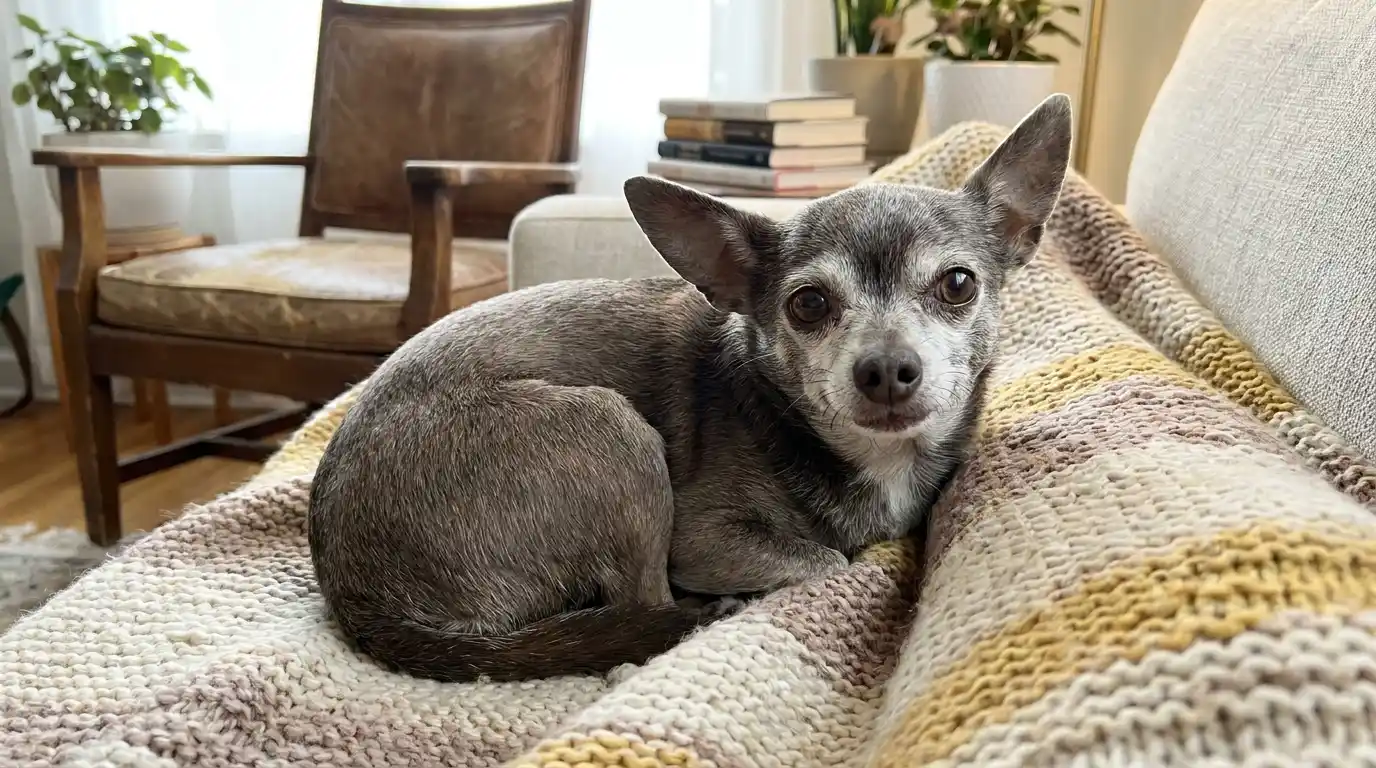
How long do chihuahuas live? Often 14 to 16 years, sometimes longer, making this one of the longest-lived dog breeds around. That’s genuinely wonderful news for anyone sharing a home with one. It also means a much longer senior chapter than most breeds ever see, and that chapter comes with its own specific needs.
A tiny frame brings tiny-frame problems. Dental crowding, cold sensitivity, a build that doesn’t tolerate excess weight the way a larger dog might. This guide covers real lifespan numbers, when a Chihuahua actually enters senior years, the health issues this breed leans toward, and exactly how to keep him comfortable, warm, and healthy through what could be a decade or more of golden years.
Chihuahua Life Expectancy
The honest answer to how long do chihuahuas live: 14 to 16 years on average, with some Chihuahuas pushing past 17 or 18. Very few breeds live this long, which puts Chihuahuas near the top of the longevity list among all dogs, purebred or otherwise.
Wondering how long do chihuahuas live in human years? Using rough conversions, a 15-year-old Chihuahua sits somewhere around 76 in human-equivalent age — genuinely elderly, but a testament to how gently this breed tends to age when cared for well.
Teacup Chihuahuas deserve a specific mention here, since life expectancy teacup chihuahua searches come up constantly. Teacup-sized dogs, bred smaller than breed standard, sometimes face a shorter lifespan than standard Chihuahuas due to increased health fragility that comes with extreme miniaturization. If you’re wondering how long do teacup chihuahuas live specifically, the honest answer is: often slightly less than standard-sized Chihuahuas, though individual health and care still matter enormously.
That’s genuinely worth knowing before choosing between a teacup and a standard-sized Chihuahua, since the smaller extreme carries real trade-offs alongside the appeal.
How Chihuahua Years Compare to Human Years
That question about how long do chihuahuas live in human years deserves a bit more nuance than a flat “times seven” answer, since the old dog-year math never really applied evenly across breeds.
Small breeds age faster in their first couple of years, then slow down considerably compared to larger dogs. A one-year-old Chihuahua is roughly equivalent to a 15-year-old human, but by the time he’s five, he’s aging much more gradually, maybe two or three human years for each calendar year rather than seven.
By ten, most Chihuahuas sit somewhere around 56 to 60 in human terms, still very much active and engaged. By fifteen, that climbs to roughly the mid-70s, genuinely elderly, but often still spry given how gently this breed tends to carry its age.
At What Age Is a Chihuahua Considered a Senior
Small breeds age slowly compared to their larger counterparts, and Chihuahuas are about as small as dogs get.
Most vets place Chihuahuas in senior territory around 10 to 12 years old, noticeably later than a medium or large breed. Given their long overall lifespan, that senior window can genuinely stretch across several comfortable years rather than feeling rushed the way it might in a shorter-lived breed.
Don’t treat this as a hard cutoff. Plenty of ten-year-old Chihuahuas still act like pups, darting around and demanding attention exactly as they always have.
Common Health Issues in Senior Chihuahuas
Senior chihuahua health issues cluster around a few areas specific to this breed’s tiny build. Knowing this list ahead of time makes a real difference in catching problems before they become urgent.
- Dental disease — extremely common, given how much tooth crowds into such a small jaw; this is arguably the single biggest health concern for the breed and gets its own section below
- Patellar luxation — a slipping kneecap, common in small breeds generally and Chihuahuas specifically, sometimes worsening with age and showing up as an occasional skip-step while walking
- Heart murmurs and mitral valve disease — a degenerative heart valve condition that becomes more common as small breeds age, often first detected as a murmur during a routine exam long before any visible symptom
- Tracheal collapse — a weakening of the windpipe that causes a distinctive honking cough, more common in small breeds and often worse in senior years, especially during excitement or pulling on a leash
- Obesity — even a small amount of extra weight has an outsized effect on a dog this tiny, putting real strain on joints and the heart alike
Knowing this list means catching things early, rather than dismissing a cough or a limp as nothing worth mentioning at your dog’s next checkup.
Dental Care Is Non-Negotiable for This Breed
Chihuahua dental problems deserve their own section, because this genuinely is the health issue owners underestimate the most.
Their small jaws simply weren’t built to comfortably fit a full set of teeth. That crowding creates tight spaces where plaque builds up fast, leading to gum disease and tooth loss far more often than in larger breeds with more room to work with, sometimes by the time a Chihuahua is only middle-aged.
Daily brushing genuinely makes a difference here, more than in almost any other breed. Even a few times a week beats none, and starting the habit early makes a senior Chihuahua’s mouth far easier to manage later, since plaque is much easier to prevent than to reverse.
Professional cleanings matter too, and you shouldn’t skip them just because a senior dog seems otherwise healthy. Advanced dental disease affects more than the mouth—it can contribute to heart and kidney strain when bacteria enter the bloodstream through inflamed gums, a connection many owners simply don’t know about.
Watch for bad breath beyond normal, pawing at the mouth, or reluctance to eat hard food. These are often the first visible signs something’s wrong beneath the surface. For deeper background, veterinary dental health resources on small-breed dental disease are worth reading if this runs in your dog’s history or has already been flagged by your vet.
Nutrition for Senior Chihuahuas
Portion control here almost becomes a different exercise entirely compared to larger breeds, given how little margin for error a tiny body has.
Chihuahua weight average sits around 3 to 6 pounds for a healthy adult, which means even half a pound of extra weight represents a meaningful percentage gain — something that would barely register on a 60-pound Labrador. Precise, measured portions matter more here than almost anywhere else in dog care, and a kitchen scale genuinely beats eyeballing a scoop.
Given how common dental issues are in this breed, texture matters too. Softer kibble, or kibble soaked briefly in water, helps a senior Chihuahua with dental discomfort eat comfortably without needing to switch to wet food entirely.
A quality senior dog food sized appropriately for small breeds, with reasonable calorie density for such a small dog’s actual needs, covers most of what matters here, especially when paired with a vet-confirmed target weight rather than a guess.
Keeping a Small Senior Dog Warm and Safe
Chihuahuas run cold even as young, healthy dogs. Senior years make this considerably more pronounced, since older bodies generally lose heat faster and regulate it less efficiently.
A thin coat, minimal body fat, and a small overall body mass mean heat escapes fast. A good coat for a chihuahua, worn on chilly walks or even indoors during winter, genuinely isn’t excessive — it’s a real comfort and safety measure for a dog built this small, not just a fashion choice.
Watch for shivering that persists even indoors, which can signal genuine cold sensitivity beyond normal. Senior dogs regulate body temperature less efficiently than younger ones, making this worth taking seriously rather than assuming it’s just personality or nerves.
Safety extends beyond temperature too. A senior Chihuahua with any joint or heart concerns benefits from careful handling during play, secure footing at home, and protection from larger pets or boisterous kids who might not realize how fragile a dog this size can become with age, even if he was sturdy and scrappy in his younger years.
For more on this breed generally, the American Kennel Club maintains a detailed Chihuahua profile worth reading.
Frequently Asked Questions
How long do chihuahuas live compared to other small breeds? Chihuahuas are among the longest-lived of all breeds, often outlasting other small dogs by a couple of years on average, thanks partly to their tiny size and partly to generally hardy genetics.
When is a chihuahua considered a senior exactly? Around 10 to 12 years typically, later than most breeds given how slowly small dogs age overall, and how long this particular breed tends to stay active.
Is dental disease really that serious in this breed? Yes, genuinely. It’s one of the most common and most underestimated health issues Chihuahuas face, and it can affect more than just the mouth if left untreated for years, potentially straining the heart and kidneys too.
Can obesity really cause serious problems in such a small dog? Absolutely, and arguably more so than in larger breeds. A small amount of extra weight represents a much bigger percentage increase on a 4-pound frame than the same weight would on a bigger dog, which is why portion precision matters so much here.
Does joint pain and arthritis affect Chihuahuas the way it does larger breeds? Somewhat differently. Chihuahuas are less prone to hip dysplasia than large breeds, but patellar luxation and general age-related stiffness still happen, and it’s worth watching for the same way you would with any senior dog regardless of size.
A Final Note
Chihuahuas give owners something rare: genuinely many years together, often well into their late teens. Whatever the exact answer to how long do chihuahuas live turns out to be for your specific dog, that long runway makes it worth investing early in dental care, weight management, and simple warmth, since small, consistent habits compound meaningfully over a decade-plus lifespan. Watching for signs your senior dog is in pain and understanding what age is a dog considered senior for a breed this small helps you meet him exactly where he is, for as long as he’s got.
Few things feel quite as rewarding as watching a dog this small stay this scrappy for this long. A little extra care now pays off across genuinely many good years ahead.