Senior German Shepherd: Health, Aging & Care Guide
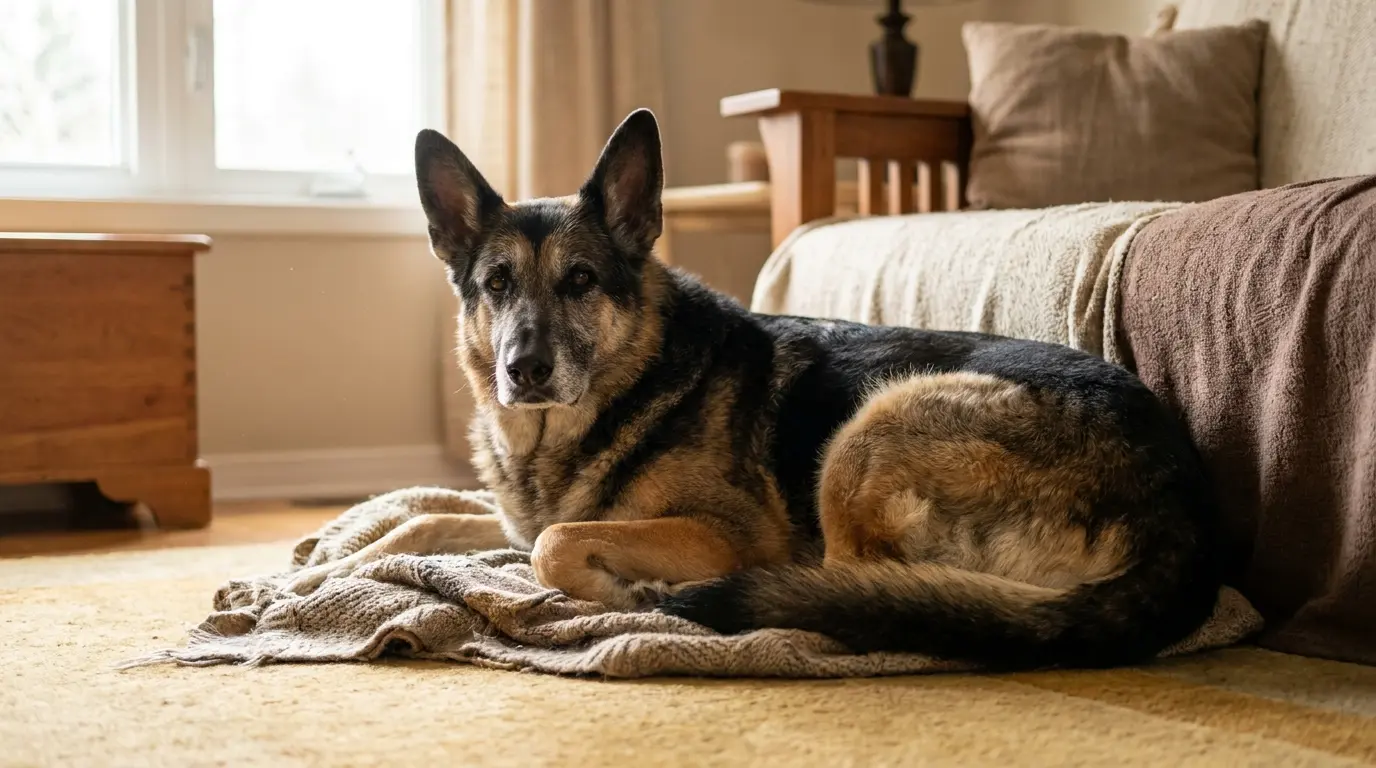
How long does a german shepherd live? Most reach somewhere between 9 and 13 years, with 10 to 11 being the realistic average for the breed. That’s shorter than a lot of medium-sized dogs, and there’s a specific reason for it — German Shepherds age through the back half of their body in a way that’s genuinely distinct from most other breeds.
Watch an aging Shepherd walk and you’ll often see it in the hindquarters first. A slight sway, a dragging back paw, hips that seem to sink lower than they used to. This guide covers real lifespan numbers, when a Shepherd actually enters senior years, the health issues this breed is especially prone to, and specifically how to manage that hindquarter decline that so many owners eventually deal with.
How Long Does a German Shepherd Live? Life Expectancy Explained
The honest answer to how long does a german shepherd live: 9 to 13 years, averaging around 10 to 11. Some working-line Shepherds, leaner and more athletic, edge toward the higher end. Show-line dogs, often bred with a more sloped back and heavier build, sometimes fall shorter.
A few things move that number. Weight matters, same as most breeds, but joint health matters even more here specifically, given how prone Shepherds are to hip and spinal issues. Genetics play an outsized role too — this is a breed where knowing a dog’s parents’ health history genuinely tells you something useful about what’s likely ahead, more so than in less structurally consistent breeds.
Degenerative myelopathy, a progressive spinal cord condition disproportionately common in this breed, also factors into lifespan for the dogs who develop it. It’s not universal, but it’s common enough in German Shepherds specifically that most vets watch for it as a matter of course once a dog hits middle age, often well before any visible symptoms appear.
At What Age Is a German Shepherd Considered a Senior
Shepherds are a large breed, and large breeds age faster than their size alone might suggest. Most vets consider a Shepherd senior starting around 6 to 7 years old, noticeably earlier than a similarly sized but less joint-prone breed might be.
That’s earlier than a lot of owners expect, honestly. A six-year-old Shepherd still looks and often acts like he’s in his prime, which makes the internal shift toward senior status feel like it’s sneaking up rather than arriving on schedule the way a birthday would.
Working-line dogs sometimes hold onto peak condition slightly longer than show-line dogs, thanks to a leaner build and less structural strain on the hips.
Senior German Shepherd Health Problems to Watch For
This breed carries a fairly specific set of risks, more concentrated than what you’d see in a genuinely mixed-health breed. Knowing this list ahead of time means fewer surprises down the road.
- Hip and elbow dysplasia — extremely common, often considered close to a hallmark issue for the breed, and frequently the underlying cause behind later joint pain and arthritis
- Degenerative myelopathy — a progressive disease affecting the spinal cord, causing gradual hind-leg weakness and eventual paralysis in affected dogs; genuinely more common in Shepherds than almost any other breed, and one worth discussing with your vet even before symptoms appear
- Arthritis — often develops earlier here than in less joint-prone breeds, largely as a downstream effect of dysplasia rather than simple wear and tear alone
- Bloat (gastric torsion) — a genuine emergency risk in deep-chested breeds like this one, worth knowing the warning signs for regardless of age, since it can turn fatal within hours if untreated
- Exocrine pancreatic insufficiency — a digestive condition where the pancreas stops producing enough enzymes, disproportionately seen in German Shepherds compared to most other breeds, sometimes showing up as unexplained weight loss
None of these are guaranteed for your specific dog. But this list is exactly why regular vet visits and honest attention matter more in this breed than in a lot of others.
Mobility and Hindquarter Weakness
This is genuinely the defining aging pattern for German Shepherds, distinct enough from other breeds that it deserves its own section entirely.
German shepherd hip dysplasia in senior dogs often shows up first as subtle hind-leg weakness rather than obvious pain. A dog who starts “sinking” slightly in the rear when standing, or drags a back paw occasionally without seeming to notice, is showing an early pattern worth mentioning to your vet directly and specifically, rather than waiting to see if it gets more obvious.
Degenerative myelopathy complicates this further, since its early signs — hind-leg weakness, dragging paws, difficulty with stairs — overlap heavily with dysplasia and arthritis. Only a vet, sometimes with genetic testing, can really distinguish between the three, which is exactly why a direct vet conversation matters more than guessing at home.
Practically, this means home modifications matter earlier and more heavily for this breed than for most. Ramps and stairs become genuinely important well before a Shepherd looks dramatically old, since hindquarter support issues often start quietly, well before an owner notices anything obviously wrong with how their dog moves day to day.
A supportive orthopedic bed matters here too, arguably more than in most breeds, given how much pressure a weakening rear end puts on hips and spine during rest, and how many hours a day a senior dog spends lying down.
Genetic Testing Worth Considering
Given how concentrated this breed’s risks are, genetic testing offers real practical value here, more so than in breeds with a broader spread of possible issues.
A DM (degenerative myelopathy) genetic test can tell you whether your dog carries the risk variant, well before any symptoms show up. A positive result doesn’t guarantee the disease will develop, but it does mean earlier, more informed monitoring makes sense.
Hip and elbow scoring through your vet, sometimes involving X-rays even in a dog who seems currently fine, can flag dysplasia risk before it becomes symptomatic too. Catching structural issues early gives you more room to slow things down through weight and exercise management, rather than reacting once a dog is already showing visible discomfort.
Nutrition for Senior German Shepherds
Joint support through diet matters enormously for this breed, given everything covered above. Food alone won’t undo genetic dysplasia, but it can meaningfully slow how fast things progress.
A quality senior dog food with built-in glucosamine and chondroitin addresses joint health directly, and it’s worth prioritizing over a generic senior formula that doesn’t specifically include these. Given how much this breed’s issues concentrate around joints and spine, general “senior” labeling isn’t quite enough on its own.
Weight management matters too, same as any large breed, since extra pounds accelerate the joint decline this breed is already prone to. A lean body condition genuinely buys time here, more than in breeds without the same structural risk, and it’s one of the few factors fully within an owner’s control.
Some vets also recommend digestive-support formulas given the breed’s tendency toward exocrine pancreatic insufficiency, particularly for Shepherds already showing digestive symptoms like weight loss despite normal appetite or greasy, unusual stools.
Exercise Needs as They Age
Shepherds are a working breed at heart, bred for endurance and purpose, and that drive rarely fades even as the body starts to struggle to keep up with it.
Shift toward controlled, lower-impact activity rather than cutting exercise entirely. Structured walks and swimming both keep muscle mass around weakening joints without the repetitive impact that accelerates decline further.
Watch specifically for hind-leg fatigue, not just general tiredness. A Shepherd who used to run for an hour and now stumbles or seems unsteady after twenty minutes is showing something specific about those hips and that spine, not just normal aging fatigue that any dog might show.
Consistency beats intensity here more than in most breeds. Frequent, moderate movement maintains the muscle that supports a Shepherd’s often-vulnerable hindquarters far better than occasional intense exercise followed by days of rest recovering from it.
Grooming and Shedding
That double coat sheds constantly, arguably even more dramatically than a Labrador’s, and senior years don’t slow it down one bit.
Brush several times a week, daily during seasonal blowouts in spring and fall. This also doubles as a hands-on check for the muscle loss around the hindquarters that often signals the mobility issues covered above, which you might not notice just by looking.
Nails deserve extra attention too. A Shepherd compensating for hind-leg weakness often shifts weight forward, wearing front nails down unevenly and letting back nails grow too long, which further worsens balance if left unaddressed for too long.
For deeper breed-specific health background, the American Kennel Club maintains a detailed German Shepherd profile, and veterinary neurology resources covering degenerative myelopathy specifically are worth reading .
Frequently Asked Questions
How long does a german shepherd live compared to similar large breeds? Slightly shorter than average for a dog this size, mostly due to the breed’s concentrated joint and spinal health risks rather than any single fixed cause. Careful weight and joint management genuinely helps close that gap.
When is a german shepherd considered a senior exactly? Around 6 to 7 years typically, earlier than many similarly sized breeds, largely because of how early joint and spinal issues tend to develop here compared to less structurally strained breeds.
Is hindquarter weakness always degenerative myelopathy? No, and this is a common point of confusion. Arthritis and hip dysplasia cause similar symptoms far more often. Genetic testing and a thorough vet exam are the only reliable ways to tell them apart, so don’t assume the worst without that confirmation.
Can diet actually slow joint decline in this breed? It genuinely helps, though it won’t prevent dysplasia that’s already genetically present. Weight management and targeted joint supplements meaningfully slow how fast existing issues progress, even if they can’t reverse structural problems already there.
Should I watch for signs of pain differently in this breed? Somewhat, yes. Shepherds are known for stoicism, often masking discomfort more than other breeds do. Our guide on signs your senior dog is in pain is worth reading closely, since subtle signs matter more in a breed this good at hiding them from an owner who isn’t looking closely.
A Final Note
German Shepherds carry themselves with a kind of quiet dignity, even as the hindquarters start to struggle. Whatever the exact answer to how long does a german shepherd live turns out to be for your specific dog, a little extra attention to joints, diet, and mobility support goes further in this breed than almost any other, simply because so much of what threatens a Shepherd’s golden years concentrates in one predictable place. Watch that back end closely, and you’re watching the thing that matters most.