Old Dog Back Legs Collapsing: Causes and What to Do
Watching old dog back legs collapsing underneath him mid-walk is genuinely alarming, the kind of moment that sticks with an owner long after it happens. The good news, if there’s a silver lining here at all, is that several distinct causes lead to this, and some are far more manageable than the frightening image itself suggests.
This guide walks through what typically causes hind-leg collapse in senior dogs, how to tell degenerative myelopathy apart from arthritis, what to do the moment you notice it, how vets actually diagnose the cause, and how to manage mobility at home either way. None of this requires a medical background, just close attention and a willingness to get him seen promptly.
Common Causes of Back Leg Collapse in Senior Dogs
Dogs back legs weak or giving out entirely usually traces back to one of a handful of specific causes, each with a different outlook and treatment path. Knowing which category you’re likely dealing with helps you have a more informed conversation once you’re at the vet.
- Arthritis and hip dysplasia — chronic joint deterioration that gradually weakens the hindquarters, often the most common cause overall, especially in larger breeds
- Degenerative myelopathy (DM) — a progressive spinal cord disease, disproportionately common in German Shepherds and similar breeds, that causes gradual, painless hind-leg weakness and eventual paralysis
- Intervertebral disc disease (IVDD) — a spinal condition where discs bulge or rupture, pressing on the spinal cord and causing sudden, often painful hind-leg dysfunction
- General muscle atrophy — reduced activity over time simply shrinks the muscle supporting the hindquarters, weakening them independent of any specific disease
- Neurological issues — beyond DM specifically, other nerve-related conditions can cause dogs back legs not working properly, sometimes appearing suddenly rather than gradually
What causes sudden hind leg weakness in dogs specifically often points toward IVDD or an acute injury, since DM and arthritis both tend to progress gradually rather than appearing overnight.
Degenerative Myelopathy vs. Arthritis — How to Tell the Difference
This distinction matters enormously, since the two conditions call for genuinely different approaches and expectations.
Degenerative myelopathy in dogs is progressive but not painful. A dog with DM typically shows no signs of discomfort even as the hind legs weaken, and the progression is usually gradual over months, sometimes longer. Dragging paws, knuckling over on the top of the foot while walking, and a wobbly, uncoordinated gait are classic early signs.
Arthritis-related weakness, by contrast, usually comes with visible discomfort. A dog favoring a leg, wincing when touched near a joint, or showing stiffness that improves somewhat with movement is more consistent with joint pain and arthritis than with DM.
Dog suddenly limping back leg leans toward arthritis flare-up, an injury, or IVDD rather than DM, since DM’s hallmark is a slow, painless decline rather than a sudden onset. This timing detail is one of the most useful things you can describe to your vet.
Genetic testing exists for DM specifically, particularly relevant for breeds like German Shepherds where the condition is more common. If you’re caring for a senior german shepherd showing early hind-leg symptoms, this test is worth asking your vet about directly.
What to Do When You Notice This
Don’t force continued activity if your dog’s legs are visibly giving out. Pushing through can worsen an acute injury or cause a fall that leads to additional harm on top of whatever’s already happening beneath the surface.
Note exactly when and how it happens. Does it occur after rest, during exercise, on stairs specifically, or seemingly at random? Is there any pain response when you touch his back or hips? This detail speeds up diagnosis considerably once you’re at the vet.
Book a vet visit promptly rather than waiting to see if it resolves. Some causes, particularly IVDD, genuinely benefit from swift intervention, and delaying can mean the difference between a manageable outcome and a much harder one.
Dog not putting weight on back leg at all, especially suddenly, warrants treating this as urgent rather than routine. That specific presentation often signals something needing same-day attention.
How Vets Diagnose the Cause
Expect a thorough process, since several conditions can look similar on the surface and a rushed diagnosis can send you down the wrong management path entirely.
A physical exam comes first, checking joint range of motion, pain response, and general mobility. This alone often narrows things down considerably between arthritis and something more neurological in nature.
A neurological exam follows for suspected DM or other nerve-related causes, testing reflexes and proprioception (whether your dog knows where his feet are without looking). This test specifically helps distinguish DM from muscle-only weakness, since the two can look deceptively similar to an untrained eye.
Imaging, including X-rays or an MRI, gets added when IVDD or a structural spinal issue is suspected. MRI in particular gives a much clearer picture of disc and spinal cord issues than X-rays alone can provide.
Genetic testing rounds out the picture for suspected DM, especially in higher-risk breeds, confirming or ruling out the specific genetic marker associated with the condition. This test can even be run before symptoms appear, which some owners of at-risk breeds choose to do proactively for peace of mind.
Managing Mobility at Home
Whatever the diagnosis, a few home adjustments genuinely help a dog with hind-leg weakness navigate daily life more safely and with more confidence.
Non-slip flooring throughout the house reduces the risk of a fall on already-weakened legs, since slipping on hardwood or tile turns a manageable weakness into a real safety hazard fast. Rugs or runners along frequently walked paths make a real difference, especially in hallways and near food and water bowls.
Ramps and stairs for cars, beds, and any elevated surface remove the need for hind legs to push off and land, both of which become genuinely difficult with progressive weakness.
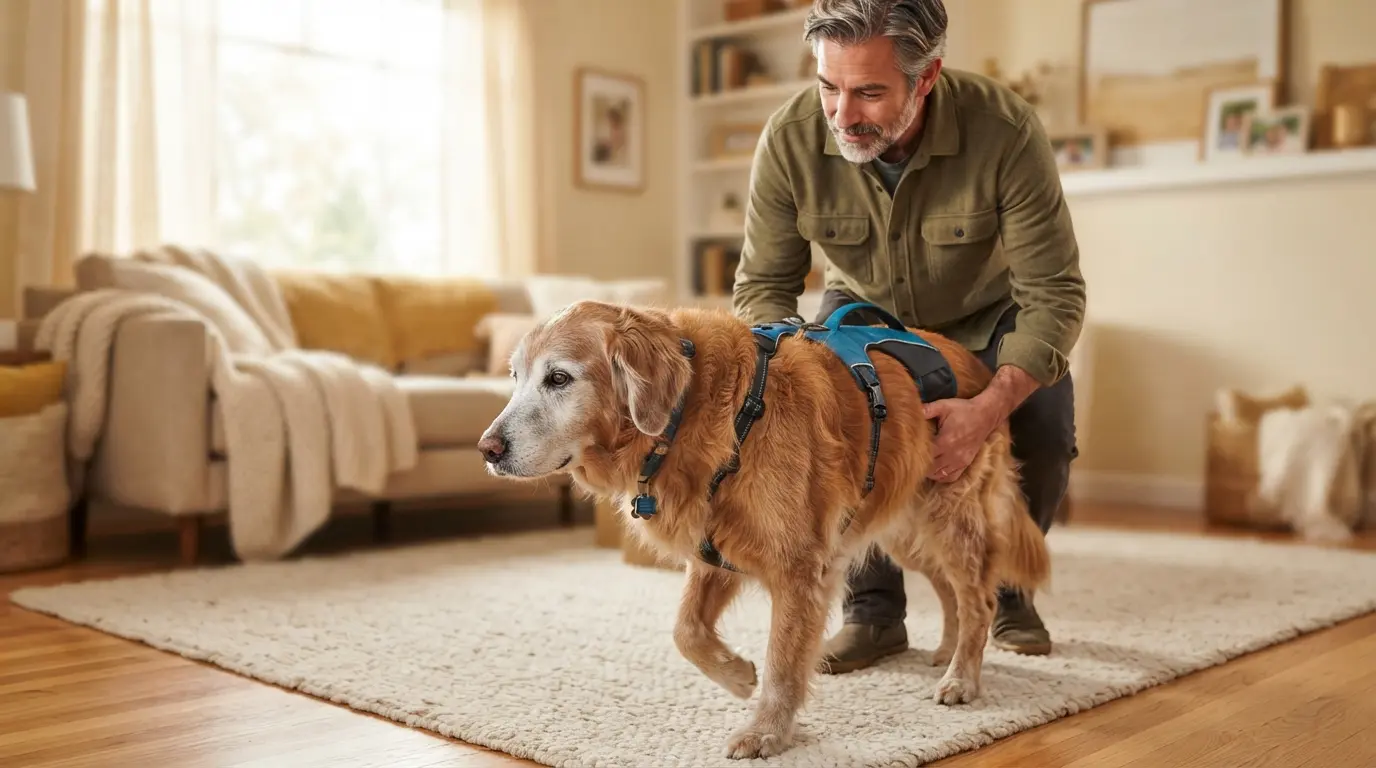
Supportive harnesses with rear handles let you physically assist your dog on stairs or uneven ground, which becomes essential rather than optional as weakness progresses. Many owners find this tool makes daily walks possible again even in fairly advanced cases.
A supportive orthopedic bed takes pressure off hips and spine during rest, which matters even more for a dog whose hindquarters are already under strain during waking hours.
Non-slip socks add traction for indoor walking specifically, complementing rugs in areas where flooring can’t be easily covered.
Physical Therapy and Long-Term Management Options
Beyond home adjustments, several longer-term approaches genuinely help manage this over time, whether the cause turns out to be arthritis, DM, or something else entirely.
Canine physical therapy, sometimes called rehabilitation, uses targeted exercises to maintain muscle strength and slow further decline, particularly valuable for DM where keeping remaining muscle engaged matters considerably to preserving mobility as long as possible.
Hydrotherapy, exercise in water, offers resistance training without joint impact, useful for both arthritis and DM cases where land-based exercise has become difficult or risky. Many dogs who struggle to walk comfortably on land move with surprising ease once submerged.
Wheelchairs or mobility carts exist specifically for dogs with advanced hind-leg dysfunction, and many dogs adapt to them remarkably well, regaining real independence and quality of life even with significant weakness that once seemed limiting.
For evidence-based background on degenerative myelopathy specifically, veterinary neurology resources and the American Veterinary Medical Association both offer reliable information worth reviewing as you navigate a diagnosis.
Frequently Asked Questions
Is old dog back legs collapsing always a sign of something serious? Not always emergency-level serious, but old dog back legs collapsing always warrants a vet visit. Causes range from manageable arthritis to more significant neurological conditions, and only an exam can tell you which you’re dealing with.
Can degenerative myelopathy be treated or cured? No cure currently exists, but physical therapy, mobility aids, and supportive care can meaningfully extend a good quality of life for dogs with DM, sometimes for a year or more after diagnosis.
How fast does dogs back legs giving out typically progress? It depends entirely on the cause. DM progresses gradually over months. Arthritis fluctuates but generally worsens slowly over years. IVDD can appear suddenly and needs prompt attention.
Should I get a wheelchair for my dog right away if I notice weakness? Not necessarily immediately, but it’s worth discussing timing with your vet. Many owners wait until mobility aids like ramps and harnesses aren’t enough anymore before moving to a cart.
Can arthritis and degenerative myelopathy occur in the same dog at once? Yes, unfortunately, and this combination can make diagnosis trickier since symptoms overlap. A thorough neurological exam alongside imaging helps sort out how much each condition is contributing.
A Final Note
Old dog back legs collapsing is frightening to witness, but it’s rarely a dead end. Between an accurate diagnosis, the right home setup, and modern mobility support, most dogs continue living full, engaged lives well after hind-leg weakness first appears. Getting him seen promptly gives you the clearest path toward whatever management plan fits his specific situation best, and most owners find the uncertainty itself is the hardest part, not the actual day-to-day management once a plan is in place.