
Best Orthopedic Dog Beds for Senior Dogs
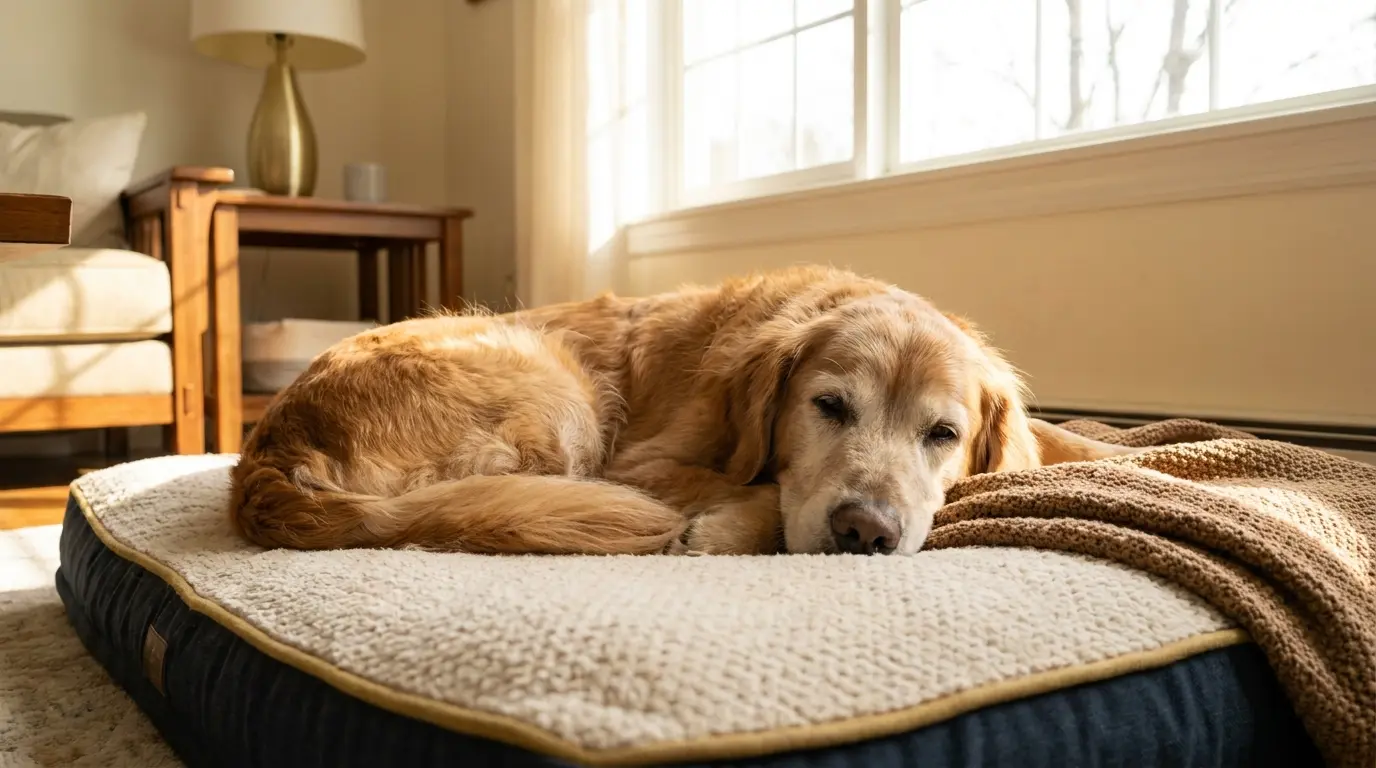
Your dog spends more hours asleep than doing anything else, and that number only goes up as he ages. So the bed underneath him during all those hours matters a lot more than most owners assume. Finding the best bed for senior dogs is about more than just luxury – it’s about providing the kind of support that their joints need for the long haul.
This guide covers why orthopedic support actually makes a difference, what to check before buying, some well-reviewed picks by category, how to set the bed up at home, and how to tell when it’s time to replace one that’s past its prime. None of it requires spending a fortune, though understanding what you’re actually paying for helps a lot when the options start blurring together.
Why Orthopedic Beds Matter for Senior Dogs
How Orthopedic Support Works
A regular fluffy bed compresses fast under a dog’s weight, especially at the hips and shoulders, the two points that carry the most load when he’s lying down. Once that padding flattens out, those pressure points end up resting almost directly against the floor underneath.
Memory foam works differently. It distributes weight across a wider surface instead of letting it concentrate at a few points, which reduces the pressure on joints already dealing with wear and tear. That’s a meaningful difference for a dog with joint pain and arthritis, where even a few hours of concentrated pressure overnight can leave him stiffer than usual by morning.

Density and Temperature Considerations
Density matters here too, and it’s easy to overlook Now, a lower-density foam will feel nice and squishy in the store, but it won’t take very long for your dog’s weight to permanently compress it, especially with larger dog breeds. High-density memory foam is much firmer and better able to withstand the pressure of a heavier dog, and it maintains its shape long after a cheaper bed would be completely flat.
There’s also the temperature side of things, which surprises a lot of owners the first time it comes up. Some Memory foam has a natural tendency to trap heat close to a dog’s body which can be rather unpleasant for a dog that has difficulty getting up and down from a resting position. Beds that have a cooling technology or gel infused layer on them are usually the best option as far as keeping your dog from getting too hot and it is something to look out for if your dog tends to overheat frequently or you live in a place where summer weather tends to be fairly hot.
None of this means a regular bed is useless. A young, healthy dog does perfectly fine on standard stuffing. It’s really the combination of age, reduced mobility, and joint wear that shifts the calculation toward something built with actual orthopedic support in mind.
For general background on joint health and comfort in aging dogs, the American Kennel Club has useful resources worth a look.
What to Look for When Buying
A few specs are worth checking closely before you buy, since the label often oversells what a bed actually delivers.
Support and Material Specs
Memory foam density is the big one. Look for beds that list a specific density (measured in pounds per cubic foot) rather than just the word “memory foam” on the label, since that term alone doesn’t guarantee real orthopedic support.
Whether to go with a bolster is a personal preference based on the pet’s habits, as bolstered designs give dogs that like to rest their heads on something a place to do so, but a flat, bolsterless edge may be easier for the stiff joints of an arthritic dog to navigate when getting on and off the bed. Watch how your dog sleeps and if they hunker down on their bed in any particular way to see what they are most comfortable with, as they will likely do it regardless of what kind of bed they are on.
A waterproof liner is worth prioritizing if your dog deals with any incontinence, which becomes more common with age. It protects the foam itself from moisture damage, which otherwise shortens a bed’s life considerably, and it saves you from replacing an otherwise good bed just because of a few accidents.
A washable cover matters for the same reason, and for basic hygiene. Removable, machine-washable covers make a real difference in how long a bed stays usable and pleasant.
Size and Practical Considerations
Size relative to your dog matters more than people think. A bed that’s slightly too small forces him to curl tighter than he naturally would, which works against the whole point of joint support in the first place. As a general rule of thumb it’s best to measure your dog laying down on their side and add a few extra inches on both ends, instead of strictly going by the breed size suggested by the bed’s manufacturer.
A non-slip base keeps the bed from sliding across hardwood or tile every time your dog gets up or down, which matters especially for dogs already unsteady on their feet. Rubberized grip strips on the bottom, or a bed with a naturally heavier base, both help here more than people expect until they’ve dealt with a bed skating across the floor.
And finally, easy in-and-out height. Some orthopedic beds sit fairly high off the ground, which can actually work against a dog struggling with mobility. A lower profile is often the better call unless your dog is still quite agile.
One more consideration to add to your buying-guide checklist (though it’s not one that most of us think about): the scent and offgassing properties of the bed.New memory foam typically has a strong chemical odor during the first few days as it breaks in. While this isn’t harmful after a couple days of airing out, it’s not a bad idea to let a new bed sit in a well-ventilated room for a day or two before letting your dog sleep on it regularly.
Best Orthopedic Beds by Category
A quick note before getting into this list: these are all popular, well reviewed items based on general word of mouth, not first hand experience, so please be sure to check the weight capacity and size specifications to make sure it’ll work for your particular dog.
Best Overall
Big Barker orthopedic pet bed is one of the most widespread products in the category because of its excellent quality. It uses high-density foam, and numerous big dog owners have tested it. Although it might seem expensive, its value is justified by time: many people who use this model prefer to invest more in one high-quality bed for their large pets instead of changing cheaper ones every few years.
Best for Arthritis
Furhaven’s Orthopedic Sofa-Style bed pairs supportive foam with a bolstered edge dogs can lean against, which some arthritic dogs find comforting for joint support while resting. It also comes in a range of sizes suited to different breeds and weights, and the bolster design gives dogs a choice between resting flat or propped against something, depending on which feels better on a given day.
Best Budget-Friendly
PetFusion’s Ultimate Bed offers solid memory foam support at a noticeably lower price point than premium brands, without a dramatic quality gap for most dogs. It’s a reasonable place to start if you’re not sure yet how much your dog will actually use a dedicated bed, before committing to a pricier option.
Best for Large Breeds
Big Barker makes an appearance again here, for its extra large sizing, and due to the reinforced foam which has been specially designed to accommodate larger dogs without collapsing too early. At the other end of the spectrum, density and size are more important than at the small-dog end since large-breed dogs exert more pressure on the bed than smaller dogs.
Best Waterproof/Easy-Clean Option
The Casper Dog Bed comes with a removable, machine-washable cover and water-resistant material, which makes it ideal for dogs with any form of incontinence or those that tend to make a mess. Its ease of cleaning encourages frequent cleanings, which is healthier than many dog owners realize.
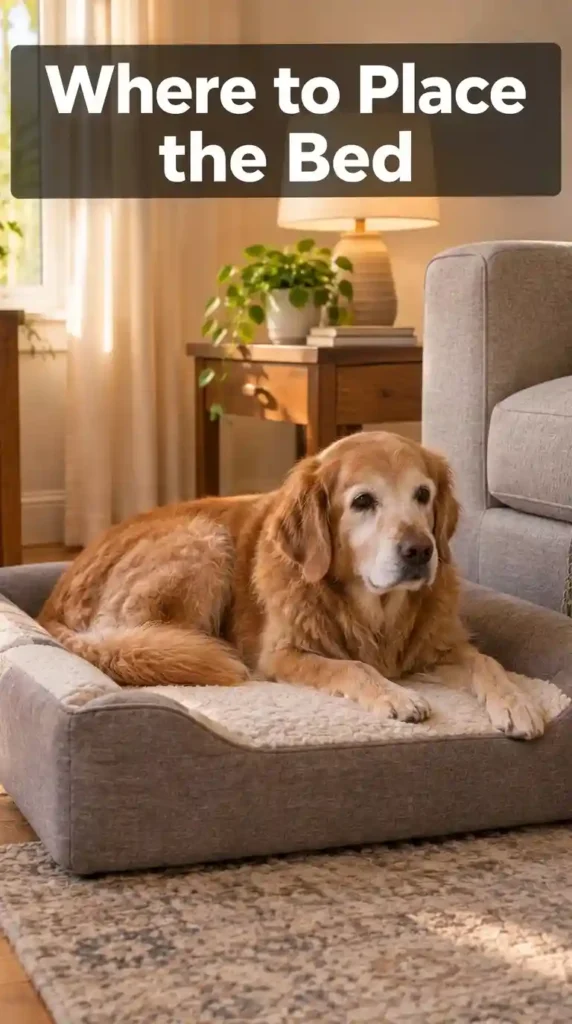
Bed Placement and Home Setup Tips
Where you put the bed matters almost as much as which one you buy.
Place it in a family area and not in a back room. Older dogs, particularly those experiencing any changes in mental capacity, tend to feel better when kept among the people and things with which they are acquainted and accustomed rather than separated from them and placed in a quiet area.
Avoid drafts and cold floors. Having a cold space, whether it’s a drafty door or the actual cold tile beneath the mattress, can be a big issue even with an orthopedic bed, especially during the colder months when stiffness is already a problem.
If the bed sits somewhere elevated — on a couch, in the car, or anywhere else off the ground — pair it with a ramp or stairs to help with getting on and off elevated surfaces safely. A great bed doesn’t do much good if your dog struggles just to reach it.
Consider a second, smaller bed somewhere your dog spends daytime hours, like near the kitchen or living room, so he’s not tempted to nap on hard flooring out of convenience.
Also think about noise and foot traffic. The senior may not get his “rest” when he sleeps on a bed in a high traffic area, as he feels he is always on duty instead of resting. A place close to the main stretch of the road can offer him both companionship and to kickback and relax.
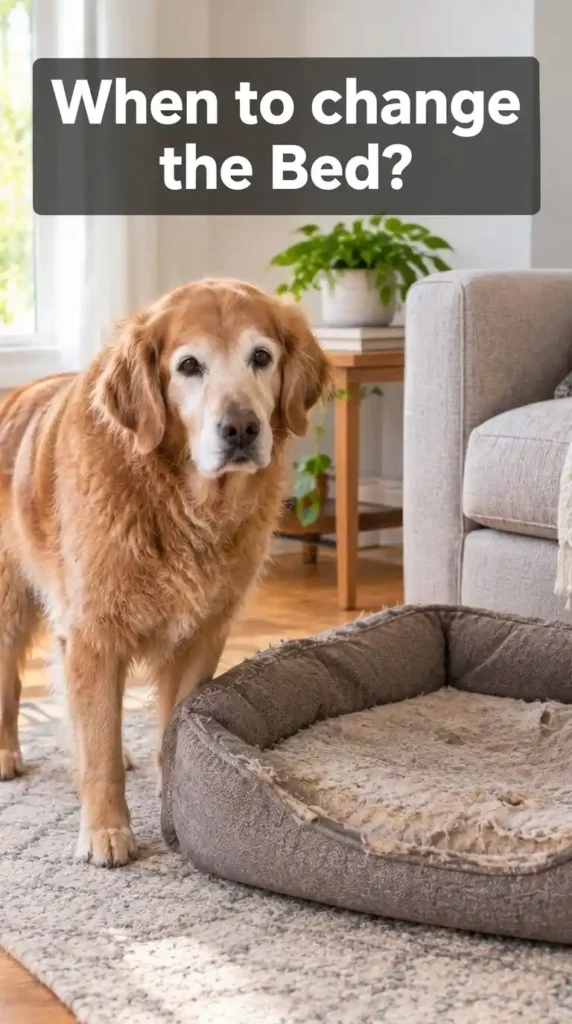
Signs It’s Time to Replace the Bed
Even a good orthopedic bed doesn’t last forever. Watch for a few signs it’s worn out its usefulness:
- Visible flattening or a permanent body-shaped dent that doesn’t spring back after your dog gets up
- Your dog choosing to sleep on the floor instead of the bed, which often signals it’s no longer providing real support
- Lumpy or uneven foam, especially after washing, which sometimes indicates the foam has broken down internally
- A cover that’s torn or worn through, exposing the foam underneath to moisture and dirt
- A musty odor that remains even after washing, which typically indicates that the moisture had penetrated the foam
Most orthopedic beds are designed to last two to four years with regular use, but this can be affected by the weight of your pet and how often they are washed.It’s a reasonable habit to check the foam every few months by pressing down where your dog usually sleeps and seeing how quickly it springs back, rather than waiting for obvious problems to show up on their own. A bed that’s genuinely done its job has usually earned its replacement by then anyway.
Frequently Asked Questions
What’s the best dog bed for senior dogs with arthritis? Look for high-density memory foam specifically, since that’s what actually provides pressure relief rather than just softness. Pairing a good bed with joint supplements often works better than either one alone, addressing both the joints themselves and the pressure on them overnight.
How do I know if my dog even needs an orthopedic bed? If you’re noticing any of the signs your senior dog is in pain, particularly stiffness after resting, an orthopedic bed is worth trying regardless of age. It’s a low-risk change with a real chance of helping, and there’s little downside even if it turns out your dog didn’t strictly need it yet.
Are orthopedic dog beds actually worth the extra cost? Yes, in general, if your dog is suffering with a joint problem. Due to the density of a conventional bed and a true orthopedic foam, it can make a difference, particularly over months and years, and the price per bed over its lifespan is not that much higher than the price of replacing a low-quality bed over time.
Can I make a regular bed more supportive without replacing it? Not really, not in any meaningful way. Adding blankets or extra padding doesn’t replicate what supportive foam actually does, since it’s the material’s structure doing the work, not just thickness. A folded blanket might feel softer to the touch, but it won’t distribute weight the same way.
How often should I wash the cover? Every one or two weeks, or more often if your dog tends to go to the bathroom when on the run and before he gets settled in. Always check the care instructions for the cover, as some require cold water washes or air drying to maintain the integrity of the material.
A Final Note
A good bed is one of the simplest, most overlooked upgrades you can make for a senior dog. It won’t fix everything, but it takes real pressure off a body that’s already working harder than it used to, during the hours he spends resting rather than moving. Most owners notice the difference within the first week or two.
It will not always be the priciest choice on the list. What really counts is the support, sizing, and a good in-home location that the dog feels comfortable with.
