Best Dog Ramps & Stairs for Senior Dogs, Reviewed
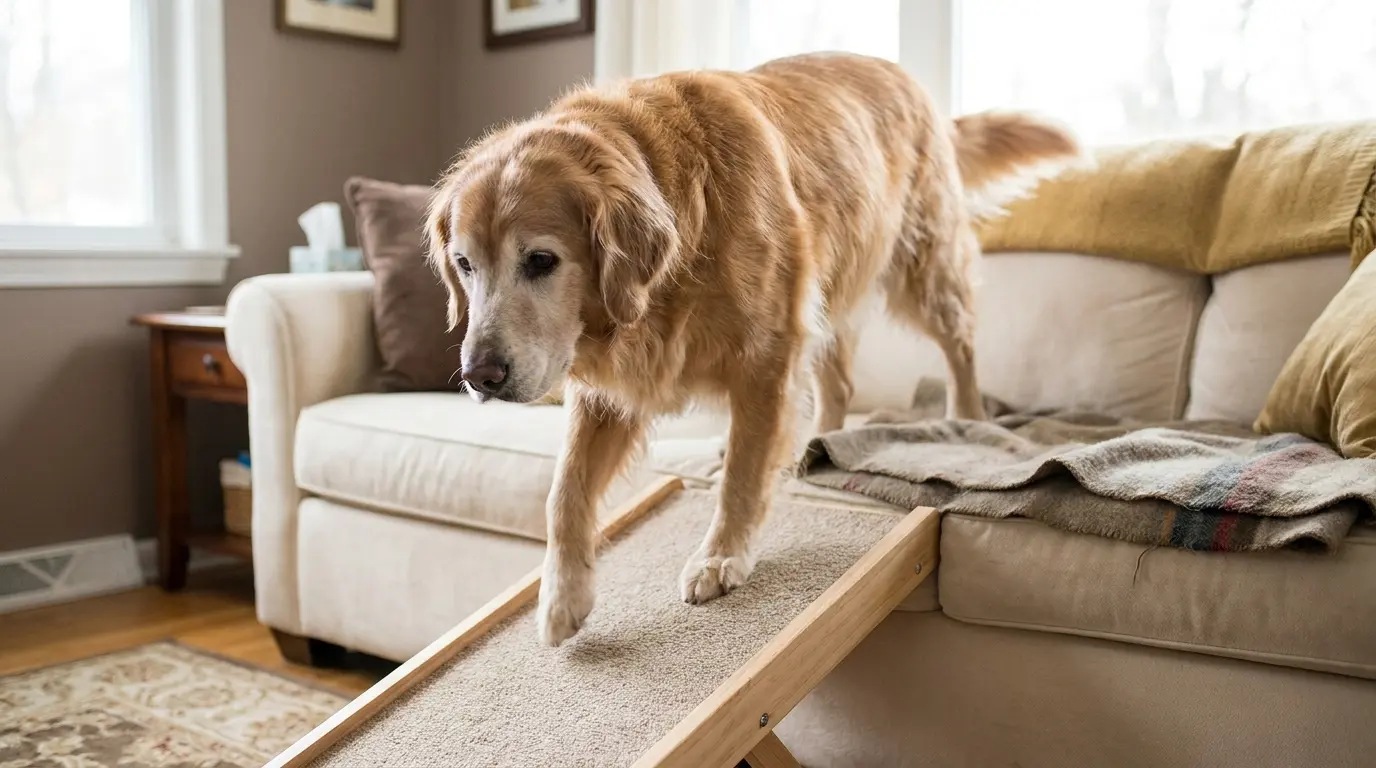
That little pause your dog takes before jumping onto the bed or into the car isn’t nothing. It’s often the first sign he needs a bit of help getting places he used to reach without a second thought. Good dog stairs for senior dogs — or a ramp, depending on the situation — can take that strain off his joints and give him back access to the spots he loves, without you having to lift him every time.
This guide breaks down when to choose a ramp versus stairs, exactly what to look for before buying, some well-reviewed options by use case, and how to actually get a reluctant senior dog comfortable using one. None of it needs to be complicated, and most dogs adjust faster than owners expect.
Ramps vs. Stairs — Which Does Your Dog Need?
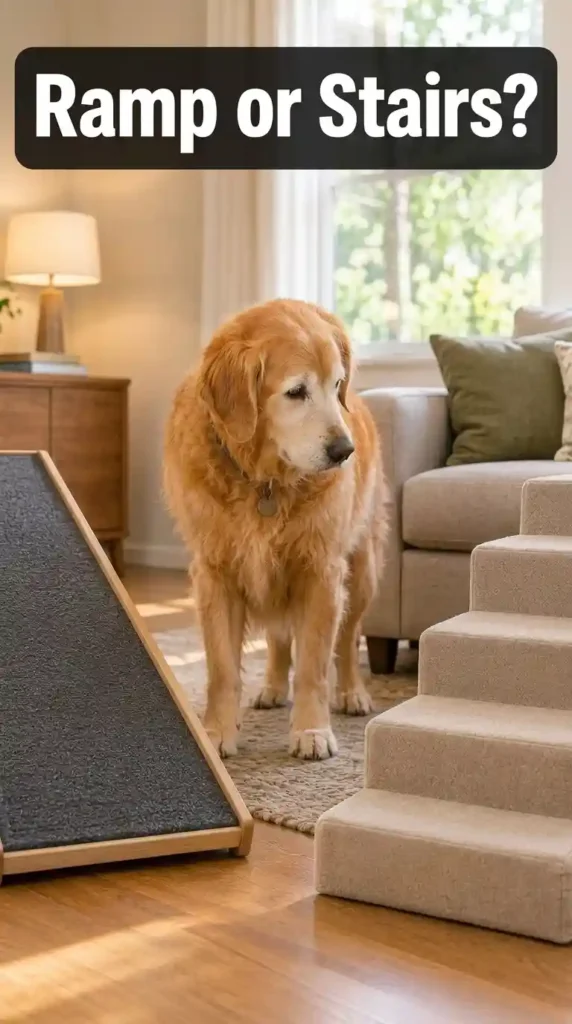
This comes down mostly to your dog’s size, confidence, and where he needs the help, rather than one option being universally better than the other.
Ramps tend to work best for cars and SUVs, where the height and angle can be steep, and for dogs who feel difficulty lifting their paws in a stepping motion. They’re also the gentler option on joints overall, since there is no repeated up-down motion the way stairs require.
Stairs are often the better fit for beds and couches, where space is tighter and a full-length ramp would not practically fit in the room. They’re also easier to feel natural on for dogs that aren’t yet completely immobile, but simply need a little extra help to make it to the top, and many dogs prefer the shorter defined steps versus a long sloped surface.
A rough rule of thumb: if your dog is dealing with joint pain and arthritis, or any significant mobility loss, ramps are usually the gentler choice. If he has simply become more careful with age but is still fairly steady on his feet, stairs are often enough.
Size matters here too. A larger dog generally handles a ramp’s gradual incline more easily than a set of steep stairs, while a smaller dog might find a set of low, closely-spaced stairs easier to navigate than a long ramp designed with bigger dogs in mind. If you’re genuinely unsure, watching how your dog approaches the car versus the bed can tell you a lot — some dogs are confident with one and hesitant with the other, which is a useful clue for which tool to start with.
What to Look for When Buying
Not all ramps and stairs are the same, and a few specs matter more than the price tag might suggest.
- Weight capacity — check this against your dog’s actual weight, with some buffer room, since a ramp rated right at the edge of his weight can feel unstable
- Non-slip surface — carpeted or textured tread matters enormously here, since a slick ramp is often worse than no ramp at all
- Incline angle — a gentler slope (lower degree angle) is easier and safer for arthritic or very senior dogs, even if it means a slightly longer ramp
- Portability — folding designs matter if you’re using it for the car regularly, since you’ll be moving it in and out often
- Material — plastic tends to be lighter but can flex under weight; aluminum-framed options are sturdier but heavier to move around
- Foldability and storage size — worth checking before buying if you have limited space, since some ramps are genuinely bulky once assembled
None of these need to be perfect on every point — it’s really about matching the specific features to your dog’s size and where you’ll be using it most. A ramp built for daily car use, for example, should prioritize portability and durability over anything else, while one that lives permanently beside the bed can afford to be heavier and sturdier since it’s not moving anywhere.
Best Options by Use Case
A quick note before this list: these are popular, well-reviewed options based on general reputation, not personal testing claims. Always double-check weight capacity against your specific dog before buying.
Best for Cars & SUVs
PetSafe Happy Ride Telescoping Ramp is a widely recommended option for vehicle access, with an adjustable length that suits different vehicle heights and a non-slip surface built specifically for outdoor, uneven use. It folds up compactly in the trunk too, thanks to its telescoping feature, so that it won’t clutter up the space.
Best for Beds
Pet Gear Stramp (a hybrid stair-ramp design) works well for beds specifically, since it combines a shorter footprint with a gentler climb than traditional stairs, which suits smaller bedrooms where a full-length ramp simply wouldn’t fit.
Best for Couches
Solvit PupSTEP Plus is a popular pick for couch access, foldable for storage between uses and light enough to move room to room without much hassle. Its lower height profile also makes it a natural fit for couches, which tend to sit lower than most beds.
Best Budget Option
Internet’s Best Foldable Pet Ramp and similar budget-tier options on Amazon often deliver solid basic functionality — non-slip surface, decent weight capacity — without the premium price tag of the bigger brand names. They’re a reasonable starting point if you’re not sure yet whether your dog will take to using a ramp at all.
Best for Small Dogs
PetSafe CozyUp Bed Ramp is built with a lower incline and narrower design suited to small breeds, who often need a gentler slope than the standard ramp provides even at a shorter overall height. A wide ramp carried out for large dogs can also make a difference in small dogs’ confidence level, as a narrower ramp may better suit their needs.
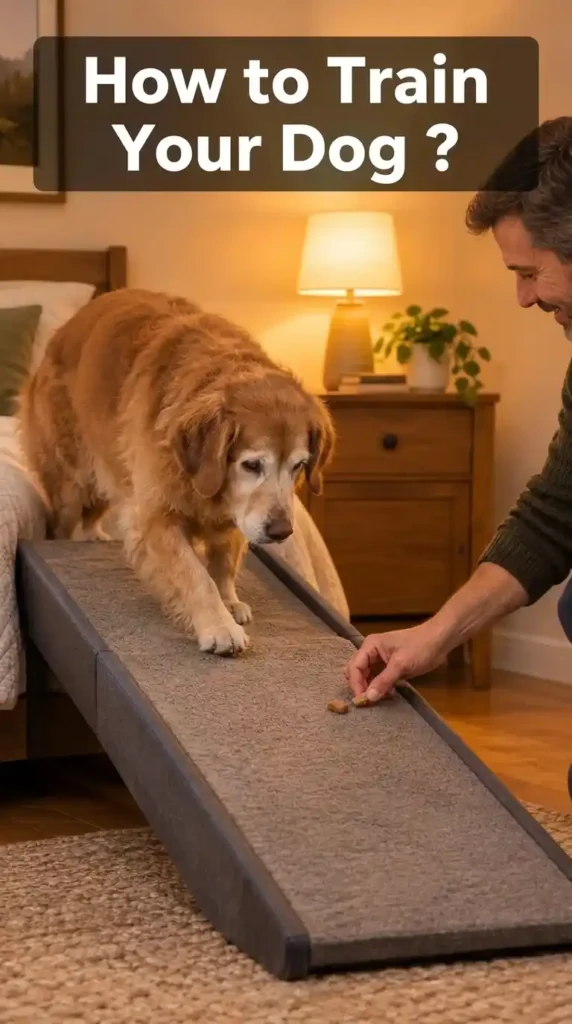
Training Your Senior Dog to Use a Ramp or Stairs
Even the best ramp does nothing if your dog is too nervous to try it. Most dogs need a bit of patient introduction rather than using it right away.
Start flat on the ground. Before angling the ramp against the car or bed, let your dog walk across it while it’s lying flat, so the surface itself becomes familiar first. This step alone solves a lot of the hesitation, since dogs are often more unsettled by the unfamiliar texture underfoot than by the incline itself.
Use treats and encouragement, not force. Coax him across with treats placed a little further along each time, rather than pushing or pulling him onto it. Confidence built this way tends to stick much better than confidence forced, and it avoids creating a negative association with the ramp altogether.
Raise the angle gradually. Allow him to get used to walking across it level, then gradually ramp up the angle gradually with a few short sessions before heading for the steepest angle. There are some ramps that are adjustable for this purpose, so if your ramp is adjustable, see if it can be fitted slightly lower.
Stay close the first several times. Walking beside him, or standing at the top, gives him confidence and lets you catch him gently if he hesitates partway up. You can supplement these initial attempts with a gentle hand on his shoulder or a harness handle.
Expect a few off days. It takes some dogs only one practice session, other dogs a week of brief, low-key sessions. Both speeds are not indicative of a problem and working hard on a bad day will not make it up to you.
Other Mobility Aids Worth Considering
While ramps and stairs do help to solve one of the mobility puzzle, there are a few other tools to have with them for a full complement.
Non-slip rugs or mats along frequently walked paths reduce the number of places your dog has to navigate slippery flooring in the first place, which matters just as much as the ramp itself. The first areas to consider are hallways, front of food bowls and approach to any ramp.
A harness with a rear handle gives you a way to physically support your dog’s hindquarters on stairs or uneven ground, which is especially useful for dogs with significant hip or joint weakness. These are also real-life useful when used in conjunction with visiting the vet or any situation that requires additional lifting support, other than walking around the house.
Supportive orthopedic bedding rounds out a good mobility setup, since comfortable rest matters just as much as getting around during the day — a dog who struggles to get comfortable overnight often shows more stiffness the next morning, regardless of how well the ramps and stairs are working.
For general guidance on mobility support in aging dogs, the American Kennel Club has useful background worth a read if you want to go deeper on this topic.
Frequently Asked Questions
How do I know if my senior dog needs a ramp or stairs? Watch for hesitation at the car, bed, or couch, along with any other signs your dog is in pain. If he is not taking the jump at all or is hesitant to take it or whining, it may be better to introduce a ramp or steps than for it to deteriorate or cause an injury from a missed jump.
Are ramps better than stairs for arthritic dogs? Generally yes, since ramps avoid the repeated joint-flexing motion that stairs require. However, some dogs truly enjoy using the stairs and adapt to it just fine, even if they have mild arthritis, so it’s important to observe your dog and determine whether it is a good fit for them or not.
What weight capacity should I look for? Always buy above your dog’s actual weight, not right at the limit — a good rule of thumb is at least 20-30 pounds of buffer room for stability and long-term durability, since ramps can lose some structural give over years of regular use.
My dog refuses to use the ramp. What should I do? Go back to basics — flat on the ground, treats, no pressure. Rushing the training process is the most common reason people abandon ramps in a closet after one failed attempt, and most dogs come around with a slower, more patient reintroduction.
A Final Note
A small expense that can make a big difference and help your dog enjoy the areas he enjoys for a longer period is to add a ramp or steps It’s not to ‘baby him’ — it’s to take away any extra stress from a body that’s already working a little harder than it probably has to be. Most dogs adjust well, and most owners wonder why they didn’t get one sooner.
Give the training process some time, expect a slightly awkward first week, and don’t feel discouraged if progress isn’t linear. The reward: a dog that can still jump up beside you on the couch without flinching is more than worth the brief transitional period.